

Bicycle trips make up 1% of all trips in the United States. However, bicyclists account for 2-3% of people who die in a crash involving a motor vehicle on US roads, according to the Centers for Disease Control and Prevention.
According to the National Highway Traffic Safety Administration, the most contributing factor in fatal bicycle crashes is the bicyclists failing to yield the right of way. The next is when bicyclists are not visible to other drivers.
After a bicycle accident, proving what happened can be just as important as proving the extent of the injuries. Which is why securing evidence is always a key to proving a case. They are important with disputes in identifying fault or securing claims. The help of a bicycle accident lawyer is crucial to obtain all the evidence needed to strengthen your claim.
Let’s look at the essential evidence below and how it can support a cyclist’s case.
The Crash Report Captures Less Than Riders Assume
Insurers treat the police report as the anchor document, and it is thinner than that treatment suggests. Researchers at UC Berkeley reviewed ten studies matching hospital records against police crash files and found reporting levels for bicycle crashes ranging from 7 to 46 percent, with the reviewers flagging wide uncertainty in those estimates.
When one did, the officer often arrived after the ambulance left. The driver gave a statement. The rider did not. This becomes the essence of the narrative part and remains in place for years. The rider may get to the report number earlier, read the narrative, and inquire about the supplemental statement.
Crash Type Decides Which Evidence Matters
A left-turn collision is a sightline issue. The key evidence to look for is the approach angle and what was visible from the stop bar.
In California, there are specific rules that cyclists and drivers must follow. This includes bicycle operation, lane positioning, and interactions with turning vehicles. With these rules, it makes California bicycle laws important when evaluating fault. But what are California bicycle laws?
Bicycle laws establish how cyclists and motorists are expected to share the road safely. In California, these laws address issues such as bike-lane use, right-of-way, turning, passing, signaling, and other safety requirements. Generally, bicyclists have many of the same rights and responsibilities as drivers of motor vehicles.
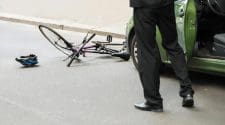
Dooring issues depend on how long the door had been open and the bike’s position within the lane. Right hooks rise and fall based on the positions of the two vehicles before the turn. Once the collision type is known, evidence should be gathered based on the specific circumstances rather than relying on general advice.
Physical Evidence Has a Short Shelf Life
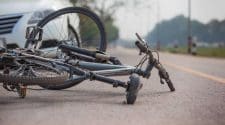
The bicycle is evidence. A bent fork, paint transferred from the road onto the bicycle’s top tube, and a scuff mark on one of the pedals provide information about the direction and speed of impact that a photo of the road cannot provide.
This too applies to torn clothes and cracked helmets. It’s important to take the picture at the same time of day to make sure the sun will be in the same place.
You may also need a video. This may provide a better narrative of the incident. Security camera video from doorbells and small business surveillance systems is overwritten after just days if not for the written request made within the first week.
What the Driver’s Car Recorded
Most late-model vehicles carry an event data recorder. Federal rules do not require the device, but 49 CFR Part 563 governs what one must capture when a vehicle has it. The current requirement is five seconds of pre-crash data sampled twice per second, covering indicated speed, throttle position, brake application, and, on many vehicles, steering input and antilock activity.
A December 2024 NHTSA final rule stretches the requirement to twenty seconds sampled ten times per second. The agency’s duration study found the five-second window captured less than one percent of total intersection event time, while twenty seconds reaches up to 95 percent of an intersection traversal, including rolling stops and signal running. The compliance date for this rule is September 1, 2027, despite NHTSA proposing to push that back to 2028 with a phased rollout. Either way, the wider window belongs to future model years, not to the car involved in last month’s crash.
The Driver Privacy Act of 2015 makes recorder data the property of the vehicle owner or lessee, so a cyclist cannot simply ask for it. Access runs through owner consent or one of the statute’s narrow exceptions, which usually means litigation.
Medical Records Do Two Jobs
They establish the injury and they tie the injury to the collision. The second job is where claims fail. A rider who declines transport, sleeps it off, and sees a doctor eleven days later hands the adjuster an argument about intervening causes.
Head injuries surface late, and concussion symptoms appearing on day three read differently in a chart that starts on day one. The mechanism matters to the chart as much as the pain does.
Helmets, Lights and the Fault Argument
Adjusters raise helmet use quickly, and whether it legally matters varies by state. Utah, for one, has no statewide helmet requirement for conventional bicycles at any age, though a 2026 amendment now requires helmets for anyone under 21 riding an electric-assisted bicycle on a Utah highway.
Passing distance varies the same way. NHTSA counted 35 states and the District of Columbia requiring at least three feet when passing a cyclist as of September 2021, with Pennsylvania and New Jersey at four feet and five states requiring a full lane change instead.
Lights work the same way. A rider who was lit and visible removes an entire branch of the comparative fault argument before it starts.
Almost none of this requires a lawyer to begin. Photographs from the scene, a report number, an unrepaired bicycle in a garage, and a medical record dated the day of the crash are things a rider or a family member can secure inside the first week. Evidence somebody bothered to collect while it was still there usually decides these claims.