


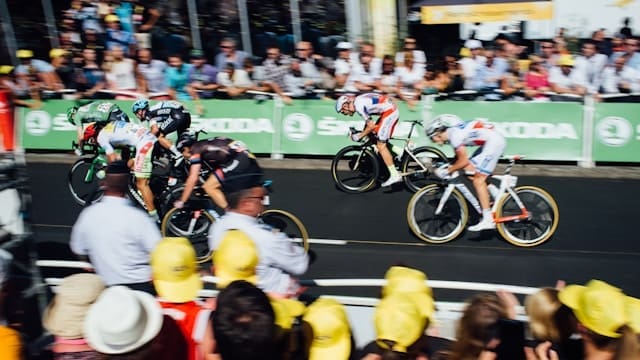
The upcoming summer sports calendar presents a truly massive intersection of global passion. As cycling fans prepare for the grueling mountain ascents of the Tour de France, soccer enthusiasts are simultaneously gearing up for the expansive spectacle of the 2026 FIFA World Cup. Managing the sheer volume of global attention for these two massive events at the exact same time is a monumental task. For digital services keeping fans connected to live data, milliseconds are the ultimate currency. This is why top-tier sports betting platforms have rebuilt their core architectures from the ground up, utilizing innovative low-latency pipelines to ensure that every pedal stroke and penalty kick updates instantly. To see how developers manage these immense live synchronization demands, one can look at specialized international layouts, where systems tailored for FIFA World Cup 2026 process millions of concurrent player requests without a single line stutter or system delay.
The Network Infrastructure Behind Live Streaming Analytics
Behind the interface of any modern screen lies an incredibly complex web of enterprise tech. Traditional online betting frameworks used to rely on standard internet communication models where a device had to request updates from a central database repeatedly. When handling the overlapping schedules of the Tour de France and the FIFA World Cup 2026, that old method would completely break the server clusters. To solve this scalability challenge, Betway has consolidated its architecture, offering fans the streamlined option of betting on both of these major sports events under one cohesive platform without experiencing system lag.
Instead, modern infrastructure utilizes persistent data streaming pipelines, which keep an open communication channel between the user and the platform. For example, Betway’s online betting platform leverages advanced websocket technology to push data packets out the exact millisecond a metric changes. When a rider goes for a sudden breakaway in the mountains or a striker slips a shot past the keeper, that live moment instantly turns into a tiny packet of text data. It hits the app and updates the live betting options before the stadium crowd even finishes roaring.
Front-End Efficiency and the Elimination of Visual Noise
Delivering thousands of live calculations per second to millions of devices requires a massive focus on front-end optimization. This structural reality has driven some of the biggest tech trends in software design. Front-end engineers are systematically stripping away heavy, bloated code and unskipable graphic animations. The goal is to build a hyper-minimalist grid that prioritizes processing speed over decorative visual noise.
This clean layout strategy ensures that a sports bet can be finalized between downs or during a tense sprint finish without a mobile app lagging out. When a user navigates a highly responsive digital lobby, the lack of visual clutter allows the device to process incoming telemetry smoothly. It creates a fast, highly natural user session where the focus remains strictly on the competitive drama of the matchday.
Distributed Processing for Peak Global Surges
Maintaining this level of network stability during overlapping peak viewing hours requires serious server load management. When soccer matches and cycling stages reach their final minutes simultaneously, traffic spikes can easily overwhelm single data centers. To combat this, tech teams utilize decentralized edge-computing nodes, placing processing power physically closer to regional user bases.
This distributed architecture ensures that a user exploring online betting options experiences the exact same instantaneous responsiveness regardless of global traffic volume. Ultimately, the synchronization of these historic tournaments is a masterclass in invisible engineering. By replacing slow-burning legacy code with rapid, automated data pipelines, modern digital platforms successfully capture the chaotic energy of the world’s greatest athletes and deliver it straight to your pocket in true real time.
Photo by Howard Bouchevereau on Unsplash