


Medical staff at cycling events are defined as the qualified personnel responsible for immediate injury assessment, emergency response, and clinical decision-making during organized rides and races. Every cycling event organizer carries a legal duty of care to participants, and adequate medical provision is not optional. Failure to provide credible medical cover can result in liability claims and outright denial of event licenses by regulatory authorities. Understanding why cycling events need medical staff is the first step toward building a safe, compliant, and professionally run event.
Why cycling events need medical staff: the legal and safety case
Event organizers are legally responsible for ensuring adequate medical provision based on professional risk assessments, not fixed participant-to-medic ratios. That distinction matters enormously. A 500-rider gran fondo through desert heat carries far greater medical risk than a 2,000-rider flat criterium on a closed circuit. Licensing authorities can and do deny event permits when organizers fail to demonstrate credible, proportionate medical planning.
Relying on public ambulance services is not an acceptable substitute. Organizers must provide their own medical cover to meet legal and safety standards, because diverting public emergency resources to a private event violates licensing requirements in most jurisdictions. This is a point many first-time race directors miss entirely. The role of a race director includes owning this responsibility from the earliest planning stages.
The importance of medical staff also extends to participant confidence. Riders who see a credentialed medical team at the start line, along the route, and at the finish area race with greater assurance. That confidence directly affects registration numbers, repeat attendance, and the overall reputation of your event.
How medical risk assessments determine staffing needs
Risk assessment is the foundation of every sound medical plan. Crowd size alone is a poor predictor of medical need. Environment and event characteristics are far more accurate risk indicators than headcount. A 200-rider mountain gravel race in july heat demands more medical resources than a 1,000-rider flat road race in mild conditions.
The key factors that drive medical staffing decisions include:
- Terrain: Technical descents, loose gravel, and off-road sections increase crash and trauma risk significantly.
- Weather: Heat, cold, and humidity directly affect the likelihood of heat stroke, hypothermia, and dehydration.
- Event profile: Competitive races push riders harder than recreational gran fondos, raising cardiac and trauma risk.
- Audience demographics: Masters categories and mixed-ability fields carry different injury profiles than elite fields.
- Historical incident data: Previous editions of your event provide the most reliable baseline for staffing decisions.
The WHO framework for mass gatherings reinforces this approach. WHO’s mass gathering model emphasizes clinical capacity, human resource management, and mass casualty incident readiness as non-negotiable components of event medical planning. These global standards apply directly to cycling events of any size.
Industry frameworks like the Purple Guide, widely used in the UK events sector, provide structured templates for translating risk factors into specific staffing and equipment requirements. Using event-specific risk data to build a tailored medical coverage plan minimizes both under-provisioning and over-provisioning, and satisfies Safety Advisory Group expectations.
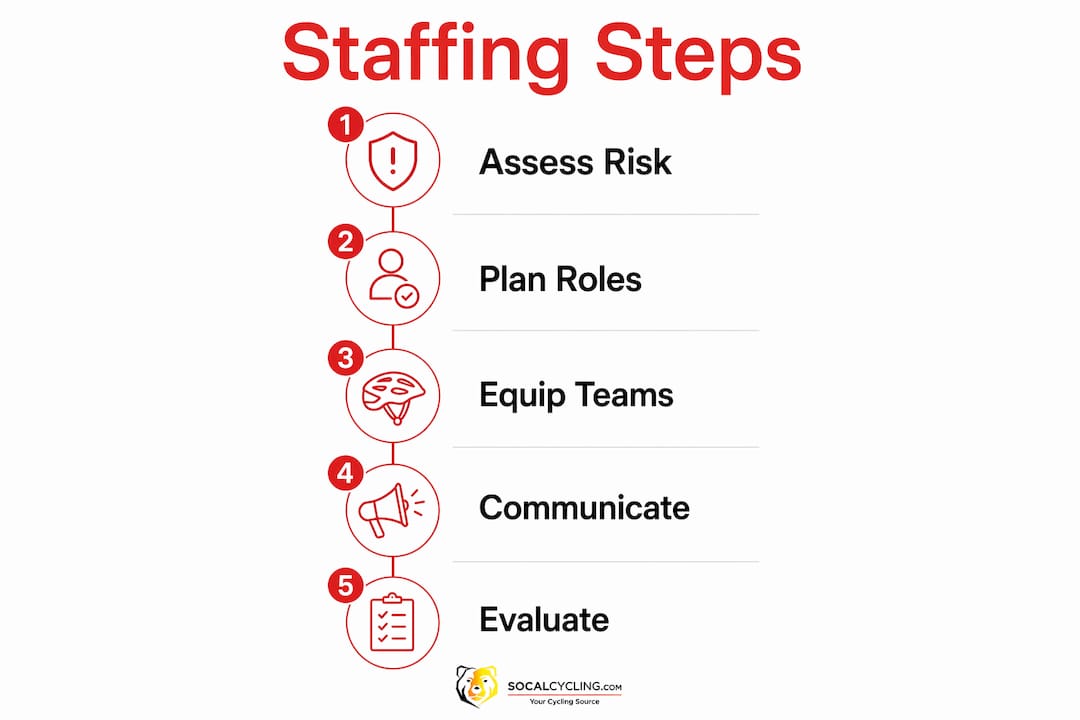
Pro Tip: Commission your medical risk assessment at least 12 weeks before your event date. Late assessments leave no time to source specialized personnel or equipment for technical terrain.
What roles do medical staff fill at cycling events?
Medical staffing at cycling events is not a single job. It is a layered team with distinct roles, each filling a specific gap in the care chain. The Tour of Luzon provides a clear real-world model. Medical teams at that race included doctors, paramedics, nurses, and trauma specialists deployed across start and finish areas, with mobile ambulances traveling in the race caravan.
A well-structured medical team for a competitive cycling event typically includes:
- First aiders: Positioned at high-density areas like start corrals and feed zones to handle minor injuries, abrasions, and dehydration.
- Paramedics: Deployed along the route for rapid response to crashes, fractures, and cardiac events requiring advanced life support.
- Nurses: Stationed at medical posts for assessment, wound care, and monitoring of riders pulled from the race.
- Medical lead or event physician: Responsible for overall clinical governance, communication with hospitals, and final decisions on rider evacuation.
The medical lead’s role is particularly critical. Medical staff make instant clinical decisions about whether a rider can continue or needs immediate evacuation. Getting that call wrong in either direction carries serious consequences. Sending a rider with a spinal injury back onto the road is catastrophic. Pulling a healthy rider unnecessarily disrupts the race and erodes trust.
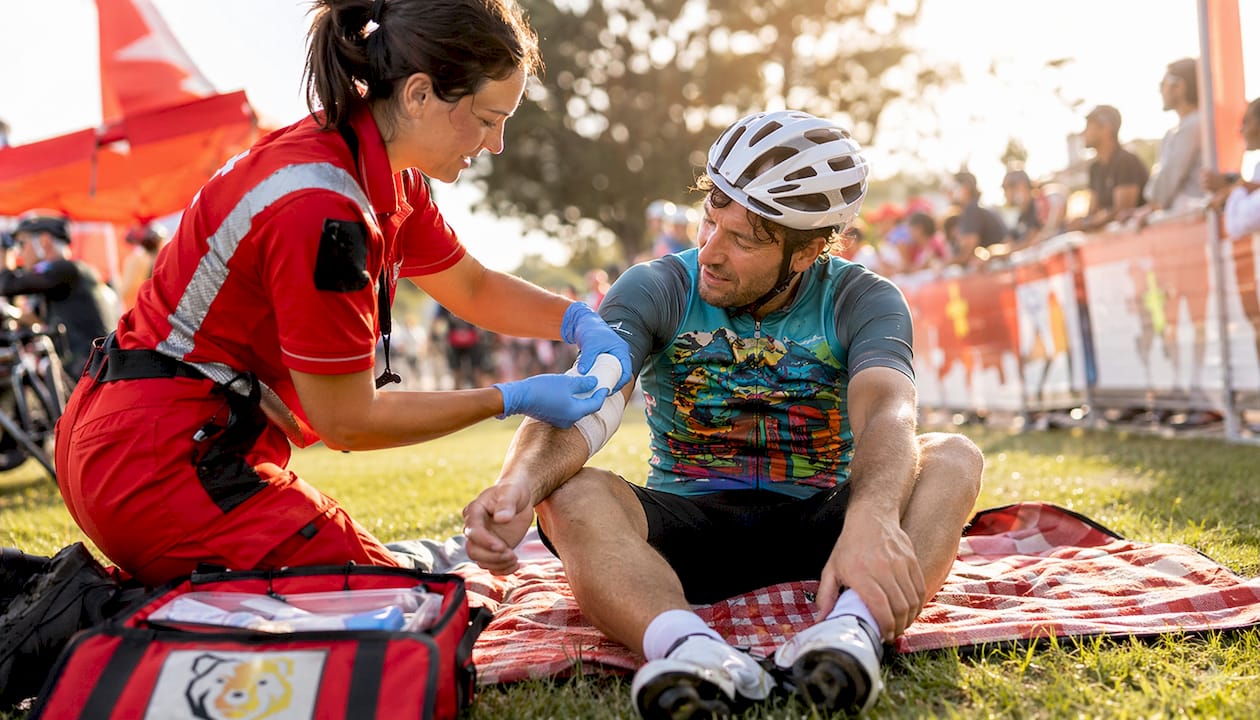
Common cycling event injuries include abrasions, road rash, dehydration, heat stroke, fractures, and muscle injuries. Treatment on site by skilled medical staff enables quick decisions about race continuation or hospital transfer. That speed of decision-making is what separates a well-managed incident from a preventable fatality.
Pro Tip: Assign your medical lead a dedicated radio channel shared with the chief commissaire and race director. Clinical decisions made in isolation from race operations create dangerous delays.
How medical staffing shapes safety outcomes and event reputation
Adequate medical staffing improves participant safety by reducing injury severity and preventing secondary complications. Qualified medical staff deliver faster response and treatment, which is critical in heat-related illness and trauma cases where minutes determine outcomes. That speed advantage is not achievable by waiting for a public ambulance dispatched from miles away.
The table below summarizes how medical staffing levels affect key event outcomes:
| Outcome area | Under-staffed event | Well-staffed event |
|---|---|---|
| Crash response time | Delayed, dependent on public EMS | Immediate, on-route responders |
| Heat illness management | Reactive, often requires hospitalization | Proactive monitoring, on-site cooling |
| Licensing and permits | Risk of denial or conditions | Meets Safety Advisory Group standards |
| Rider and media confidence | Low, negative press risk | High, positive event reputation |
| Post-event liability exposure | Elevated, documentation gaps | Reduced, incident logs support defense |
Regulatory bodies and Safety Advisory Groups review medical plans as part of the event licensing process. Events that demonstrate thorough, risk-based medical planning move through approvals faster and face fewer conditions. That efficiency has real value for organizers managing tight timelines.
“The presence of a credentialed medical team is not just a safety measure. It is a public statement that the organizer takes participant welfare seriously, and that statement shapes how riders, media, and sponsors perceive the entire event.”
Media coverage of cycling events increasingly includes reporting on medical incidents. Events with visible, professional medical teams generate coverage that reinforces rider confidence. Events where incidents are handled poorly become cautionary stories. The public perception of your event is shaped as much by how you handle emergencies as by the quality of the course.
Best practices for integrating medical staff into event planning
Medical integration starts with route analysis, not staffing numbers. Walk or ride the full course before finalizing your medical plan. Identify high-risk sections: technical descents, exposed climbs, narrow roads with poor sight lines, and areas with limited vehicle access. Each high-risk section needs a defined response plan before the event day.
Terrain access is a frequently underestimated problem. In off-road sections, standard ambulances are ineffective. Specialized extraction teams equipped with rope rescue capability and off-road vehicles drastically improve casualty response times in technical terrain. Gravel and mountain bike events in particular require 4×4 vehicles and, in some cases, motorcycle-mounted first responders who can reach a downed rider before any vehicle can.
Key operational best practices include:
- Medical post placement: Position posts at the start, finish, feed zones, and the top of major climbs where fatigue and dehydration peak.
- Specialized equipment: Stock medical posts with neck collars, stretchers, automated external defibrillators (AEDs), IV fluids, and spinal immobilization boards.
- Communication protocols: Every medical responder carries a radio on a dedicated channel. Establish clear codes for different incident types to avoid confusion under pressure.
- Evacuation plans: Pre-identify helicopter landing zones and hospital routes for each section of the course. Share these with your medical lead and local emergency services before race day.
- Incident logging: Document every medical incident with time, location, injury type, and disposition. Systematic logs support iterative improvements and strengthen your defense in any post-event liability claim.
- Insurance and legal compliance: Confirm that your medical provider carries professional indemnity insurance. Verify that their qualifications meet the requirements of your licensing authority.
Cycling event insurance and medical planning are closely linked. Insurers increasingly require documented medical plans as a condition of coverage. A well-documented plan protects both your participants and your organization.
Key Takeaways
Medical staff are the single most critical safety investment a cycling event organizer can make, and risk-based planning is the only defensible approach to determining what that investment looks like.
| Point | Details |
|---|---|
| Legal duty of care | Organizers must provide their own medical cover; relying on public EMS violates licensing requirements. |
| Risk-based staffing | Terrain, weather, and event profile are more accurate staffing drivers than participant headcount alone. |
| Layered medical teams | Events need first aiders, paramedics, nurses, and a medical lead with clear roles and communication protocols. |
| Incident documentation | Logging every medical incident by time, location, and injury type improves future planning and reduces liability. |
| Terrain access planning | Off-road and technical sections require 4×4 vehicles or motorcycle responders, not standard ambulances. |
Socalcycling’s take on medical planning as a competitive advantage
We have covered cycling events across Southern California and beyond for years, and the gap between well-prepared and underprepared medical operations is visible from the start line. The organizers who treat medical planning as a checkbox exercise are the ones who end up in difficult conversations after a serious incident. The organizers who treat it as a core part of race design produce events that riders return to year after year.
The most common mistake we see is assuming that a fixed ratio of medics to riders is sufficient. It is not. A 300-rider mountain gravel race in august heat in the San Gabriel Mountains carries more medical risk than a 1,500-rider flat criterium in Santa Monica. Terrain, temperature, and rider fitness level all matter more than headcount. Organizers who understand that distinction build better events.
The second mistake is treating the medical team as separate from race operations. The best events we have covered run their medical lead as a core member of the operations team, with a seat at the briefing table and a radio on the race director’s channel. That integration means faster decisions, cleaner incident management, and a calmer race day for everyone involved.
Continuous learning matters too. After every event, debrief your medical team. Review the incident log. Ask what slowed response times and what worked well. The organizers who do this consistently build medical plans that get sharper every year. That kind of institutional knowledge is genuinely hard to replicate.
— Socalcycling
Socalcycling’s event planning resources for race directors
Race directors and safety coordinators building their medical plans need more than a checklist. They need context, examples, and a community of experienced organizers who have solved the same problems.

Socalcycling covers cycling events across every discipline, from road racing and gravel to cyclocross and gran fondos, with reporting that goes beyond results to examine how events are organized and run. The cycling event resources at Socalcycling include race coverage, event calendars, and practical guides built for organizers who take participant safety seriously. For directors managing competitive fields, the race director guide covers the full scope of operational responsibilities, including medical coordination. Explore the full library and connect with a community that treats event quality as a shared standard.
FAQ
Why do cycling events need dedicated medical staff?
Cycling events carry specific injury risks including crashes, heat illness, and cardiac events that require immediate on-site clinical response. Public emergency services cannot provide the coverage speed or event-specific expertise that dedicated medical staff deliver.
What qualifications should cycling event medical staff have?
Medical teams should include at minimum certified first aiders and at least one paramedic or event physician, scaled to event size and risk profile. The medical lead should hold qualifications recognized by your licensing authority and carry professional indemnity insurance.
How do organizers determine how many medical staff they need?
Risk assessment factors including terrain, weather, event type, and audience demographics determine staffing needs more accurately than participant headcount alone. A professional medical risk assessment is the standard method for translating those factors into a specific staffing plan.
What equipment do cycling event medical teams need?
Core equipment includes AEDs, spinal immobilization boards, neck collars, stretchers, IV fluids, and oxygen. Off-road and technical events additionally require 4×4 extraction vehicles and, in some cases, rope rescue capability.
What happens if a cycling event lacks adequate medical cover?
Licensing authorities can deny event permits when medical provision is inadequate, and organizers face elevated liability exposure if a participant is harmed without proper care on site. Documented incident logs and credentialed medical teams are the primary defenses against post-event legal claims.
Recommended
- Why Cycling Events Need Insurance: 2026 Guide
- Cycling Event Category Guide: What Riders Need to Know
- The Role of Race Director in Cycling Events
- Cycling Sportive Explained: Your Complete Ride Guide