


Rest stops in cycling events are designated support points that provide riders with hydration, nutrition, mechanical assistance, and safety checks at regular intervals throughout a route. They are not optional conveniences. They are the structural backbone of every well-run organized ride, from a local charity century to a multi-day gran fondo. Understanding why cycling events have rest stops gives you a real edge in planning your effort, pacing your nutrition, and finishing strong.
Why cycling events have rest stops: strategic placement
Rest stop placement is a deliberate decision, not a guess. Event organizers position support stations based on distance, terrain, rider experience level, and route complexity. Charity rides typically space rest stops every 12–18 miles to create manageable segments for hydration, snacks, and assistance before fatigue affects safety. That spacing reflects a physiological reality: most riders begin to feel the effects of glycogen depletion and fluid loss well before the 20-mile mark on a warm day.
Competitive endurance events use a more structured approach. A 50-mile course positions stops at the 15-mile and 30-mile marks, creating two defined refueling windows that align with the body’s energy burn rate. That structure prevents riders from arriving at the final stretch already depleted.
Terrain also drives placement decisions. Organizers often position rest stops just before a major climb or immediately after a long descent. Before a climb, riders need to top off calories and fluids. After a descent, they need a moment to regroup and warm muscles that have been locked in a static position. Strategically placed rest stops also ensure safer navigation through urban or complicated route segments by regrouping riders before dense traffic or tricky terrain.

The table below shows how rest stop spacing typically varies by event type.
| Event Type | Typical Rest Stop Spacing | Primary Focus |
|---|---|---|
| Charity century ride | Every 12–18 miles | Hydration, snacks, SAG access |
| Endurance gran fondo | Every 15–20 miles | Nutrition, medical check, regrouping |
| Competitive road race | Every 20–30 miles | Feed zones, minimal stop time |
| Multi-day touring event | Every 10–15 miles | Full meals, mechanical support |
| Gravel race | Every 20–25 miles | Water, calories, route confirmation |
What physiological benefits do rest stops provide cyclists?
The body does not send reliable warning signals before performance starts to drop. Thirst is a lagging indicator of dehydration. By the time you feel thirsty, your power output and decision-making are already declining. Planned hydration stops remove the guesswork and force a proactive intake schedule that keeps your physiology ahead of the deficit.
Nutrition timing works the same way. Bonking, the sudden collapse of energy caused by depleted glycogen stores, hits without much warning. Eating before you feel hungry at every rest stop keeps blood glucose stable and muscles fueled. Riders who skip early stops because they “feel fine” are the ones who struggle hardest in the final miles.
Rest stops also address a less-discussed problem: circulation and positional fatigue. Standing briefly every 20–30 minutes restores blood flow and reduces saddle-related numbness, lessening the need for full stops during long rides. A two-minute stand at a rest stop can reset comfort levels for the next 15 miles.
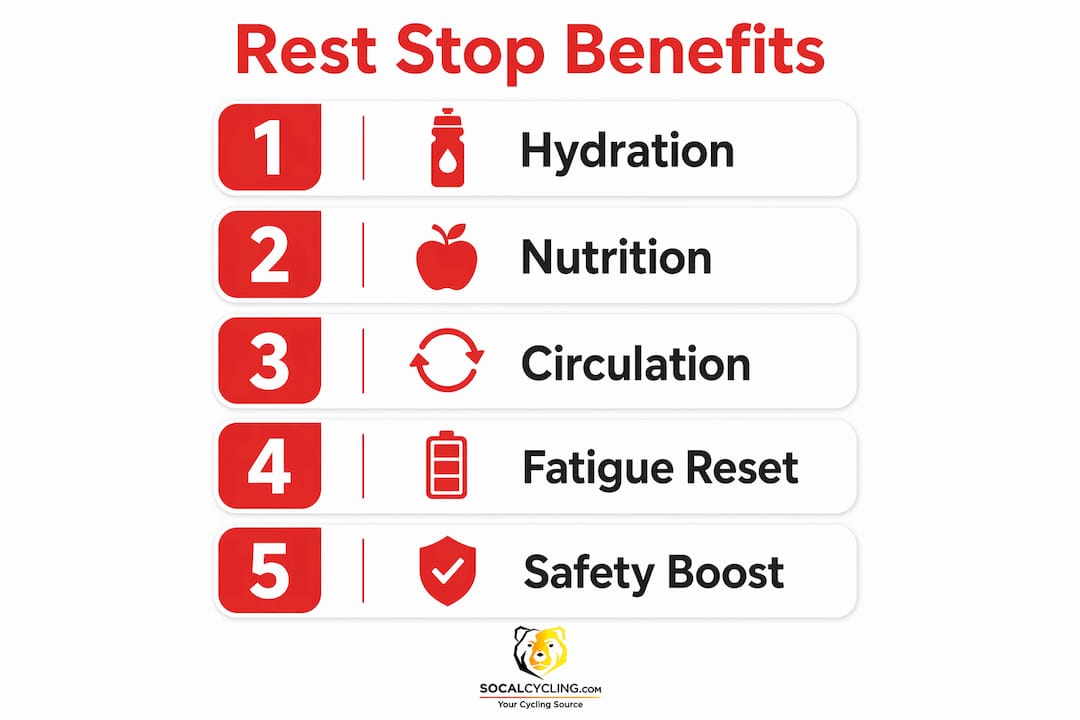
Pro Tip: Eat and drink at every rest stop, even if you feel strong. Hydration and nutrition timing at rest stops are as much about preventing early fatigue as they are about maintaining morale and focus during the event.
Key physiological benefits of rest stops include:
- Fluid replacement before dehydration reduces power output
- Caloric refueling to prevent glycogen depletion and bonking
- Circulation reset through standing and light movement
- Muscle temperature management after descents or cold sections
- Mental recovery through a brief pause in sustained effort
How do rest stops enhance safety and reduce accident risks?
Fatigue is the primary cause of poor decision-making on a bike. Riders who are tired make slower reactions, take wider lines through corners, and misjudge gaps in group riding. Planned breaks significantly reduce fatigue-related accidents, making structured stops a critical safety feature in any organized event.
Rest stops also serve as the anchor point for SAG (Support and Gear) vehicle operations. SAG vehicles provide mechanical, transport, and medical assistance during organized rides, adding a safety net for all rider levels. If you flat out between stops, a SAG vehicle can reach you. If you cramp badly or feel unwell, the nearest rest stop has a volunteer or medic on site.
“The integration of SAG vehicles with rest stops forms a comprehensive safety net, allowing even beginners to complete routes safely by providing mechanical and medical support on demand.”
Here is how rest stops reduce accident risk in sequence:
- Fatigue management. Regular stops prevent the accumulated tiredness that leads to swerving, slow braking, and poor group awareness.
- Regrouping before hazards. Organizers place stops before complex urban sections or technical descents so riders enter those zones fresh and together.
- Medical and mechanical access. Volunteers at rest stops can spot riders showing signs of heat exhaustion or mechanical failure before those issues become emergencies.
- Group synchronization. Stops prevent the dangerous accordion effect where faster riders sprint ahead and slower riders push beyond their limit to keep up.
Experienced riders treat rest stops as proactive tools to reset mental and physical fatigue markers, preventing the irritability and indecision that often precede physical collapse. That mental reset is just as protective as any physical benefit.
What logistical and social functions do rest stops serve?
Rest stops are the operational hubs of any organized cycling event. They are where food, water, electrolyte drinks, and first aid supplies are staged, distributed, and restocked throughout the day. For event organizers, managing these stations requires coordination with local businesses, volunteer teams, and supply chains that run parallel to the route itself.
Rest stops also serve as social connectors within events, giving riders a chance to relax, exchange tips, and mentally reset before continuing. That social function is underrated. A two-minute conversation with another rider at mile 40 can completely shift your mental state for the next segment. Many lasting cycling friendships start at a folding table with bananas and peanut butter.
Stops also manage group dynamics by preventing uneven pacing and mental overload, helping groups ride harmoniously and reducing stop-start fatigue cycles. Without designated stops, riders self-select random pull-off points, which fragments the group and creates confusion for SAG vehicles trying to track rider locations.
| Function | Rider Benefit | Organizer Benefit |
|---|---|---|
| Hydration and food supply | Sustained energy and performance | Controlled resource distribution |
| SAG vehicle coordination | Emergency support access | Real-time rider tracking |
| Group regrouping | Synchronized pacing, reduced accidents | Predictable event flow |
| Social interaction | Mental reset, morale boost | Community building and retention |
| Medical check-in | Early identification of health issues | Liability management and rider safety |
Large events can face rest stop congestion and supply limitations. Proactive riders plan their intake and timing to avoid delays and access resources before peak rush. Arriving at a rest stop five minutes before the main pack gives you faster service and a calmer experience.
How can cyclists maximize the benefits of rest stops?
Getting the most from a rest stop takes a plan. Most riders either rush through without eating enough or linger too long and lose their rhythm. Neither extreme serves your performance.
Pro Tip: Arrive at each rest stop with a specific task: drink a full bottle, eat a banana and a bar, check your tire pressure, and then roll out. Treating each stop as a short checklist keeps you efficient and consistent.
Use these practices at every stop:
- Drink before you eat. Fluids absorb faster on an empty stomach. Start with water or an electrolyte drink, then eat.
- Eat real food when available. Bananas, boiled potatoes, and peanut butter sandwiches provide fast and sustained energy better than gels alone.
- Stand and walk for 60–90 seconds. This resets circulation and reduces saddle pressure before you clip back in.
- Check in with your body honestly. Dizziness, nausea, or unusual fatigue at a rest stop is a signal to flag a volunteer, not push through.
- Time your departure. Leave slightly before the main group to avoid the chaotic mass exit and find your own pace on the next segment.
If you are joining a charity cycling ride for the first time, rest stops are where you learn the rhythm of organized riding. Use them fully. They exist precisely so you can finish the route feeling good, not just surviving it.
Key takeaways
Rest stops are the single most important structural feature in cycling event logistics, combining physiological support, safety management, and group coordination into one planned system.
| Point | Details |
|---|---|
| Strategic spacing matters | Rest stops placed every 12–18 miles prevent dehydration and glycogen depletion before they affect performance. |
| Hydration must be proactive | Thirst signals arrive after performance declines, so drinking at every stop is non-negotiable. |
| Safety is the core function | SAG vehicles and volunteers at rest stops reduce fatigue-related accidents and provide emergency support. |
| Social value is real | Rest stops reset rider morale and synchronize group dynamics, improving the overall event experience. |
| Efficiency wins at stops | Arriving early, eating deliberately, and standing briefly maximizes recovery without losing ride momentum. |
The part most riders get wrong about rest stops
Here at Socalcycling, we have covered hundreds of events across Southern California and beyond, from local charity centuries to competitive gran fondos. The pattern we see most consistently is this: experienced riders use rest stops like pit stops, and newer riders treat them like optional water fountains.
The riders who bonk at mile 70 almost always skipped the mile 35 stop because they felt strong. Feeling strong at 35 miles is exactly when you need to eat and drink. That is the whole point. Rest stops are not for when you are struggling. They are for preventing the struggle.
We have also watched groups fall apart between stops because nobody agreed on a pace. The riders who use rest stops to regroup and communicate always finish together. The ones who blow through stops fragment, and then the SAG vehicle spends the last hour chasing stragglers.
The mental reset function is the most undervalued benefit we see. Two minutes off the bike, a conversation, a banana, and a full bottle changes the psychological texture of the next segment completely. If you are planning your first organized sportive, commit to using every rest stop fully. You will finish stronger and enjoy the ride more.
Explore california cycling events with Socalcycling
Socalcycling covers the full spectrum of California cycling, from road racing and gravel events to gran fondos and charity rides where rest stop strategy makes a real difference in your finish.

Whether you are looking for your next California cycling event or want to find a local group to practice your pacing and rest stop habits with, Socalcycling has the resources you need. Check the cycling group finder to connect with riders in your area. Explore gravel race listings across the United States to find events that match your fitness level and goals. Socalcycling keeps you informed, prepared, and connected to the riding community.
FAQ
Why do cycling events have rest stops every 12–18 miles?
Rest stops spaced every 12–18 miles create manageable segments that prevent dehydration and fatigue from building to dangerous levels. That spacing aligns with the body’s fluid and glycogen depletion rate during moderate to hard effort.
What is a SAG vehicle at a cycling event?
SAG stands for Support and Gear. SAG vehicles travel the route to provide mechanical repairs, medical assistance, and transport for riders who cannot continue. They are typically coordinated from rest stop locations.
How do rest stops prevent bonking during long rides?
Bonking occurs when glycogen stores drop too low to sustain effort. Eating at every rest stop, even before hunger sets in, keeps blood glucose stable and prevents the sudden energy collapse that ends many riders’ days early.
Should you stop at every rest stop during an event?
Yes, especially for rides over 50 miles. Hydration and nutrition timing at rest stops prevent early fatigue and maintain focus, even when you feel strong. Skipping stops because you feel good is the most common mistake in endurance cycling.
How do rest stops help with group riding safety?
Rest stops synchronize group pace and allow riders to regroup before technical or high-traffic sections of a route. This reduces the accordion effect, where speed differences create dangerous gaps and surges within a group.
Recommended
- Cycling Sportive Explained: Your Complete Ride Guide
- What Is a Cycling Omnium Event? Your Race Guide
- Find a Cycling Group Near Me: Your 2026 Guide
- How to Join a Charity Cycling Ride Fundraiser