

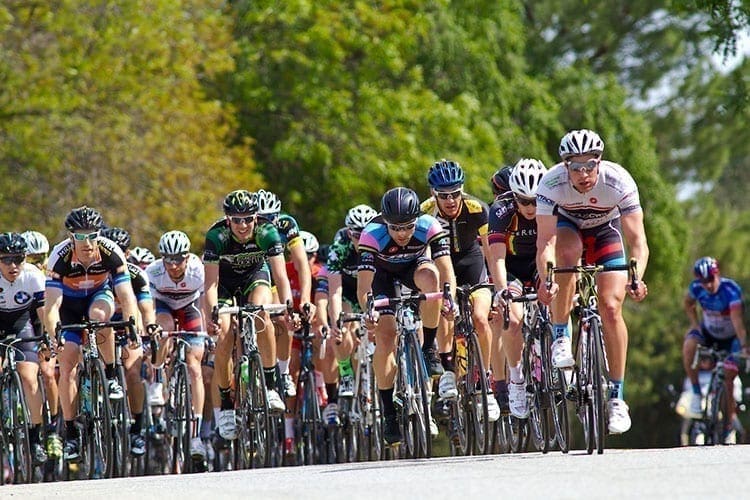
Real examples of cyclists’ weekend group rides across major US cities
Weekend group rides are organized, recurring events with fixed start times, mapped routes, pace categories, and a clear social or training purpose. They are not casual spins with friends. The Chicago Cycling Club, San Francisco Roasters Ride, Specialized Chicago Lincoln Park rides, and BikeLA shop rides are among the most well-known examples of cyclists’ weekend group rides in the US, each with distinct schedules, pace groups, and ride cultures.
Here is a structured look at what these rides actually offer:
Chicago
- Chicago Cycling Club (CCC): Rides depart most Saturday and Sunday mornings from various Chicago neighborhoods. The CCC runs multiple pace groups simultaneously, typically labeled A, B, and C, covering distances from 25 to 60+ miles. Start times cluster around 8:00–9:00 AM depending on season. Routes often head north along the lakefront or west into the suburbs.
- Specialized Chicago Lincoln Park: This shop-based ride launches Saturday mornings from the Lincoln Park store. It draws a mix of fitness and performance riders, with a moderate-to-fast pace and a social atmosphere at the finish.
San Francisco Bay Area
- San Francisco Roasters Ride: A Saturday morning institution departing from the city, typically around 8:00 AM. The ride is named for its coffee stop tradition and covers hilly terrain through Marin County or the Peninsula. Pace is brisk but the group regroups at key points, making it accessible to strong recreational riders.
- Berkeley Bicycle Club: The Berkeley Bicycle Club runs weekend rides throughout the East Bay, ranging from 30-mile social rides to 70-mile training loops. Saturday rides often include a café stop; Sunday rides tend to be longer and faster.
- Alto Velo Racing Club: Based in the South Bay, Alto Velo hosts structured weekend rides with clearly defined A and B groups, targeting riders comfortable at 18–24 mph on rolling terrain.
Los Angeles
- BikeLA Shop Rides: Multiple LA-area shops run Saturday morning no-drop rides, typically departing at 7:30–8:00 AM. These rides cover 20–40 miles at a social pace, welcoming newer riders and those returning after a break.
- Local Club Rides in the San Gabriel Valley and South Bay: Clubs like those affiliated with Socalcycling’s coverage area run weekend rides on routes through Palos Verdes, Malibu, and the Angeles Crest foothills. Competitive A-group rides on these routes regularly hit 22–25 mph on flat sections.
| City | Ride Name | Day | Start Time | Pace / Type |
|---|---|---|---|---|
| Chicago | Chicago Cycling Club | Sat/Sun | 8:00–9:00 AM | A/B/C groups, 25–60+ mi |
| Chicago | Specialized Lincoln Park | Saturday | Morning | Moderate-fast, social |
| San Francisco | Roasters Ride | Saturday | ~8:00 AM | Brisk, coffee stop, hilly |
| East Bay | Berkeley Bicycle Club | Sat/Sun | Morning | Social to training, 30–70 mi |
| South Bay (CA) | Alto Velo Club Ride | Weekend | Morning | A/B groups, 18–24 mph |
| Los Angeles | BikeLA Shop Rides | Saturday | 7:30–8:00 AM | No-drop, 20–40 mi |
Table of Contents
- What types of weekend group rides should you expect?
- How group ride culture differs across major US cycling hubs
- Group riding etiquette and communication that keep everyone safe
- Ride style and pace: what the unwritten rules actually mean
- How to join or sign up for weekend group rides
- Gear and safety considerations you need before joining a group ride
- Standard group ride rules and safety protocols
- How ride difficulty and skill levels vary across weekend rides
- Post-ride activities and the social side of group cycling
- Tips for newcomers joining a group ride for the first time
- Key Takeaways
- Why weekend group rides are worth committing to
What types of weekend group rides should you expect?
Weekend group rides fall into three main categories, and knowing the difference before you show up saves you from a miserable first experience.
Social / No-Drop Rides
These rides operate on a simple promise: no one gets left behind. On climbs, the group waits or soft-pedals at the top. The pace is conversational, and the emphasis is on community. No-drop rides are the recommended entry point for cyclists new to group dynamics, because you can focus on positioning and communication without worrying about getting dropped.
Tempo Rides
Tempo rides maintain a sustained moderate-to-high intensity with less frequent regrouping. The group expects riders to hold the pace, and if you fall off the back, the group may not wait. These rides suit cyclists who have solid base fitness and want structured effort without the full commitment of a race-pace chain gang.
Training / Chain Gang Rides
The most demanding format. Riders rotate through a pace line at high speed, sharing the workload at the front before peeling off and drifting to the back. These rides demand strong bike-handling skills and clear communication.
Pace group categories typically break down as follows:
- C Group (social): 13–16 mph average
- B Group (tempo): 16–19 mph average
- A Group (fast/competitive): 20+ mph average
Pro Tip: If you are unsure which group fits you, start one level below your estimated ability. Riding comfortably at the back of a B group teaches you far more than struggling to survive at the front of an A group.
How group ride culture differs across major US cycling hubs
Cycling culture is genuinely regional, and the vibe of a Saturday morning ride in Chicago feels nothing like one in Los Angeles or the Bay Area.
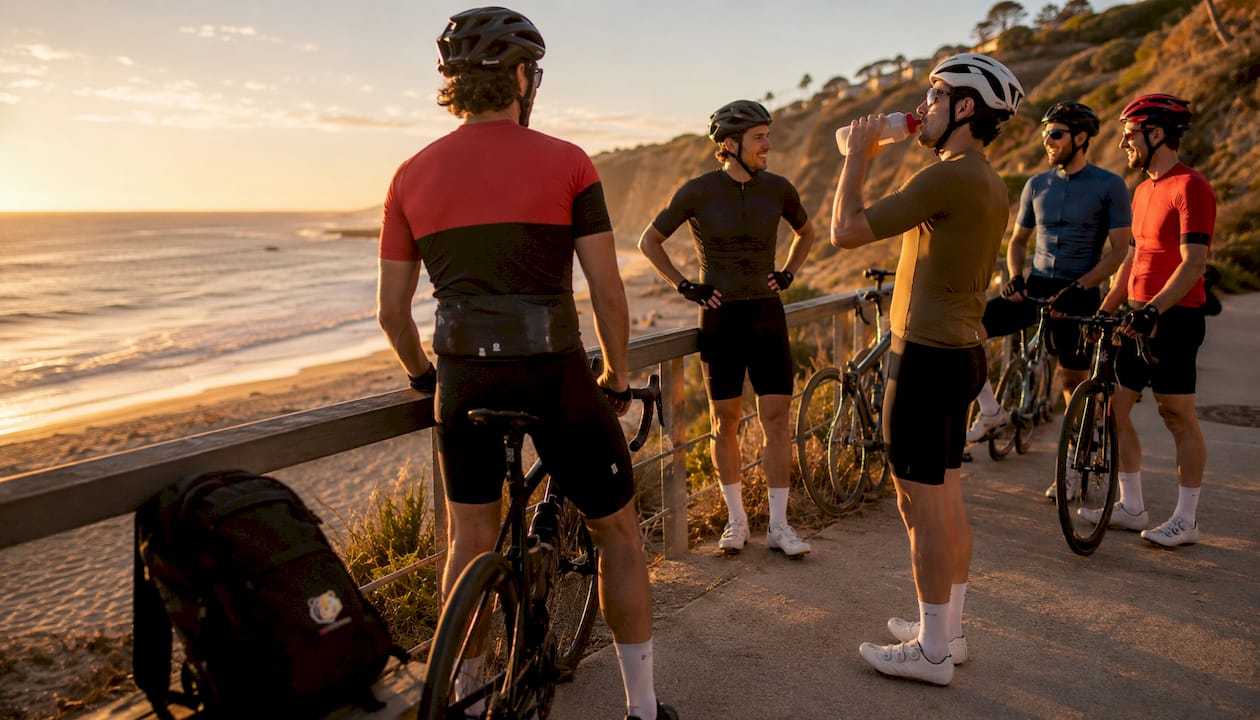
Chicago
Chicago’s cycling community blends competitive ambition with Midwestern friendliness. The Chicago Cycling Club has been running organized rides for decades, and its multi-pace structure means you will find everyone from Cat 4 racers to weekend fitness riders on the same morning. Post-ride coffee at a neighborhood café is standard. Rides are seasonal, with the heaviest activity from April through October given the winters.
San Francisco Bay Area
- The Bay Area’s ride culture is defined by hills, café stops, and a strong club infrastructure.
- The Roasters Ride tradition reflects a broader Bay Area habit of building social rituals into the ride itself, not just after it.
- Clubs like Berkeley Bicycle Club and Alto Velo maintain active online calendars and use Strava to coordinate routes and share segment data.
- Weekend rides here often double as informal route scouting for upcoming gran fondos or charity events.
Los Angeles
LA’s cycling scene is sprawling and diverse. Shop rides from BikeLA and similar outlets serve as community anchors, particularly for newer riders. The competitive subgroups gravitate toward Malibu Canyon, Mulholland Drive, and the Palos Verdes loop. Visibility matters in LA, both for safety on busy roads and for the culture of the sport there. Many riders treat Saturday morning rides as a social event as much as a training session, with post-ride breakfast spots becoming as much a fixture as the route itself.
Across all three regions, Strava clubs and local Facebook groups are the primary tools for finding rides, confirming schedules, and connecting with ride leaders before showing up.
Group riding etiquette and communication that keep everyone safe
Group riding is a shared responsibility. Your movements, your speed choices, and your communication directly affect everyone around you.
Verbal calls and hand signals
Hazard communication runs from the front of the group to the back through a relay of calls and signals. Standard hand signals include:
- Pointing down at the road surface to indicate a pothole, gravel, or debris
- Extending the arm left or right to signal a turn
- Waving the hand behind the back to indicate moving over or changing position
- Verbal calls like “Car back,” “Car up,” “Slowing,” and “Stopping” relay information the hand signals cannot
Every rider in the group is responsible for passing these signals back. If you receive a call or signal and stay silent, the riders behind you are riding blind.
Pacing etiquette
Half-wheeling, where you ride half a wheel ahead of the person next to you and force them to accelerate, is one of the most disruptive habits in group riding. It creates a creeping pace increase that exhausts the whole group. Ride shoulder to shoulder with your partner, and if the pace needs to change, communicate it.
Mechanical issues and regrouping
When you have a flat or mechanical problem, call it out clearly (“Flat!” or “Mechanical!”) and move safely to the side of the road without braking abruptly. The group continues past and regroups at a pre-agreed point ahead. Do not stop in the middle of the pack.
Pro Tip: Look two riders ahead, not just at the wheel directly in front of you. This gives you time to react smoothly and prevents the accordion effect that causes chain-reaction braking crashes in pace lines.
Ride style and pace: what the unwritten rules actually mean
Every group ride has a stated pace and an actual pace, and the gap between them is where new riders get into trouble. A ride advertised as “18 mph average” often means 18 mph on the flat sections, with surges on climbs and through town limits that push the effort significantly higher.
Ride style also varies by the group’s culture. Some rides are genuinely no-drop in spirit and practice. Others are no-drop in name but drop riders regularly on the first climb. Ask the ride leader directly before you commit: “Do you wait at the top of climbs?” is a fair question and any experienced leader will answer it honestly.
Pace groups exist to solve this problem. When a club publishes A, B, and C groups with speed ranges, those ranges are honest guides. Choosing the right group based on your current fitness, not your aspirational fitness, is the single most important decision you make before the ride starts.
How to join or sign up for weekend group rides
Finding and joining a local group ride is straightforward once you know where to look.
Start with local bike shops. Shop rides are the most accessible entry point. Walk in, ask about their weekend rides, and confirm the pace and distance. Most shops welcome first-timers and will pair you with an experienced rider.
Search Strava clubs and Meetup. Strava’s club feature lets you search by location and see upcoming group rides with route previews and pace descriptions. Meetup.com hosts cycling groups in most major US cities, many of which run weekly weekend rides.
Contact local clubs directly. The Chicago Cycling Club, Berkeley Bicycle Club, and similar organizations publish ride schedules on their websites. Email or message the ride coordinator to introduce yourself, confirm the pace group, and ask about any registration requirements. Some rides require pre-registration or a waiver; most do not.
Check Socalcycling’s event coverage. For California riders, Socalcycling maintains event calendars and ride listings across Southern California, covering everything from casual shop rides to competitive club events.
Confirm the meeting point, start time, and any ride host confirmation requirements before you show up. Some clubs ask new riders to contact the ride leader in advance so they can keep an eye on you during the ride.
Gear and safety considerations you need before joining a group ride
Helmets are non-negotiable on every organized group ride in the US. No helmet means no ride, on every reputable club and shop ride without exception.
Beyond the helmet, the gear that matters most for group riding:
- Properly fitted road or gravel bike with reliable brakes and no loose components
- Tire pressure checked the morning of the ride (a flat caused by low pressure is avoidable)
- Two spare tubes, tire levers, and a CO2 inflator or mini pump
- Cycling computer or phone mount for following the route
- Bright rear light, even in daylight, particularly on roads with traffic
- Gloves for grip and protection in a fall
- Nutrition and water for the expected duration, typically one bottle per hour minimum
Clothing matters for safety too. Bright or high-visibility kit helps drivers see you, especially in the early morning when most weekend rides start. Avoid loose clothing that can catch in the drivetrain.
Standard group ride rules and safety protocols
Most organized weekend rides operate under a consistent set of rules that experienced riders follow instinctively.
Ride two abreast where legal, single file where necessary. On open roads with light traffic, riding two abreast is legal in most US states and keeps the group compact. On narrow roads or when traffic builds, the group moves to single file on a call from the ride leader.
Obey traffic laws. Running red lights or stop signs puts the entire group at legal and physical risk. Reputable clubs enforce this strictly, and riders who ignore traffic signals are asked to leave.
No headphones. You need to hear verbal calls from other riders and traffic around you. This is a firm rule on virtually every organized group ride.
Stay predictable. Sudden accelerations, sharp swerves, and unpredictable braking are the primary causes of crashes in group rides. Smooth, gradual inputs keep everyone safe.
Announce your intentions. “Slowing,” “Stopping,” “On your left,” and “Rider up” are not optional courtesies. They are safety calls.
How ride difficulty and skill levels vary across weekend rides
Weekend group rides span a wide spectrum, from flat 15-mile social rides at 13 mph to 80-mile mountain routes with 8,000 feet of climbing at 22 mph average. The key variables are distance, elevation gain, average pace, and regrouping policy.
Most clubs structure their rides across at least two or three difficulty tiers. A beginner-friendly C-group ride on flat terrain is a genuinely different experience from a B-group ride with rolling hills, even if both are labeled “weekend rides.” Elevation gain is often the more honest indicator of difficulty than distance alone. A 40-mile ride with 3,500 feet of climbing will challenge a fit rider far more than a 55-mile flat route.
For newer cyclists, charity rides and sportive-style events offer a structured alternative to club rides, with marked routes, rest stops, and SAG support. These events are excellent for building confidence before committing to a regular club ride.
Post-ride activities and the social side of group cycling
The ride ends at the finish point, but the experience often continues for another hour. Post-ride coffee or breakfast is a fixture of weekend group ride culture across the US, and it is where a lot of the real community building happens.
In Chicago, groups often head to a neighborhood café near the ride’s end point. In the Bay Area, the café stop is sometimes built into the route itself, with the group pausing mid-ride at a known coffee spot. In Los Angeles, post-ride breakfast at a local spot near the trailhead or shop is common, with groups of 10–30 riders taking over a patio.
These post-ride gatherings serve a practical purpose too. Riders exchange route recommendations, discuss upcoming events, and introduce newcomers to the broader club community. If you are new to a group, staying for coffee after the ride is one of the fastest ways to build relationships and get comfortable with the regular riders.
Tips for newcomers joining a group ride for the first time
Showing up to your first group ride prepared makes the difference between a great experience and an overwhelming one.
- Arrive 10–15 minutes early. Introduce yourself to the ride leader and mention it is your first time. Most leaders will pair you with an experienced rider or keep an eye on your positioning.
- Start with a no-drop ride. The no-drop format removes the pressure of being dropped and lets you focus on learning group dynamics.
- Honestly assess your fitness. Choosing a pace group one level below your estimated ability is smart, not timid. You can always move up once you know the group.
- Stay near the back for the first few rides. You can observe how experienced riders communicate, signal, and position without being responsible for the riders behind you.
- Bring everything you need. Do not rely on others for tubes, nutrition, or tools. Self-sufficiency is expected.
- Ask questions before the ride, not during it. Confirm the route, distance, and regrouping policy at the start. Mid-ride is not the time for clarifications.
The learning curve is real but short. Most riders find that after two or three group rides, the communication and positioning feel natural.
Key Takeaways
Weekend group rides in major US cities offer structured, recurring options across all skill levels, from no-drop social rides at 13–16 mph to competitive A-group pace lines at 20+ mph.
| Point | Details |
|---|---|
| Ride types vary significantly | Social, tempo, and training rides each have distinct pace expectations and regrouping policies. |
| Pace groups guide your choice | C group runs at a social pace typically around 13–16 mph, B group maintains a moderate tempo pace at 16–19 mph, and A group rides at a fast or competitive pace above 20 mph — pick honestly based on current fitness. |
| Communication is a safety skill | Hand signals and verbal calls relay hazards through the group; every rider is responsible for passing them back. |
| Major US cities offer accessible options | Chicago, San Francisco, and Los Angeles all have recurring weekend rides through clubs and shops. |
| Newcomers should start no-drop | No-drop rides let first-timers learn group dynamics without the pressure of being left behind. |
Why weekend group rides are worth committing to
The conventional wisdom says group rides are intimidating for new cyclists. We think that framing gets it backwards. The structure of a well-run group ride, the pace categories, the ride leader, the established etiquette, actually makes it easier to learn than riding alone. When you ride solo, no one tells you that you are half-wheeling, braking too late, or drifting wide in corners. In a group, experienced riders will notice and, on a good ride, quietly correct you.
What we find underappreciated about weekend group rides is how quickly they accelerate fitness. The social pressure of holding a wheel, the drafting dynamics, and the varied terrain of a club route push you harder than most solo rides without feeling like structured training. Riders who join a regular Saturday group ride and stick with it for a season consistently come out the other side as more confident, more technically skilled cyclists.
The post-ride coffee matters too, and not just socially. The conversations that happen over espresso after a hard two hours are where you learn which routes are worth riding, which upcoming events are worth entering, and which riders are worth following on a climb. That informal knowledge transfer is something no training app replicates.
Start with a no-drop ride. Show up early, introduce yourself, and stay for coffee. The group ride culture in cities like Chicago, San Francisco, and Los Angeles is genuinely welcoming to riders who come prepared and come with the right attitude.
Recommended
- Bike Shop Community Events: 10 Ideas That Actually Work
- Find a Cycling Group Near Me: Your 2026 Guide
- Cycling Sportive Explained: Your Complete Ride Guide
- Cycling Event Category Guide: What Riders Need to Know