
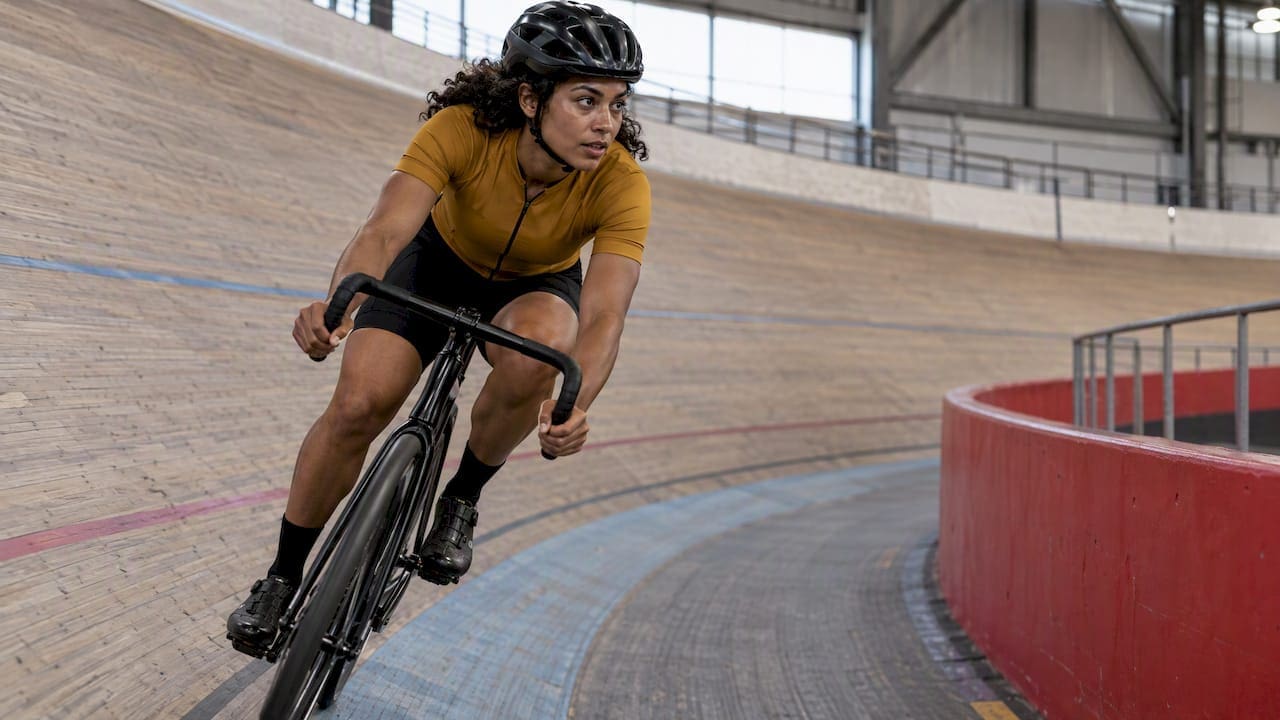
You start track cycling by finding a velodrome near you, signing up for its beginner session or certification class, renting a track bike and riding that first class on the banking. You don’t need to be a fast road rider first. Most US tracks run beginner programs for riders with little or no experience, and they supply the instruction and, usually, the bike.
This guide walks through what happens between “I’d like to try that” and your first open track session. It covers real fees, what to bring, how the first class goes and where to go next. We focus on Southern California, where several tracks sit within a day’s drive, and we point to venues elsewhere in the US.
Key takeaways
- Start with a beginner session, not an open session. Tracks such as Hellyer Velodrome in San Jose and Encino Velodrome in Los Angeles route new riders through structured instruction first.
- Rent before you buy. Track bikes are fixed-gear and have no brakes, and most tracks rent them. Arrive early, because rentals are first come, first served.
- Budget modestly. At Encino, for example, a session costs $10, the one-time beginner certification $40 and a bike rental $5.
- Bring your own pedals and shoes if you can. Swapping clipless pedals onto a rental is the usual upgrade.
- Expect to follow instructions to the letter. Riding in a pack on steep banking only works when everyone does the same thing.
Table of Contents
- What track cycling is, and why riders try it
- Step 1: Find a velodrome and read its beginner page
- Step 2: Take the beginner session
- Step 3: Rent a bike, then decide what to buy
- What to bring on your first day
- Safety: why the rules are stricter than on the road
- Step 4: Progress from beginner to open sessions
- Our perspective: the track is the best skills lab in cycling
- Find your next ride with SoCalCycling.com
- Costs at a glance
- FAQ
- Sources
What track cycling is, and why riders try it
Track cycling is racing on a banked oval, called a velodrome, on bikes with one fixed gear, no freewheel and no brakes. You slow down by resisting the pedals. Events range from sprints that last seconds to endurance races such as the points race, scratch race and Madison, and the top level is showcased at the UCI Track World Championships, held in Santiago, Chile in 2025.
For most newcomers the appeal is practical. A velodrome is traffic-free, the surface is smooth, and everyone rides the same direction. Pace, line and pedaling rhythm get sharper quickly because you can’t coast. Many road racers, criterium specialists and cyclocross riders use the track for exactly that reason. If crits are your goal, our guide to criterium races in Southern California shows where those track-honed skills pay off.
The United States has few tracks. The US Olympic & Paralympic Committee says there are 16 velodromes across the country, including its own training venue in Colorado Springs. That scarcity is why finding yours is the real first step.
Step 1: Find a velodrome and read its beginner page
Every track sets its own entry path, so start with the venue’s website rather than a general forum. In Southern California you have two main options, plus a third in the Bay Area worth knowing about if you travel.
| Venue | Where | Beginner route | Fees listed by the venue |
|---|---|---|---|
| Encino Velodrome | Los Angeles | Beginner certification, required before open sessions | Session $10; certification $40; bike rental $5 |
| Dignity Health Sports Park Velodrome | Carson | Membership or open training | Open training included in membership or $25 |
| Hellyer Velodrome | San Jose | Saturday Beginner Structured Training | See the venue’s page |
The fees come from Encino Velodrome’s membership and rental page and the Dignity Health Sports Park session description. Prices and schedules change, so check the calendar before you drive. Encino notes that exact dates are posted on its calendar, and Dignity Health lists separate weekday and weekend open-training windows.
One more point from Encino’s page: a private track rental is $100 per hour with a two-hour minimum. That’s an option for a club or a group of friends, not for your first day.
Step 2: Take the beginner session
This is where the sport actually begins. Hellyer Velodrome’s Saturday Beginner Structured Training runs almost every Saturday morning at 9:00 a.m., led by experienced supervisors and assistant supervisors. Its FAQ answers the question of how to start racing on the track the same way: attend those Saturday sessions, where you may rent a bike and receive basic track instruction.
A common worry is that you must be an advanced cyclist before visiting a velodrome. The structure works the other way. These sessions are designed for riders with minimal or no experience, as long as they follow the safety instructions and the format the supervisor sets.
What a first class usually covers
The details vary by venue, but a first session typically builds in this order:
- Bike and gear familiarization. How a fixed gear behaves, why you can’t stop pedaling and how to start and stop safely.
- Riding the flat apron. The flat strip inside the track lets you get used to the drivetrain before you touch the banking.
- Moving up the banking. Supervisors have you go up the track at a controlled pace so you feel the angle without surprises.
- Riding behind another rider. The beginner guides ranking on Google suggest starting at an easy pace behind a rider and leaving at least a bike length between you. That’s the foundation of group riding on the track.
- Basic rules. Which lane is for what, how to pass, what to do if you need to leave the track.
At Encino, completing certification is a one-time requirement before you can join open sessions, and it carries the $40 fee mentioned above. Think of it as the price of a pair of tires for a lifetime of access, rather than something to skip.
Step 3: Rent a bike, then decide what to buy
Renting is the smart default. Hellyer lets beginners rent, and Encino lists track bikes at $5 for the session. You get to learn what you like before putting money into a frame.
Two practical points from insiders and venue guidance:
- Arrive early. Rental bikes are limited and handed out first come, first served. An hour before the session start gives you the best chance at one that fits.
- Don’t expect adjustments. Gear changes and wheel adjustments are generally off limits on rentals, so check the fit and tell staff about problems before you roll out.
Many riders bring their own clipless pedals and shoes and have them swapped onto the rental. Some rentals have flat pedals with cages, which work for a first class but feel less secure once you’re pushing harder. Ask the venue about pedal swaps in advance, because policies differ.
When you’re ready to buy, expect to look at used track frames first. Local swap meets are the classic place. We’ve covered how this works in a day at the San Diego Velodrome Velo$wap, and the fall edition announcement shows how the event has long served local track riders. Those posts are archives, so confirm current dates with the organizers.

What to bring on your first day
You probably own most of it already:
- A properly fitting helmet
- A snug, non-flapping kit with a quality chamois for a long morning in the saddle
- Cycling shoes and, if you have them, your own clipless pedals and the tool to fit them
- Two bottles of water or a drink mix, plus a snack
- Gloves and glasses, since you’ll be close to other riders
- Cash or a card for the session fee, certification and rental
If you like a written list to tick through, a general cycling trip checklist is a handy template for building your own bag the night before. Add the track-specific items above and you’re set.
For fueling, keep it simple. A session is short and intense, so eat a normal breakfast two to three hours before and bring something light for afterward.
Safety: why the rules are stricter than on the road
A velodrome packs riders onto a steep, narrow oval at speed, on bikes that can’t brake or coast. The rules aren’t bureaucracy. They are what lets 20 people ride together without contact.
Three habits matter most in your first weeks:
- Hold your line and your pace. Sudden changes of speed or direction are the biggest hazard in a pack.
- Look ahead, not at your front wheel. Track riders learn to read the whole group.
- Listen to the supervisor, every time. Hellyer’s sessions are built around instructors directing the group, and the format only works if riders follow the instruction exactly. If you’re told to ride at the apron, ride at the apron.
If you have a medical condition, a past injury or any question about whether intense efforts are safe for you, talk with your physician before you sign up. Crashes on a velodrome can cause road-rash and fractures, which is one reason venues require certification and a helmet.
Step 4: Progress from beginner to open sessions
Once you’re certified, the path gets less formal. You’ll typically ride open training at the venue, which at Dignity Health Sports Park means open training included with membership or $25 per session, with separate weekday and weekend windows. At Encino, open sessions come after your beginner certification.
A sensible progression looks like this:
- Weeks 1 to 4: Attend the beginner class again or the earliest open sessions. Focus on smooth pedaling and riding close behind others.
- Weeks 4 to 8: Practice standing starts, rolling accelerations and riding in a paceline.
- After that: Try a local club night or a low-key race, and learn the common formats, from the scratch race to the points race.
To race officially, you’ll want to understand how event categories work. Our cycling event category guide explains what riders need to know before they enter, and our explainer on passport events covers a format that’s common for newer racers.
Our perspective: the track is the best skills lab in cycling
We’ve covered Southern California racing for years, from road races and stage races to cyclocross and the velodrome. Across that coverage one pattern repeats: the riders who handle a crowded corner in a criterium or hold a wheel in a fast group tend to be the riders who’ve spent time on the track.
Our advice is to treat your first month as a skills course rather than a race program. Pay the certification fee, rent the bike, ask the supervisor questions and ride the easy laps properly. You’ll feel the difference on your road bike within weeks, because a fixed gear teaches an even cadence in a way no computer screen can.
We also encourage riders to think of the velodrome as a community. Tracks are small, volunteers run much of the show, and the riders you meet in your first class are often the people who lend you pedals, tell you which swap meet to attend or text you about the next race night.
If you want structured guidance, a coach familiar with track work can shorten the learning curve. Our page on finding a cycling coach is a good place to start, and our post on why the off-season is where successful cyclists are made explains why winter is an ideal time to add track sessions.
— SoCalCycling.com
Find your next ride with SoCalCycling.com
Once you’re comfortable on the track, you’ll want somewhere to race and people to ride with. SoCalCycling.com brings together California cycling events, news and racing coverage, from road and criterium races to cyclocross, with reports from riders who were there. Browse the calendar and race reports to find your first event.
Costs at a glance
A first month at a Southern California track can be modest. Using Encino’s published fees as an example, one beginner certification ($40), one session ($10) and one bike rental ($5) come to $55 before any extras. After certification, each additional session at that venue is $10 plus $5 if you still rent. Dignity Health’s $25 open-training price or its membership are alternatives for riders who plan to come often.

Your own costs rise only if you buy gear. A used track bike, clipless pedals and shoes are the usual purchases, and none is necessary on day one. Wait until you’ve done at least a few sessions so you know which discipline you like, whether it’s sprinting, endurance or team events.
FAQ
Do I need a track bike to start?
No. Hellyer lets beginners rent a bike for the Saturday structured training, and Encino lists track bike rentals at $5. Rentals are first come, first served, so arrive early. Buy only after you’ve tried a few sessions.
Do I need to be a strong cyclist first?
No. Beginner sessions are built for riders with minimal or no experience. What matters is that you can follow the supervisor’s instructions and the session format. Basic comfort on a bike and the willingness to learn are enough.
How much does it cost to try track cycling?
It depends on the venue. At Encino, a session is $10, the one-time beginner certification $40 and a rental $5. Dignity Health Sports Park lists open training as included in membership or $25. Always confirm current prices on the venue’s own site.
Can I use my road pedals and shoes?
Often yes, if the pedals are swappable. Rentals may have flat pedals with cages, but many experienced riders bring their own clipless pedals and shoes and have them fitted. Ask the venue before your session so you bring the right tools.
Where can I try track cycling in California?
In Southern California, look at Encino Velodrome in Los Angeles and Dignity Health Sports Park in Carson. In the Bay Area, Hellyer Velodrome in San Jose offers Saturday beginner sessions. Check each venue’s calendar for dates.
Sources
- Saturday Beginner Structured Training Sessions, Hellyer Velodrome
- FAQs, Hellyer Velodrome
- Membership and rental, Encino Velodrome
- Membership/Session Description, Dignity Health Sports Park
- Velodrome, US Olympic & Paralympic Training Center
Recommended
- Road Race Categories for Beginners: A Clear Comparison
- Cyclocross Skills and Drills to Practice Before Race Season
- What Is a Cat 5 Cycling Race? Beginner’s Guide
- Find a Cycling Group Near Me: Your 2026 Guide