
As a ride gets longer, discomfort can gradually set in. Numb hands, tight shoulders and neck muscles, saddle soreness, and knee pain are all common complaints. These symptoms do not necessarily mean a rider lacks fitness. In some cases, bike setup and riding habits place unnecessary stress on specific parts of the body, with the effects becoming more noticeable over time.
Why Do Long Bike Rides Cause More Discomfort Than Short Rides?
Discomfort during long rides is largely associated with repetitive movement, sustained weight-bearing, and road vibrations.
When cycling, the body connects with the bike at three contact points: the saddle, handlebars, and pedals. The legs repeat the same pedaling motion, the pelvis remains under pressure from the saddle, and the hands help support the upper body while controlling the bike.
Fit problems that go unnoticed on a short ride can become difficult to ignore after several hours. Handlebars positioned too far forward may force the rider to straighten their elbows. An improperly positioned saddle can increase pressure around the pelvis, while repeated exposure to rough surfaces can add to arm and shoulder fatigue.
The first step toward greater comfort, therefore, is not necessarily buying new equipment. It is identifying where discomfort develops, when it begins, and the conditions that seem to trigger it.
How Can a Proper Bike Fit Reduce Stress on Your Knees, Back, and Wrists?
The purpose of a proper bike fit is to position the saddle, handlebars, and pedals in a way that accommodates the rider’s body proportions and range of motion.
Saddle height is a good place to start. With the pedal at the bottom of its stroke, the knee should retain a slight bend. A saddle that is too low may keep the knee excessively bent throughout the pedal stroke. One that is too high can cause the hips to rock from side to side, potentially contributing to discomfort behind the knee or in the lower back.
Handlebar position also influences how body weight is distributed. Bars that are too low or too far forward may force the rider into an excessively stretched position, transferring more pressure to the palms, wrists, shoulders, and neck.
A more balanced riding position allows the shoulders to relax, the elbows to remain slightly bent, and the wrists to stay relatively neutral. The core muscles also help stabilize the upper body.
There is no universal set of bike-fit measurements. Riding style, joint mobility, and individual body proportions all influence the appropriate setup. When pain repeatedly occurs, a professional bike fitting is generally more reliable than making several major adjustments on your own.
Why Isn’t a Softer Saddle Always More Comfortable?
Long-distance saddle comfort depends primarily on proper support, pressure distribution, and friction management—not simply the thickness of the padding.
Ideally, a saddle should provide adequate support for the sit bones while limiting excessive pressure on sensitive soft tissues.
A saddle that is too narrow may not adequately support the sit bones, while one that is too wide can cause inner-thigh chafing during repeated pedaling. Saddle shape should also complement riding posture, as an upright position and a more aggressive forward lean place different demands on the support area.
Saddle angle is another frequently overlooked factor. A noticeably downward-tilted saddle can cause the rider to slide forward, indirectly increasing the weight carried by the hands.
Beyond the saddle itself, properly fitted cycling shorts, suitable clothing materials, and periodically relieving pressure on the saddle can help reduce friction and localized discomfort.
Persistent numbness or significant pain should not simply be dismissed as part of getting used to longer rides.
How Can You Relieve Numb Hands and Neck or Shoulder Pain?
When hand numbness develops during long rides, start by examining upper-body weight distribution, wrist position, and the relationship between the handlebars and saddle.
Resting too much body weight on the palms for extended periods can increase pressure on the nerves and soft tissues of the hands. Excessive wrist bending, gripping the handlebars too tightly, or maintaining the same position for too long may make the problem worse.
First, notice whether you tend to shrug your shoulders, lock your elbows, or gradually slide forward while riding.
Keeping your shoulders relaxed, maintaining a slight bend in your elbows, and changing hand positions when it is safe to do so can help reduce sustained pressure on a single area.
Padded grips or cycling gloves may improve contact comfort, but they cannot compensate for an improper bike fit. If hand numbness keeps returning, it is also worth checking saddle fore-aft position and handlebar reach.
Numbness, tingling, or weakness that persists should be evaluated by a healthcare professional.
How Do Tire Width and Pressure Affect Riding Fatigue?
Tires influence how road vibrations travel through the bike to the rider, while tire pressure directly affects cushioning, traction, and handling.
On rough pavement, excessively high tire pressure can transmit more small bumps to the arms and hips. Reducing pressure appropriately allows the tires to conform more closely to surface irregularities.
However, lower pressure is not always better. Underinflated tires may deform excessively, compromise steering stability, and increase the risk of rim impacts or tire damage.
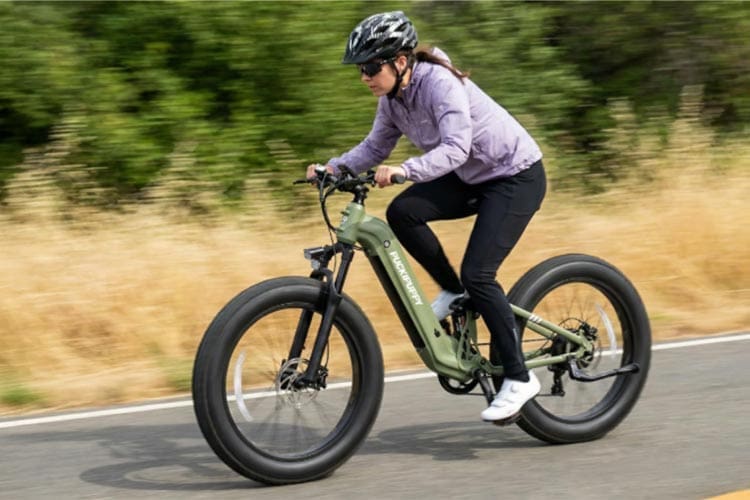
Wider tires generally have greater air volume, which can provide additional cushioning under suitable conditions. For example, fat tire electric bikes offer another configuration for riders who frequently travel on rough pavement and well-maintained gravel roads.
That said, fat tires can also increase overall bike weight and affect rolling resistance and handling. Riders who spend most of their time on smooth roads may find that appropriately sized conventional tires provide plenty of comfort.
When selecting tire pressure, consider tire dimensions, combined rider and gear weight, riding surfaces, and the safe operating limits specified by the tire and rim manufacturers.
How Can Pacing and Nutrition Help Delay Fatigue?
For long rides, maintaining a sustainable effort is more important than chasing speed during the first half of the journey.
Riding continuously in a gear that is too high requires greater force with each pedal stroke, potentially increasing muscular fatigue in the legs. Shifting into an easier gear and maintaining a smooth pedaling rhythm is generally more sustainable than grinding up hills at a very low cadence.
For recreational and endurance riding, an intensity that still allows normal conversation can serve as a useful starting point. Effort can then be adjusted according to terrain and individual fitness.
Fueling matters just as much. Once a ride extends beyond roughly an hour, carbohydrate intake becomes worth considering based on exercise intensity. For endurance activities lasting approximately one to two hours or longer, consuming around 30–60 grams of carbohydrates per hour is a commonly used guideline, although individual tolerance and energy needs vary.
Hydration should also reflect temperature, sweat rate, ride duration, and exercise intensity rather than following a rigid drinking schedule.
Can Electric Assistance Make Long Rides More Comfortable?
Electric assistance can reduce the pedaling effort required on certain sections of a ride, giving cyclists greater flexibility in managing exercise intensity. However, it cannot replace proper posture or bike setup.
For example, increasing the assistance level on sustained climbs, into headwinds, or when fatigue begins to build can reduce the amount of force the legs must continually produce. Lowering assistance again on flatter roads can help manage battery consumption.
For riders looking to extend their recreational cycling distances, PUCKIPUPPY electric bikes offer a range of frame and tire configurations. When choosing a model, riding position, overall bike weight, assistance system, and typical terrain should all be considered—not just motor power.
Electric bikes still require properly adjusted saddles, handlebars, and tire pressure. Even when the physical demands on the legs are reduced, spending hours in an unsuitable riding position can still lead to discomfort in the hands, shoulders, neck, or hips.
How Should You Recover After a Long Ride, and Which Symptoms Should You Never Ignore?
After a long ride, a few minutes of low-intensity activity can help the body gradually transition from exercise to rest. Follow this with fluids appropriate to how much you have sweated, along with regular meals that replenish energy and provide protein.
If the discomfort is limited to ordinary muscular fatigue, adequate rest and quality sleep will generally support recovery.
However, significant joint pain, persistent numbness, limb weakness, or worsening discomfort should not be treated as normal exercise fatigue. If symptoms persist, stop riding and consult a healthcare professional.
Comfort on long bike rides does not depend on any single expensive piece of equipment. It comes from getting the relationship between your body, your bike, and your riding habits right.
Before your next ride, check your bike fit and tire pressure, plan your fueling strategy, and settle into a sustainable pace. Small adjustments can make every mile more comfortable.