
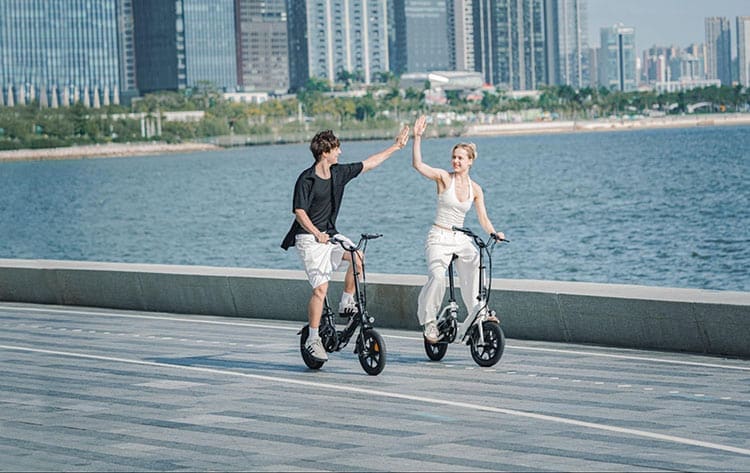
Southern California is one of the best places in the country to ride an electric bike.
From coastal bike paths and beach towns to college campuses, dense neighborhoods, RV trips, weekend markets and short urban errands, there are countless situations where two wheels are easier than a car. But not every rider needs a full-size e-bike, cargo bike or long-range commuter. Sometimes the most practical choice is the smallest one.
That is where mini e-bikes come in.
A mini e-bike is not designed to replace a road bike, mountain bike or long-distance touring e-bike. It is not built for high-speed group rides or serious training miles. Its value is different: compact size, easier storage, lighter everyday handling and simple short-distance mobility.
For riders in places like San Diego, Orange County, Los Angeles, Santa Monica, Long Beach or coastal communities where parking is limited and short trips happen all day, a smaller electric bike can make a lot of sense.
Why Smaller E-Bikes Fit SoCal Riding Life
Southern California riding is not just one thing.
Some cyclists train on road bikes in the canyons. Some ride mountain bikes on trails. Some commute by bike. Some use e-bikes for beach errands, campus transportation, RV trips, coffee runs, local shopping or getting from parking to the boardwalk.
A mini e-bike fits especially well into that last category.
For riders who want a compact option for beach-town errands, apartment storage, campus mobility or short neighborhood rides, a mini e bike can make more sense than a full-size electric bike.
The reason is not that smaller is always better. It is that smaller is sometimes easier to live with.
In Southern California, many riders live in apartments, condos, shared housing or places without a large garage. A full-size e-bike can be difficult to store indoors, carry up stairs or fit into a crowded bike room. A compact e-bike is easier to manage in these spaces.
It also helps with short trips. Riding to the beach, a café, a campus building, a grocery store or a local park does not always require a large frame, huge battery or heavy-duty setup. A smaller e-bike can cover these everyday rides with less hassle.
Mini E-Bikes Are About Practical Miles
A lot of cycling content focuses on performance: speed, distance, watts, climbing, aerodynamics and endurance. That matters for many riders, but not every ride is a workout.
Some rides are practical.
They are the two-mile trip to pick up lunch. The ride from a parking spot to a beach entrance. The short route across campus. The errand to the market. The quick trip from an RV site to a coastal town. The neighborhood ride when taking the car would be overkill.
These are exactly the kinds of rides where a mini e-bike can be useful.
Electric assist makes the trip easier, especially with wind, small hills, heat or a backpack. The compact size makes the bike easier to store and handle. The lower barrier to use makes it more likely that the rider actually chooses the bike instead of driving.
That last point matters.
A bike only helps if it gets used. If a full-size e-bike is too heavy, too large or too inconvenient to store, it may stay inside. A smaller e-bike that is easy to roll out for short rides can become part of the daily routine.
Where Mini E-Bikes Work Best
Mini e-bikes are strongest in short-distance, low-friction riding scenarios.
They work well in beach towns where parking is difficult and distances are short. They make sense for apartment dwellers who do not have much storage space. They are useful for students moving between housing, campus and nearby shops. They can be practical for RV travelers who want a compact vehicle after setting up at a campsite.
They also fit the “last-mile” problem. A rider may park outside a crowded area, then use a compact e-bike to finish the trip. This can be useful near beaches, event areas, downtown districts or neighborhoods where driving the final mile is more frustrating than helpful.
Mini e-bikes are also approachable. For people who feel intimidated by large e-bikes, a smaller frame can feel more manageable. Riders who are not trying to go far or fast may prefer something simple, compact and easy to control.
That does not mean mini e-bikes are perfect for every ride. They are not the best choice for long-distance commuting, heavy cargo, high-speed road riding or rough off-road routes. They are best when the ride is short, local and practical.
Mini E-Bike vs Full-Size E-Bike
A full-size e-bike has clear advantages.
It usually offers more comfort on longer rides, larger wheels, more stability at speed, better range options and greater versatility. For daily commuting over longer distances, a full-size city or commuter e-bike may be the better choice. For fitness rides, touring or mixed terrain, larger e-bikes usually make more sense.
A mini e-bike trades some of that for convenience.
It is easier to store, easier to maneuver and often more practical in tight spaces. It may be less comfortable over long distances, but that may not matter if the rider mostly covers short trips.
The best way to think about it is simple: a full-size e-bike is a primary ride for longer daily use, while a mini e-bike is a compact utility tool for short, frequent trips.
For many Southern California riders, both categories can make sense. A cyclist may train on a road bike, commute on a full-size e-bike and still use a mini e-bike for neighborhood errands or RV travel. The right bike depends on the ride.
Mini E-Bike vs Folding E-Bike
Mini e-bikes and folding e-bikes often overlap, but they are not exactly the same.
A mini e-bike is defined mainly by compact size. A folding e-bike is defined by a frame that folds for storage or transport. Some bikes are both mini and folding, while others are compact but not fully foldable.
For riders with very limited storage, folding can be valuable. It may help the bike fit in a trunk, RV compartment, small apartment or office. For riders who only need a smaller footprint but do not plan to fold the bike often, a compact non-folding model may still work.
The key question is not whether folding sounds useful. The real question is whether the rider will actually use the folding feature.
If the bike will be stored in a small space, loaded into a car or taken on trips, folding matters. If it will stay in a garage or bike room, compact size alone may be enough.
Safety Still Comes First
Because mini e-bikes are small and approachable, some riders may treat them casually. That is a mistake.
An e-bike is still a vehicle. It needs safe handling, good braking habits, visibility and attention to local rules. Southern California bike paths, beach routes and neighborhood streets can be crowded with pedestrians, runners, scooters, dogs, kids, cyclists and cars.
Speed control is especially important. A mini e-bike may feel easy to ride, but crowded bike paths are not the place to ride aggressively. Riders should slow down around pedestrians, signal when passing and avoid weaving through traffic.
Braking matters too. Smaller wheels can feel different from larger wheels, especially on uneven pavement, sand near beach paths, wet surfaces or rough road edges. Riders should practice braking before riding in crowded areas.
Visibility should not be overlooked. Lights, reflectors and bright clothing help, especially during early morning, evening and coastal fog conditions. A helmet is also a smart choice for everyday riding, even on short trips.
Battery care matters as well. Heat can affect batteries, and Southern California riders should avoid leaving an e-bike baking in direct sun for long periods when possible. Keeping tires properly inflated also improves ride quality, range and safety.
Choosing an E-Bike Based on the Ride
Choosing an ebike should always start with the ride you actually plan to do, not just the biggest battery, motor or frame size.
If the main ride is a 15-mile commute, a full-size commuter e-bike may be the better choice. If the ride includes kids or cargo, a cargo e-bike makes more sense. If the goal is beach-town errands, campus mobility or compact storage, a mini e-bike may be the most practical option.
Riders should think about storage first. Where will the bike live? Will it fit inside? Does it need to go up stairs? Will it be loaded into a car or RV?
Then think about distance. How far are the typical rides? A bike used for two- to five-mile trips does not need the same setup as one used for long commuting.
Comfort also matters. A mini e-bike should still fit the rider well enough to feel safe and controlled. Handlebar height, saddle position, braking feel and overall stability should all be considered.
Finally, riders should think about maintenance. Smaller bikes still need tire checks, brake adjustment, chain care and battery management. A compact bike is only convenient if it stays reliable.
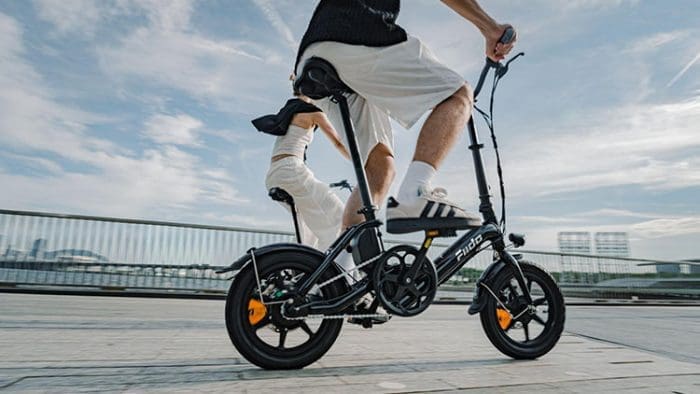
Fiido D3 Pro, D11 and Fiido X as Compact E-Bike Examples
Fiido D3 Pro is an example of a simple compact e-bike concept. It fits the idea of short local rides, easy handling and practical daily use. For riders who want something small for neighborhood trips, errands or quick mobility, this type of mini e-bike shows why compact design can be useful.
Fiido D11 takes the compact idea in a more urban direction. It can appeal to riders who want a small e-bike that still feels more like a daily mobility tool. For apartment storage, short commuting and city riding, this kind of design can be a good fit.
Fiido X represents a more premium folding urban concept. It is aimed at riders who care about compact storage, clean design and a more refined riding experience. For someone who wants a small e-bike but does not want it to feel basic, this type of model shows how the category has evolved.
These examples highlight an important point: mini and compact e-bikes are not all the same. Some are simple and affordable. Some are more commuter-focused. Others are more design-driven. The right choice depends on the rider’s space, distance and daily routine.
When a Mini E-Bike Is Not the Right Choice
A mini e-bike is not ideal for every cyclist.
Riders who want long-distance comfort, higher speed stability or serious fitness riding may prefer a full-size bike. Anyone carrying heavy cargo, children or large gear should look at cargo or utility e-bikes. Riders who plan to ride rough trails should choose a bike built for that terrain.
Mini e-bikes can also feel different because of smaller wheels and compact geometry. Some riders love that quick, easy handling. Others may prefer the smoother feel of larger wheels.
The best approach is to match the bike to the ride.
A mini e-bike is best when the goal is short-distance convenience, not maximum performance.
Conclusion: Small Bikes Can Solve Real Riding Problems
A mini e-bike is not a replacement for every bike.
It is not a training bike, cargo bike, touring bike or mountain bike. But for many Southern California riders, it can solve a very real problem: how to make short, local trips easier without using a car.
Beach-town errands, apartment storage, campus riding, RV travel, parking-to-destination trips and quick neighborhood rides all fit the compact e-bike use case. The bike is small, but the practical value can be big.
The future of e-bikes will not be one-size-fits-all. Some riders need long-range commuters. Some need cargo bikes. Some need trail-ready machines. Others simply need a compact electric bike that makes daily movement easier.
For those riders, a mini e-bike may be exactly the right size.