
Southern California is a great place to ride an e-bike, but not every rider needs the biggest battery, the heaviest frame or the most powerful setup.
Some riders want a bike for coastal errands. Some need something easy to store in an apartment. Some want a practical ride for campus, work, beach paths or short neighborhood trips. Others are returning to cycling after years away and want an electric bike that feels manageable, not intimidating.
In all of those cases, weight matters.
A lightweight e-bike is not just about a number on a spec sheet. It is about how easy the bike is to live with before, during and after the ride. The electric motor helps once the bike is moving, but it does not help when you are lifting it onto a car rack, carrying it up stairs, rolling it into an elevator, moving it through a narrow hallway or storing it in a crowded garage.
For many riders, that is where the real difference begins.
Why Weight Matters More Than Many Riders Expect
When people shop for an electric bike, they often start with motor power, battery size and range.
Those things are important. A good e-bike needs enough assistance for the rider’s terrain and enough battery for the ride. But in everyday use, the weight of the bike can be just as important.
A heavy e-bike may feel fine once the motor is helping, but daily riding involves more than pedaling. Riders have to move the bike in and out of storage, lock it up, lift it over curbs, load it into a vehicle or walk it through crowded areas. If the bike feels difficult to manage, it may not get used as often.
For riders who need to carry a bike upstairs, store it in an apartment, load it onto a car rack or handle it confidently on short daily rides, a lightweight ebike can be more practical than a heavier long-range model.
That is especially true in Southern California, where riders often mix different types of mobility. A ride may start in an apartment building, continue on a bike path, include a stop at a beach café and end with the bike being carried into a condo or loaded onto a car. In that kind of routine, lighter weight is not just a comfort feature. It is what makes the bike easier to use regularly.
Lightweight Does Not Always Mean Minimal
A common mistake is assuming that a lightweight e-bike must be weak, uncomfortable or too limited for real use.
That is not always true.
A well-designed lightweight e-bike should still have reliable brakes, stable handling, enough battery for the intended ride and a frame that fits the rider. The goal is not to remove every useful feature. The goal is to reduce unnecessary weight while keeping the bike practical.
The balance matters.
A bike that is extremely light but uncomfortable may not be useful. A bike with a tiny battery may be easy to lift but stressful to ride if the range is too limited. A bike that looks sleek but lacks practical components may be less helpful for daily use than a slightly heavier model with better comfort and control.
This is why riders should not shop only for the lightest ebike on the market. The lightest option on paper is not always the best choice for real riding.
The better question is: what is the lightest bike that still fits the way you actually ride?
SoCal Riding Scenarios Where Lightweight E-Bikes Make Sense
Southern California riding is diverse.
There are beach paths, city streets, college campuses, suburban neighborhoods, bike-friendly downtown areas, hilly residential zones and weekend routes that combine driving and cycling. A lightweight e-bike can fit many of these situations.
For apartment and condo residents, storage is a major factor. A lighter bike is easier to bring indoors, move through elevators and keep secure. This can reduce the risk of theft and make daily use more convenient.
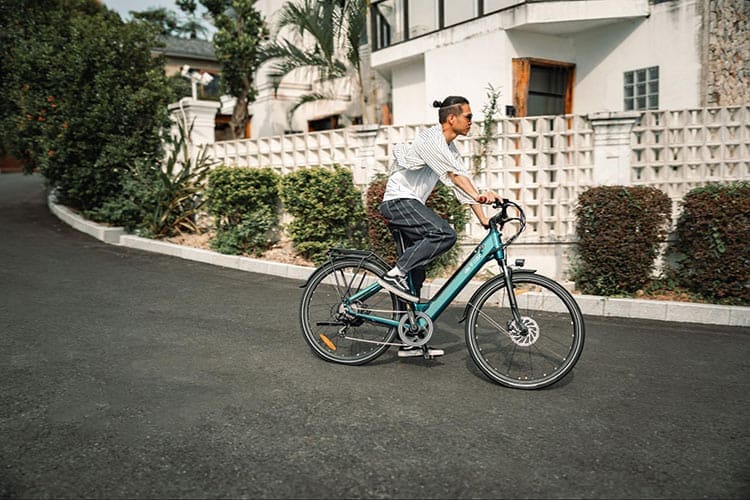
For beach-town riders, a lighter e-bike can be a practical way to handle errands without driving. Riding to the boardwalk, a café, a grocery store, a gym or a friend’s place does not always require a large, heavy commuter bike.
For students, a lightweight e-bike can make campus mobility easier. Large campuses and nearby neighborhoods often create short but repeated trips. A lighter model can be easier to park, maneuver and manage between classes or work.
For weekend riders, weight matters when loading the bike into a car, van or RV. A lighter e-bike can make it easier to bring cycling into a beach trip, camping weekend or short getaway.
In these situations, lighter weight helps reduce friction. The bike becomes easier to choose.
Lightweight E-Bikes for Women, Smaller Riders and Everyday Control
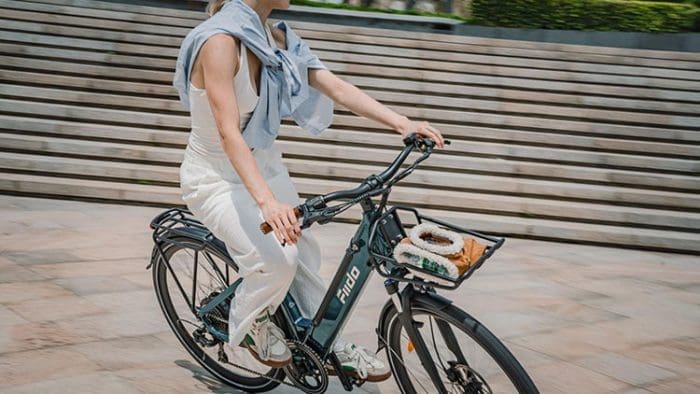
Searches for lightweight ebikes for women often come from a practical concern: control.
The issue is not that women need a completely separate type of e-bike. Many riders, regardless of gender, want a bike that is easier to lift, easier to balance, easier to stop and easier to store. But women riders, smaller riders and riders who are less comfortable handling heavy bikes may be especially sensitive to weight.
A lighter e-bike can feel less intimidating. It can be easier to push, easier to turn at low speed and easier to manage when parking. This matters in real environments: narrow bike racks, crowded paths, apartment hallways, garage corners and stop-and-go traffic.
Fit still matters. A lightweight bike that does not fit the rider will not feel safe or comfortable. Saddle height, handlebar position, frame geometry and braking feel should all be considered.
The best lightweight e-bike for a smaller rider is not simply the lowest-weight model. It is the bike that feels controlled, balanced and confidence-building.
Lightweight E-Bikes for Seniors and Returning Riders
Many riders look for lightweight e bikes for seniors because they want electric support without the bulk of a heavy machine.
That makes sense, but it should be framed carefully. Senior riders are not all the same. Some are highly experienced cyclists. Others are returning to cycling after years away. Some want easy neighborhood rides, while others want longer recreational routes.
For many returning riders, confidence matters more than top speed. A lighter e-bike can make mounting, dismounting, pushing, parking and turning feel more manageable. It can also reduce the stress of handling the bike when the motor is not assisting.
Braking and stability are especially important. A lightweight bike should still stop predictably and feel steady on common surfaces. Comfort also matters, particularly for riders who want a more relaxed position or plan to ride frequently at moderate speeds.
Electric assistance can help riders keep cycling longer, but the bike must feel approachable. Weight is one part of that.
The Lightest E-Bike for Adults Is Not Always the Best Adult E-Bike
Another common search is lightest e bike for adults.
It is understandable. Adult riders want a bike that is not too heavy to manage, especially if they live in an apartment, commute to work or need to load the bike into a vehicle.
But adults should not choose by weight alone.
A very light e-bike may use a smaller battery, narrower tires, fewer accessories or a more minimal frame. That may be perfect for some riders, but limiting for others. A commuter may need lights, fenders and a practical riding position. A coastal rider may want stable tires and good braking. A weekend rider may need more range.
The right adult e-bike should match the rider’s body, route and daily routine. If the bike is light but uncomfortable, it will not be used. If it is light but lacks range, it may create anxiety. If it is light but feels unstable, it will not inspire confidence.
The best lightweight adult e-bike is the one that balances weight with safety, comfort, range and real-world usability.
What Riders Trade Off When Choosing Lightweight
A lighter e-bike often involves trade-offs.
Battery size is one of the most common. Bigger batteries usually add weight. If a rider wants a bike that is easier to carry and store, a smaller or more efficient battery may make sense. But the rider must still have enough range for typical use.
Comfort can also be affected. Wider tires, suspension components, racks and accessories may add weight, but they can make the bike more practical. Removing too much can make a bike feel less useful.
Frame material can influence both weight and cost. Carbon fiber, lightweight aluminum and integrated designs can reduce weight, but they may increase price or change how the bike should be maintained.
Accessories also matter. A stripped-down e-bike may be lighter, but commuters may still need lights, fenders, a kickstand or a way to carry a bag.
The point is not to avoid lightweight bikes. The point is to understand what creates the lighter weight and whether those choices fit the ride.
Choosing the Right E-Bike Starts With Real Use
Choosing an ebike should start with how the bike will be stored, lifted, ridden and maintained, not only with motor power or maximum range.
A rider who lives in a second-floor apartment has different needs from someone with a garage. A rider who travels three miles to work has different needs from someone commuting fifteen miles each way. A rider who wants relaxed coastal errands has different needs from someone riding rough trails.
Storage should be one of the first questions. If the bike has to come indoors every day, weight matters. If it has to fit on a car rack, weight matters. If it stays in a garage and is used mainly for longer rides, a heavier bike may be fine.
Distance is the next question. Riders should choose enough battery for their real routes, with some reserve, but not assume that the biggest battery is automatically best.
Comfort should be considered honestly. A lightweight bike that feels harsh, cramped or unstable will not become a daily habit.
Finally, maintenance matters. A lighter bike still needs tire checks, brake adjustments, drivetrain care and battery management. Convenience only lasts if the bike stays reliable.
Fiido Air, C21 and C11 Pro as Lightweight E-Bike Examples
Fiido Air shows one direction for lightweight e-bike design. It represents a more minimalist, carbon-focused approach for riders who want a sleek, light and modern electric bike for daily movement. This kind of model makes sense for riders who prioritize weight, handling and simple urban mobility.
Fiido C21 takes a different approach. It is more of a lightweight city and gravel-style concept, which can appeal to riders who want something agile for commuting but still capable of handling less-than-perfect paths, parks or mixed surfaces.
Fiido C11 Pro is closer to the comfort-focused commuter side. It may not be the most minimal option, but it represents the balance many riders want: practical city use, comfort, range and manageable weight.
These examples show that “lightweight” does not describe only one kind of bike. Some lightweight e-bikes are minimalist. Some are sporty. Some are designed around daily comfort. Riders should choose the version that fits their life, not just the lowest number on a spec chart.
Safety and Handling Still Matter
A lightweight e-bike can be easier to handle, but it still needs to be ridden responsibly.
Southern California bike paths and streets can be busy. Riders may share space with pedestrians, runners, dogs, scooters, cars, kids and other cyclists. A lighter bike does not remove the need for safe braking, visibility and control.
Good brakes are important, especially in stop-and-go riding. Lights and reflective gear help in early morning, evening or coastal fog. Tire pressure should be checked regularly, since underinflated tires can reduce range and affect handling.
Riders should also practice low-speed control. Lightweight bikes may feel more responsive than heavier models. That can be a benefit, but it also means riders should understand how the bike reacts when turning, braking or starting.
A good e-bike should make riding easier, not careless.
When a Lightweight E-Bike Is Not the Best Choice
A lightweight e-bike is not ideal for every rider.
If someone regularly carries heavy cargo, rides long distances, needs maximum comfort on rough roads or wants a highly stable bike for high-mileage commuting, a heavier model may be better. Larger frames, bigger batteries, wider tires and more accessories all add weight, but they may also add capability.
Cargo riders should look at cargo e-bikes. Trail riders should look at bikes designed for rough terrain. Long-distance commuters may prefer a full-size model with greater range and comfort.
Lightweight is valuable only when it solves a real problem.
If the rider never lifts the bike, has plenty of storage and prioritizes long range, weight may not be the main factor. If the rider lives in an apartment, parks indoors or wants easy daily handling, weight becomes much more important.
Conclusion: The Best Lightweight E-Bike Is the One You Will Actually Ride
A lightweight e-bike is not about chasing the lowest possible number.
It is about making riding easier to start and easier to repeat.
For Southern California riders, that can mean apartment storage, beach-town errands, campus mobility, short commutes, car-rack transport, senior-friendly handling, smaller-rider confidence or simply a bike that feels less difficult to manage every day.
The best lightweight e-bike is not always the lightest ebike on the market. It is the one riders can lift, store, control, ride safely and use consistently.
If a lighter bike helps someone ride more often, drive less for short trips and feel more confident on everyday routes, then the weight savings matter.
Not because lighter always means better.
But because the right amount of lightness can make the whole riding experience easier.