



If a saddle sore is painful, draining, or growing, stop riding and treat it immediately: clean the area with mild soap and warm water, dry thoroughly, and apply a barrier ointment like zinc oxide or petroleum jelly. Rest for a day or two before your next ride. See a clinician promptly if you notice spreading redness, pus, fever, or a firm nodule that doesn’t improve within a week.
TL;DR:
- Proper saddle and bike fit, including saddle width and saddle tilt, significantly reduce pressure points that cause saddle sores, especially in prolonged rides.
- Consistent hygiene, immediate showering, and changing out of damp shorts after riding prevent bacterial buildup that can worsen saddle irritation.
- Home treatment is effective for mild saddle sores, but persistent or worsening signs such as spreading redness, pus, or a firm nodule require prompt medical attention.
- Regularly inspecting and adjusting saddle height and fore/aft position by small margins can decrease hotspots and improve comfort within just a few rides.
- Prolonged use of worn-out padding, skipping hygiene routines, or ignoring fit issues greatly increase the risk of developing chronic or severe saddle conditions.
Table of Contents
- What Causes Saddle Sores in Cycling?
- How Do You Prevent Saddle Sores on Long Rides?
- How Do You Treat a Saddle Sore at Home?
- When Should You See a Doctor for a Saddle Sore?
- When Is It Safe to Ride Again After a Saddle Sore?
- Which Bike-Fit Checks Reduce Saddle Sore Risk?
- What Actually Moves the Needle on Saddle Sores
- Where to Get Fit Help and Training Support
- Sources
- FAQ
What Causes Saddle Sores in Cycling?
Three forces combine to create a saddle sore: friction from repetitive pedaling motion, sustained pressure on soft tissue that has nowhere to escape a saddle, and moisture that softens skin and feeds bacteria. The Cleveland Clinic traces saddle sores to exactly this combination, and the result isn’t one condition, it’s a spectrum.
Simple chafing shows up as surface redness or raw skin, usually where shorts seams or chamois edges rub. Folliculitis follows when a hair follicle gets inflamed or infected, producing small red bumps or pustules that can feel like tiny pimples. Push further and you get an abscess, a deeper, more painful lump filled with pus that often needs professional drainage. At the far end sits perineal nodular induration, or PNI, a chronic firm nodule that can persist for weeks or months and sometimes resists anything you put on it topically, according to case literature on surgical excision of PNI.
Risk climbs with:
- Poor saddle or bike fit that concentrates pressure in one spot instead of spreading it
- Worn-out chamois padding that no longer wicks moisture or cushions properly
- Skipping post-ride hygiene, especially in hot, humid weather
- Shaving irritation that opens the door to folliculitis
- Long mileage weeks without adjusting position or standing breaks
How Do You Prevent Saddle Sores on Long Rides?
Prevention beats treatment every time, and it starts with fit, not padding thickness. A saddle that matches your sit-bone width and pelvic rotation will outperform a thicker, softer one nearly every time, because comfort on a bike comes from load distribution, not cushioning alone. If you’re shifting your weight constantly or going numb within twenty minutes, that’s a fit failure, not a toughness problem.
Here’s a practical order of operations:
- Check your fit first. Saddle height, tilt, and fore/aft position determine how pressure lands on soft tissue. A saddle tipped nose-down or set too far forward pushes you into the nose with every pedal stroke.
- Choose shorts built around the chamois, not the logo. Fit and seam placement matter more than brand name when you’re shopping the best bib shorts 2026 has to offer.
- Apply chamois cream before longer rides, and reapply during extended efforts, particularly in heat or rain, per BetterBike’s prevention guidance.
- Stand every 10 to 15 minutes to let blood flow return and break up sustained pressure on one area.
- Shower promptly after finishing your ride, and change out of damp shorts immediately, since Healthline notes that damp fabric against skin is one of the biggest drivers of repeated irritation.
- Wash your shorts after every wear. Bacteria and salt buildup in a chamois that sat in a gym bag overnight will undo everything else you did right.
Pro Tip: Keep a small pack of alcohol-free wipes in your saddle bag for mid-ride cleanup on hot days. A quick wipe-down at a gas station stop does more for saddle-sore prevention than most riders realize.
How Do You Treat a Saddle Sore at Home?
Rest duration should match severity. Mild chafing usually settles in one to three days off the saddle or on a much easier bike. Folliculitis can take a similar window if you catch it early, but a boil or abscess often needs a full week or more away from riding.
Start with a clean routine every time:
- Wash the area gently with mild soap and warm water, then pat dry completely, don’t rub.
- Apply a warm compress for 10 to 15 minutes, two to three times daily, which Healthline explains helps reduce inflammation and encourage a folliculitis pustule or small boil to drain on its own.
- Use a zinc oxide barrier ointment between rides to protect healing skin, or an over-the-counter antibiotic ointment on open or infected-looking spots.
Avoid three things: don’t pop or squeeze a boil, don’t shave over irritated skin, and don’t reach for a steroid cream without medical advice, since steroids can mask a worsening infection rather than resolve it.
One figure worth remembering: a scoping review in the International Journal of Environmental Research and Public Health found that conservative, first-line management resolves most saddle sores without needing surgery or steroid injections at all. Home care genuinely works for the majority of cases, but it only works if you actually rest instead of riding through it.
When Should You See a Doctor for a Saddle Sore?
Stop treating it yourself and book an appointment if you see spreading redness beyond the original spot, pus that keeps returning after drainage, fever or chills, or a nodule that stays painful and firm for more than a week despite rest and clean care.
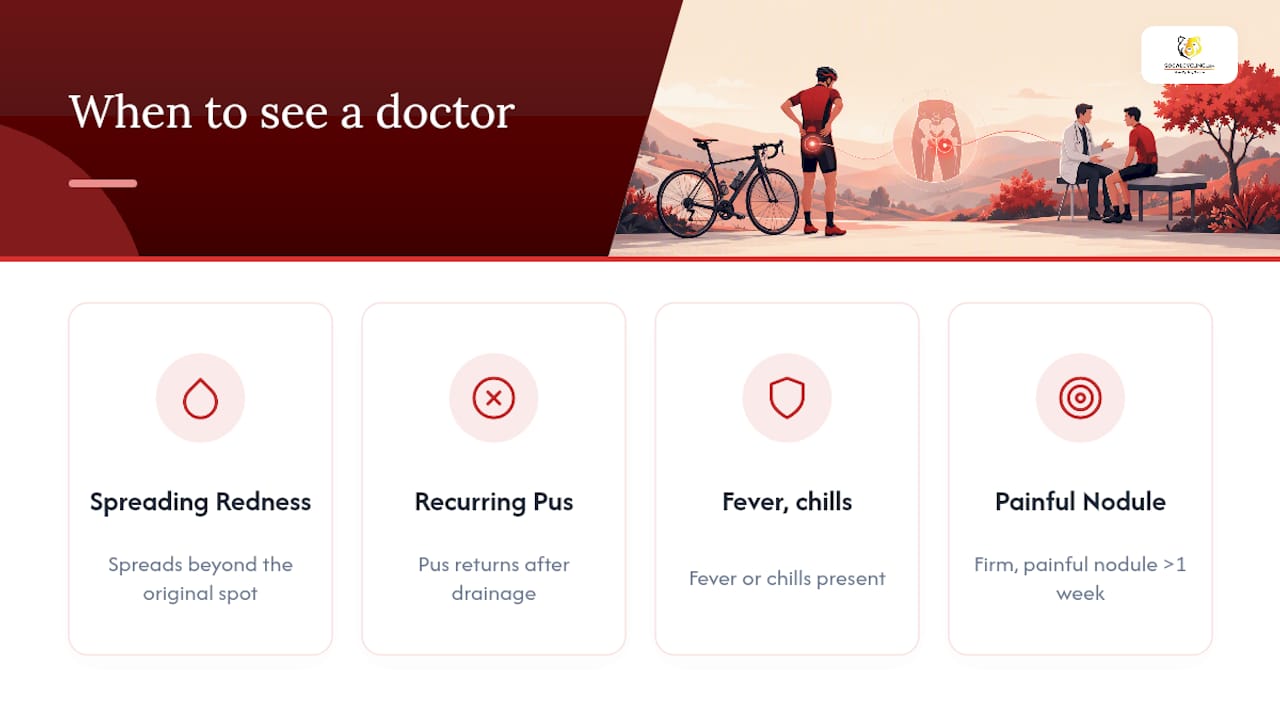
Clinicians have tools you don’t. Sports medicine sources note that prescription topical or oral antibiotics clear infections that OTC ointments can’t touch, and incision and drainage resolves an abscess far faster and more safely than waiting it out. For chronic PNI that doesn’t respond to conservative care, a dermatology referral may lead to intralesional steroid injections or surgical excision.
Be realistic about outcomes: the MDPI review points out that recurrence after steroid injection or surgery is a real possibility, and the underlying research on PNI in female cyclists is especially thin. Follow-up care matters as much as the initial treatment.
When Is It Safe to Ride Again After a Saddle Sore?
Don’t get back on the saddle until pain has meaningfully faded and the skin has closed. Then ease back in deliberately:
- Start with a short, easy ride of 30 to 45 minutes on flat terrain, and build a rest day into the plan immediately after.
- Inspect your shorts and chamois before that first ride. Worn padding or a stretched-out chamois that no longer sits flush is often what caused the sore in the first place.
- Recheck saddle height and tilt. Small position drift happens over months of riding, and a return-to-ride window is the perfect time to reset it.
- Reapply your prevention routine from day one. Chamois cream, standing every 10 to 15 minutes, and a prompt post-ride shower aren’t optional extras during recovery, they’re the whole plan.
If the same spot flares up again within a few rides, stop and re-evaluate fit, kit, and hygiene before you add mileage. Riding through a recurring sore only pushes you toward the chronic end of the spectrum.
Which Bike-Fit Checks Reduce Saddle Sore Risk?
Set your bike on a trainer, level it, and record a short video from behind and from the side while pedaling at a steady effort. Three contact-point checks tell you most of what you need to know:
- Sit-bone tracking: Watch for hip rock or side-to-side shifting, a sign the saddle width or height doesn’t match your anatomy.
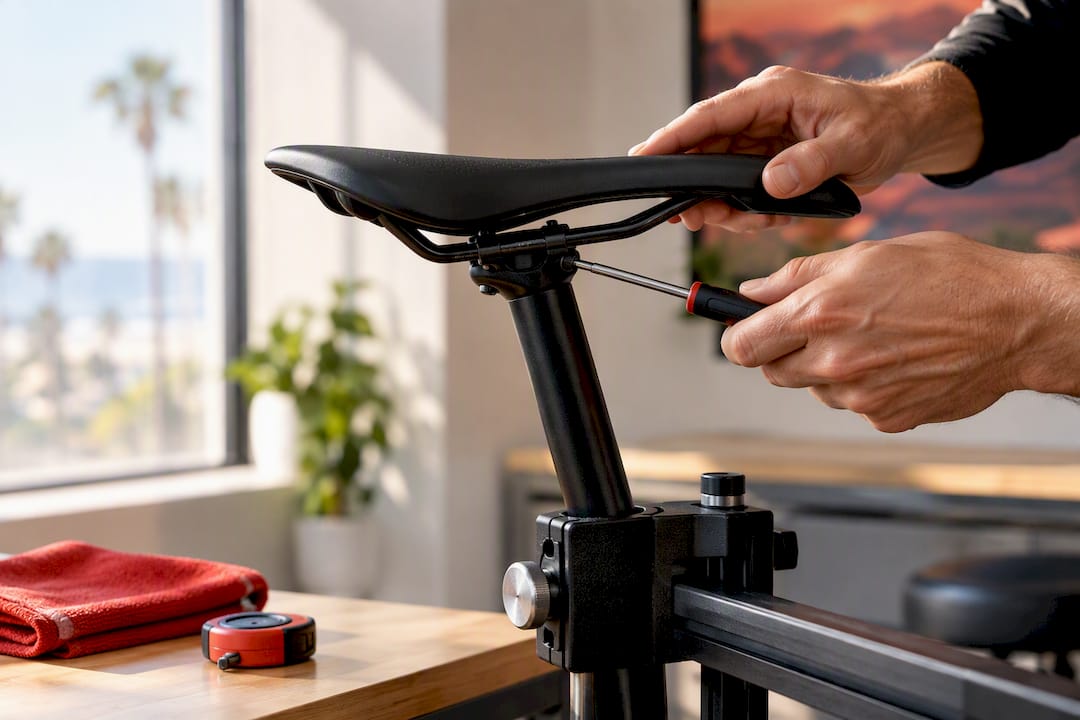
- Saddle fore/aft position: If your knee drifts well past your forefoot at the top of the pedal stroke, the saddle is likely too far forward, loading the nose and increasing friction.
- Handlebar reach: Overreaching pitches your pelvis forward onto the saddle’s nose, concentrating pressure exactly where sores form.
Small changes make a real difference. Shifting saddle height or fore/aft position by just 2 to 3 millimeters can change sit-bone tracking enough that riders notice less rocking and fewer hotspots within a ride or two.
Pro Tip: If hotspots persist on one side despite adjustments, or pain is asymmetric, that’s a signal for a professional fit, not another round of guesswork at home.
What Actually Moves the Needle on Saddle Sores
Most riders overthink saddle sores as a gear problem when it’s really a consistency problem. The habits that work, standing regularly, washing shorts every time, showering promptly, and making measured fit adjustments rather than dramatic ones, are unglamorous but they’re what separates riders who never think about saddle sores from riders who fight them all season. Start with our bike-fit guide if hotspots keep coming back.
— SoCalCycling.com
Where to Get Fit Help and Training Support
There are other routes to fixing saddle discomfort, a professional bike shop fitting, a sports medicine visit, trial and error with different saddles. Each has its place, but if you want a starting point you can act on today, without an appointment, Socalcycling’s bike-fit guide walks you through the same sit-bone tracking, saddle position, and reach checks a professional fitter starts with, using nothing but a trainer, a level, and your phone camera.

That guide is educational, not a substitute for treating an infection or a persistent nodule. If you’re dealing with spreading redness, pus, or a sore that won’t quit, see a clinician first. Once you’re healed and ready to rebuild mileage without losing the fitness you worked for, pair the fit adjustments with our 12-week strength training plan to keep your legs sharp while you ease back into saddle time. Start with the fit video today, before your next long ride.
Sources
- Saddle sores: Causes, symptoms, treatment, prevention — Healthline
- Saddle sores: scoping review — MDPI (International Journal of Environmental Research and Public Health)
- Clinical/peer-reviewed article on sports medicine management — PMC
- How to prevent and treat saddle sores — BetterBike
FAQ
How Do You Cure Saddle Sores From Cycling?
Rest off the saddle, keep the area clean and dry, and apply a zinc oxide barrier ointment or antibiotic ointment while it heals. Most mild cases clear in one to three days; folliculitis and small boils may take up to a week with warm compresses, and anything that spreads, drains persistently, or lasts beyond a week needs a clinician.
What Is the 80% Rule in Cycling?
The 80% rule refers to keeping roughly 80% of your training time at low, easy intensity and reserving about 20% for harder efforts, which supports recovery and reduces overuse injuries. It’s not a saddle-sore-specific rule, but easier weeks with lower time in the saddle give irritated skin a chance to heal, which is why our recovery week guidance pairs well with return-to-ride planning.
What Does a Cycling Saddle Sore Look Like?
Early saddle sores look like red, chafed skin or small red bumps resembling pimples, often near hair follicles. As they progress, they can turn into pus-filled pustules or a firm, painful lump under the skin, a sign you’ve moved from simple chafing into folliculitis or a deeper abscess.
How Do Pro Cyclists Avoid Saddle Sores?
Pro riders rely on the same fundamentals every recreational cyclist can use: a saddle and shorts fitted to their body, generous chamois cream on long stages, and strict post-ride hygiene including an immediate shower and fresh shorts. They also stand frequently to break up sustained pressure, and any hotspot gets addressed with a fit adjustment rather than ignored.
When Should I Worry About a Saddle Sore?
Worry when you see spreading redness, fever, pus that returns after drainage, or a nodule that stays painful for more than a week despite home care. Those signs point to an infection or chronic perineal nodular induration that needs a clinician, not another dose of chamois cream.
Recommended
- Strength Training for Cyclists: 12-Week Power Plan
- Cyclist Hydration Best Practices: Rules That Actually Work