

Local cycling clubs are the backbone of every thriving bike shop’s customer base. The relationship between community cycling groups and brick-and-mortar retailers is symbiotic: clubs create riders, and riders sustain shops. Understanding why local cycling clubs matter to bike shops reveals a feedback loop that keeps local cycling ecosystems alive, funded, and growing. From Southern California group rides to trail funding partnerships like NOCS and Trail Ninjas, the club-shop connection is one of the most underappreciated forces in cycling.
Why local cycling clubs matter to bike shops and communities
Local clubs do more than organize Saturday morning rides. Cycling programs support social, emotional, and cognitive well-being across entire communities. That impact does not happen automatically. It requires sustained funding, organized leadership, and a network of local businesses willing to invest in the ecosystem.
The importance of local cycling clubs shows up most clearly in how they bring new riders into the sport. Clubs use ride captains and structured intro rides to ease beginners onto the road or trail. Those new riders quickly need gear, fitting advice, and maintenance support. That demand flows directly to local shops.
Clubs also reduce isolation. Cycling Without Age operates in 41 countries, connecting older adults through shared rides and trained volunteer pilots. Its grassroots model proves that cycling clubs create social infrastructure, not just athletic programming. That social pull keeps riders engaged long after the novelty of a new bike wears off.
- Ride captains mentor new cyclists and build confidence on group rides
- Intro rides lower the barrier to entry for beginners who feel intimidated
- Club events create recurring touchpoints that keep riders active and spending
- Social rides build friendships that translate into long-term club and shop loyalty
Pro Tip: If you are new to group riding, find a cycling group that offers a no-drop policy. These rides keep the group together regardless of pace, which makes the first few outings far less stressful.
How bike shops function as community hubs, not just retail stores
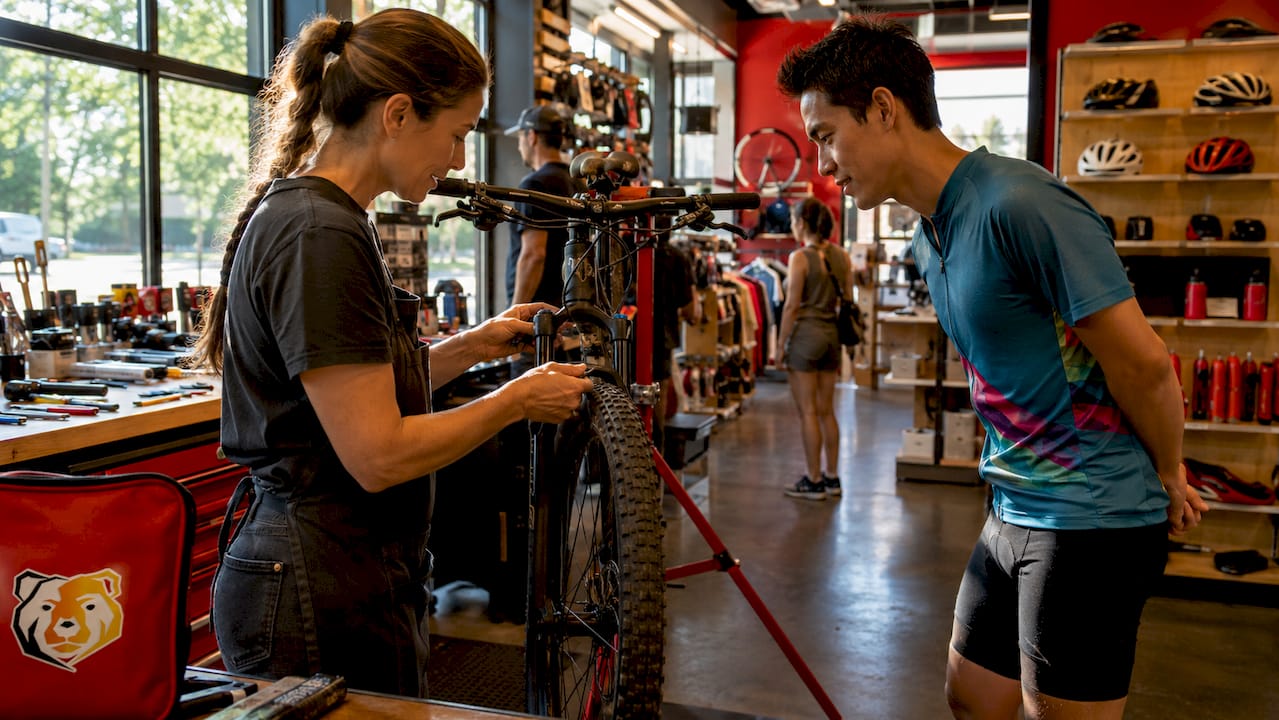
The most successful bike shops today do not compete on price. They compete on experience, knowledge, and community. Brick-and-mortar shops succeed by acting as community hubs integrated with clubs through local events, coffee spaces, trail knowledge, and rider support. That is a fundamentally different business model than selling components online.
Physical space matters more than most shop owners realize. A coffee corner inside a shop gives riders a reason to stop in on a Tuesday evening, not just when something breaks. Organized social rides that depart from the shop floor create weekly rituals. Those rituals build the kind of loyalty that no discount code can replicate.
“A level of service that can’t be boxed and shipped” is how Cyclingnews describes the advantage brick-and-mortar shops hold over online retailers. That advantage lives entirely in the community relationships shops build with local clubs.
Shops that embed themselves in club ecosystems gain something else: real-time trail and route knowledge. A shop mechanic who rides with the local mountain bike club knows which trails are muddy in february, which climbs are best for beginners, and which gear choices actually hold up locally. That advice is worth more than any product description online.
- Coffee and social spaces turn shops into gathering points between rides
- Shop-sponsored club rides create weekly brand exposure without paid advertising
- Trail and route expertise gives shops authority that online retailers cannot match
- Mechanic clinics and workshops build rider skills and deepen shop relationships
Bike shop community involvement through organized events and club partnerships also helps shops manage customer relationships more effectively. Tools that track club memberships, service histories, and event participation let shops personalize their outreach and stay relevant to every rider in their community.
Club and shop partnerships: how the financial feedback loop works
The benefits of bike shop partnerships with clubs go beyond goodwill. Concrete financial models now tie club activity directly to shop revenue and trail funding. NOCS (a club-shop partnership program) offers 5–10% member rebates on qualifying products, with a portion of those purchases flowing back to trail maintenance through Trail Ninjas. That structure turns every jersey or helmet purchase into a community investment.
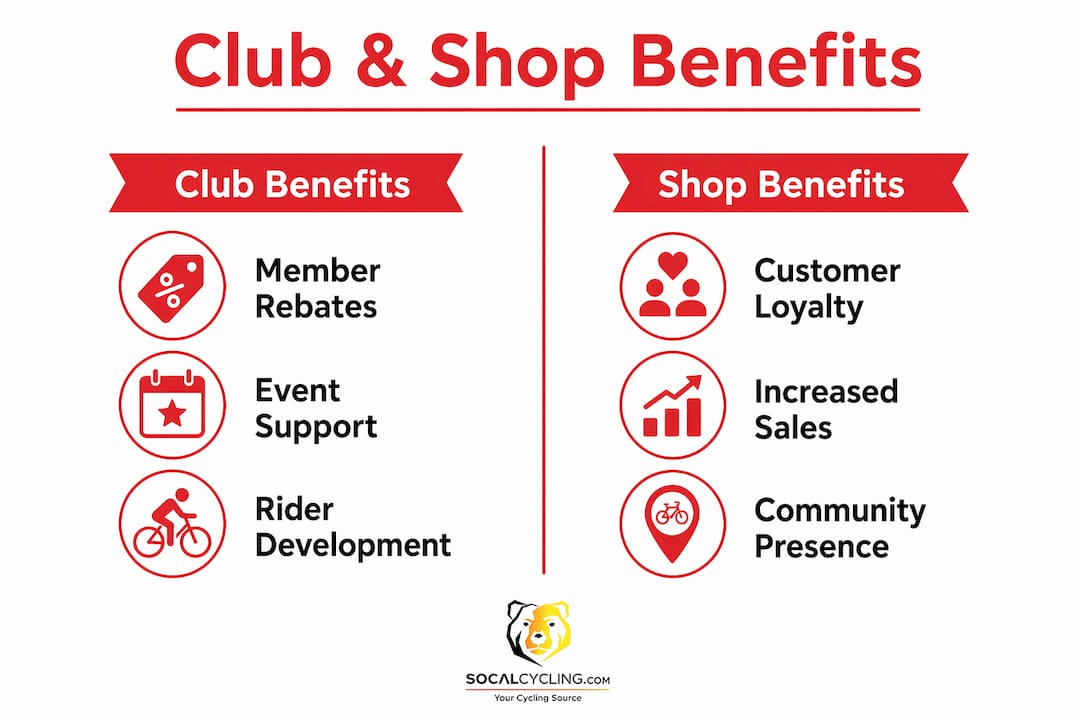
The rebate model works because it is specific. Rebate structures exclude bikes and service parts while focusing on cycling merchandise that aligns with shop inventory strengths. This prevents funding mismatches and keeps both the club and the shop financially aligned. Generic donation models rarely achieve that kind of precision.
Local cycling events amplify the economic effect. A Silicon Valley Bicycle Coalition survey found that over 50% of ride participants spend $16–50 locally during organized rides. That spending benefits coffee shops, restaurants, and bike shops along the route. Safe infrastructure and club-organized events are directly linked to small business revenue.
| Partnership model | Club benefit | Shop benefit |
|---|---|---|
| Member rebate programs (e.g., NOCS) | Discounts on gear for members | Increased merchandise sales volume |
| Trail funding contributions | Maintained trails for club rides | Loyal riders who return for service |
| Shop-sponsored club events | Organized rides and visibility | Direct brand exposure to active riders |
| Mechanic clinics at shops | Free skill-building for members | Service upsells and repeat visits |
Pro Tip: When evaluating a club-shop partnership, look for rebate programs tied to specific product categories. Broad “donate a percentage” models are harder to track and often deliver less value to both sides than structured SKU-based rebates.
What riders should consider when supporting local clubs and shops
Supporting your local bike shop is a choice that carries real financial weight. Local shops often price at a 10–15% premium compared to online retailers. That gap is tolerable when the shop delivers personalized fitting, maintenance advice, and genuine community engagement. It becomes harder to justify when the shop offers none of those things.
Club membership directly influences where riders spend their money. A rider who joins a club that has a rebate partnership with a local shop has a financial incentive to buy there. More importantly, that rider builds a relationship with shop staff who know their riding style, their bike’s service history, and their goals. That relationship has real value over time.
Cycling organizations require sustained ecosystem support and diversified funding to maximize community well-being. Riders who only buy online when it is convenient, then rely on local shops for emergency repairs, undermine the ecosystem they depend on. Sustainable support means spreading purchases intentionally.
- Personalized bike fitting at a local shop prevents injury and improves performance in ways an online size chart cannot
- Maintenance clinics offered through club-shop partnerships teach riders to handle minor repairs themselves
- Local trail knowledge from shop staff saves time and prevents bad gear choices for specific terrain
- Club membership discounts at partner shops make supporting local financially practical, not just idealistic
Riders who join a charity cycling ride or participate in club-organized events also contribute to the broader funding ecosystem that keeps trails maintained and clubs operational. Every ride entry fee and club membership dues matter.
Key Takeaways
Local cycling clubs and bike shops form a mutually dependent ecosystem: clubs build riders, riders sustain shops, and shops invest back into clubs through events, rebates, and trail funding.
| Point | Details |
|---|---|
| Clubs create consistent shop customers | Intro rides and mentorship bring new riders who need gear, fitting, and service from local shops. |
| Shops must act as community hubs | Coffee spaces, club rides, and mechanic clinics build loyalty that online retailers cannot replicate. |
| Rebate models align financial incentives | Programs like NOCS tie member purchases to trail funding, benefiting clubs, shops, and trail systems. |
| Events drive local economic activity | Over 50% of ride participants spend $16–50 locally, directly benefiting shops along the route. |
| Price premiums are justified by service | A 10–15% shop premium is reasonable when paired with personalized advice, fitting, and community access. |
The Socalcycling take on clubs, shops, and what actually sustains cycling
We have covered cycling across Southern California and beyond for years, and the pattern is consistent. The clubs that thrive are the ones with a local shop behind them. Not just as a sponsor, but as a genuine partner. The shops that survive are the ones that show up on ride days, not just on sales days.
What most articles miss is the onboarding effect. When a new rider joins a club and gets mentored by a ride captain, their first major gear purchase almost always goes to the shop that club is connected to. Club onboarding creates shop touchpoints that repeat over years, not just once. That flywheel is the most durable customer acquisition strategy any local shop can run.
The challenge in 2026 is that both clubs and shops are stretched thin. Clubs need more than passionate volunteers to sustain programming. Shops need more than foot traffic to cover rent. The answer is not for either side to work harder in isolation. The answer is tighter integration: shared events, structured rebate programs, and physical spaces that serve both communities at once.
Our honest view is that riders who care about the future of local cycling need to treat club membership and shop support as connected decisions, not separate ones. The ecosystem only holds together when every part of it is funded and active.
Socalcycling.com: your resource for local cycling events and clubs
Socalcycling.com tracks local cycling events, club rides, race calendars, and community programs across Southern California and beyond. Whether you are looking for your next group ride, a club to join, or a local event that supports the shops and trails in your area, the Socalcycling.com event calendar is updated regularly with options for every discipline. Road, gravel, mountain, cyclocross, and gran fondo riders all find relevant events here. Check out the cycling passport event guide to see one of the most community-friendly formats clubs and shops use to engage riders in 2026.
FAQ
Why do local cycling clubs matter to bike shops?
Local cycling clubs create a consistent pipeline of new and returning riders who need gear, fitting, and maintenance services from local shops. The club-shop relationship builds mutual loyalty that sustains both organizations financially and socially.
What are the benefits of bike shop partnerships with clubs?
Partnership programs like NOCS offer member rebates of 5–10% on qualifying products while directing a portion of sales to trail funding. These structures align club and shop incentives around merchandise spending rather than generic donations.
How do cycling clubs help new riders connect with local shops?
Ride captains and intro rides guide new cyclists through their first group experiences, creating early and repeated service opportunities at the local shops connected to those clubs.
Is it worth paying more at a local bike shop than buying online?
A 10–15% price premium at a local shop is generally justified when the shop provides personalized fitting, maintenance advice, and active community involvement. Riders who skip local shops for every purchase weaken the ecosystem they rely on for trail support and club programming.
How do cycling events support local bike shops economically?
Surveys show that more than 50% of organized ride participants spend $16–50 locally during events, with that spending benefiting shops, cafes, and businesses along the route. Local cycling events are a direct economic driver for brick-and-mortar retailers.
Recommended
- Find a Cycling Group Near Me: Your 2026 Guide
- Why Cycling Events Have Rest Stops: A Rider’s Guide
- How to Join a Charity Cycling Ride Fundraiser
- What Is a Cycling Passport Event? Your 2026 Guide