

Prize lists in cycling events are structured reward systems that define what riders earn for specific results across every classification, stage, and specialty category. Understanding why prize lists matter at cycling events goes far beyond knowing who takes home the biggest check. A well-designed prize structure shapes race tactics, attracts competitive fields, drives sponsorship decisions, and determines whether an event grows or stagnates. For cyclists, prize lists signal what a race values. For organizers, they are one of the most powerful tools available to build a lasting event.
Why prize lists matter at cycling events: the core mechanics
Prize lists are not simply financial bonuses. They are detailed incentive frameworks that reward performance across multiple dimensions of a race. The 2026 Tour de France prize structure illustrates this perfectly. The total pot of €2.3 million includes €11,000 per stage win, a €25,000 green jersey winner prize, and daily awards for the most aggressive rider. That breadth of reward means dozens of riders compete for meaningful prizes on any given day, not just the overall contenders.
This granularity changes how races unfold. A climber who cannot win the general classification still targets the polka dot jersey. A sprinter chases stage wins and the points competition. Prize lists create multiple races within a race, and that layered competition is what makes events compelling for spectators and media alike. Events that reward only the top finisher produce a very different kind of racing than those that distribute prizes across categories, stages, and classifications.
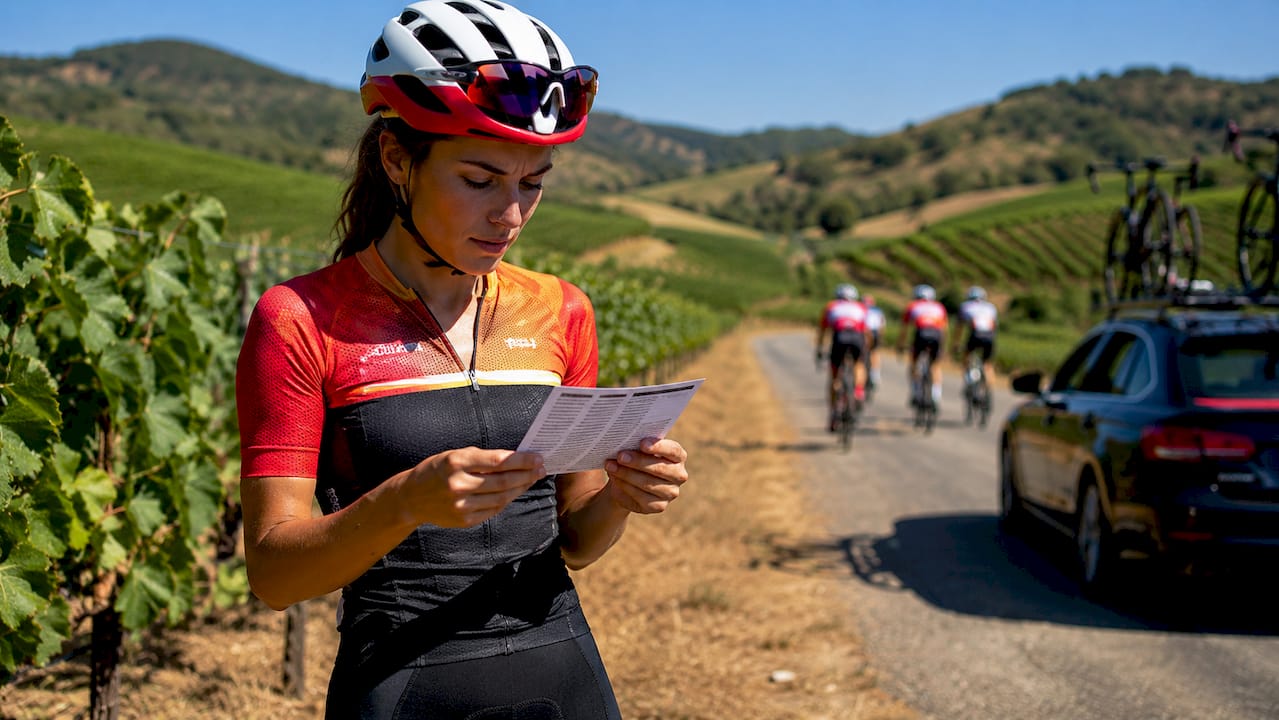
Prize money also reaches further than the individual winner. Winnings are pooled and divided by the team, often overseen by a designated road captain acting as the team’s accountant. That tradition means every soigneur, mechanic, and domestique benefits from a strong result, which reinforces team cohesion and collective motivation throughout a race.
How do prize lists influence cyclist motivation and tactics?
Prize structures directly shape how riders approach each stage and each kilometer. When rewards exist for finishing 20th, the competitive intensity extends well beyond the podium. At the Tour de France, a 20th-place stage finish earns €300, and each day spent in the yellow jersey adds €500. Those amounts matter to riders lower in the hierarchy, and they keep the peloton racing hard even when the overall result looks settled.
Motivation from prize lists varies by rider type and career stage:
- Sprinters target stage wins and points classifications, where prize money concentrates.
- Climbers pursue mountain competition prizes that reward consistency over multiple ascents.
- Breakaway specialists chase daily aggression awards, which reward attacking style regardless of final placement.
- Domestiques benefit from team prize pooling, giving them a financial stake in collective performance.
- Amateur and grassroots riders respond strongly to lower-tier prizes that make participation feel worthwhile.
Prize structures that reward only the winner create a winner-takes-all dynamic that discourages riders outside the top tier from racing aggressively. Spreading rewards across placements keeps more riders invested in the outcome. Research from professional gravel racing confirms this: raising the financial floor for mid-field riders builds a stronger, more legitimate competitive field than concentrating prize money at the top.
Pro Tip: If you are organizing a criterium or gran fondo, add prime sprint prizes at intermediate points. These small rewards keep the race animated and give riders outside the top ten a reason to attack.
What is the economic and sponsorship value of prize lists for teams?
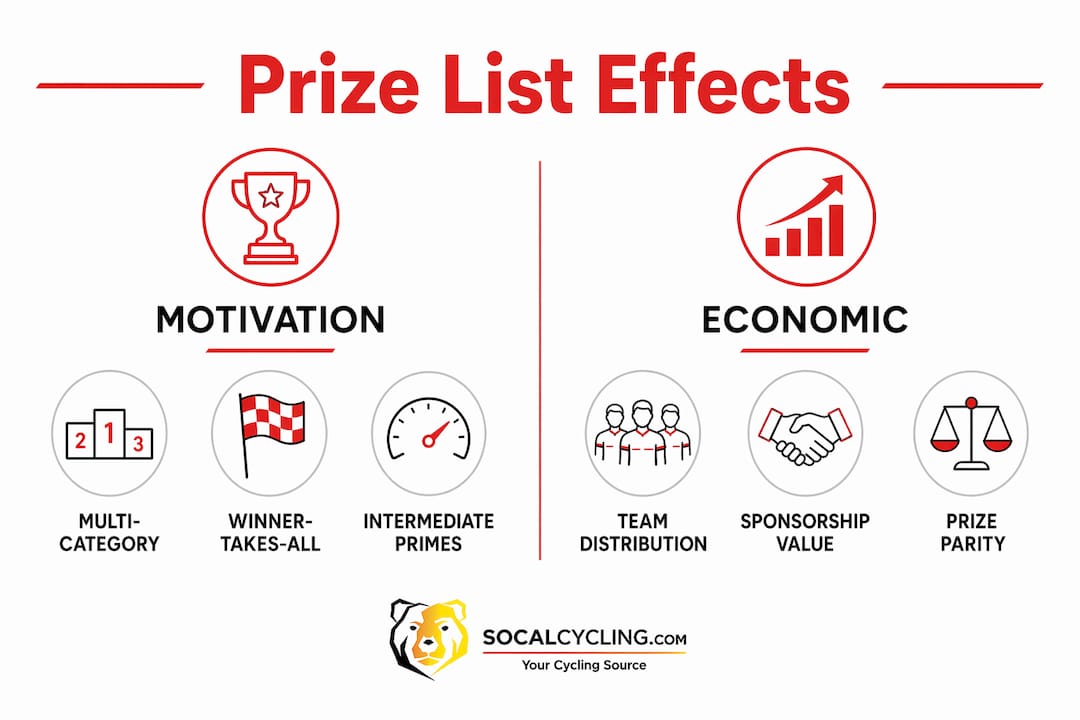
Prize lists are a financial lifeline for professional cycling teams, particularly those outside the WorldTour. Teams struggling financially find it difficult to attract sponsors, and strong prize earnings help maintain professional licensing and UCI ranking points. Prize money is not just income. It is proof of competitive relevance, and sponsors pay attention to that signal.
The economic logic works in a cycle:
- A team earns prize money through strong race results.
- Prize earnings generate media exposure and UCI ranking points.
- Higher rankings attract better sponsors and larger budgets.
- Larger budgets allow recruitment of stronger riders.
- Stronger riders produce better results and more prize money.
Breaking into that cycle is the central challenge for smaller teams. Events with generous prize distributions across categories give those teams more opportunities to earn meaningful results. An event that pays only the top three overall offers little to a development team whose riders are competitive in the sprint classification but not the general classification.
Prize money in professional cycling functions as both reward and reputation. A team’s earnings signal its competitive standing to sponsors, governing bodies, and rival teams. Events that distribute prizes broadly give more teams a chance to build that reputation, which strengthens the sport’s competitive depth over time.
The cycling incentives ecosystem extends beyond race prizes to include broader financial structures that support rider development and team sustainability. Organizers who understand this ecosystem design prize lists that serve both their event’s prestige and the sport’s long-term health.
How do prize lists affect equity and inclusion in cycling?
Prize lists are a direct measure of how much an event values its participants. The gap between men’s and women’s prize money in professional cycling remains one of the sport’s most documented inequities. Women’s prize money remains 67% lower than men’s events as of Q2 2026, despite a 31% increase in women’s cycling participation. That gap is not just a financial issue. It signals to young female riders whether the sport considers their competition worth funding.
The contrast at the 2026 Tour de France is stark. The women’s race distributed €264,152 in total prize money, while the men’s event offered €2.3 million for comparable field sizes. That disparity affects recruitment, sponsorship, and media coverage for women’s events across the board.
| Event | Total Prize Pool | Winner’s Share |
|---|---|---|
| 2026 Tour de France (men) | €2,300,000 | Publicly listed |
| 2026 Tour de France (women) | €264,152 | Not publicly listed |
The good news is that intentional investment in prize parity produces measurable results. Flanders Classics increased women’s prize money from €21,750 to €207,600 by 2026, reaching equal prize money for men and women across all their races in 2023. That commitment coincided with an 86.1% rise in girls’ participation in the sport. The data is clear: financial investment in women’s prize lists drives participation growth.
Pro Tip: Event organizers working with limited budgets can achieve parity by equalizing prize structures across categories before increasing overall prize pools. Equal percentage distribution across placements costs nothing extra and sends a strong signal about event values.
Why does prize list transparency improve event appeal and media coverage?
Transparent prize lists build trust with riders, teams, and media before a single pedal stroke turns. When teams know exactly what a race pays across every classification, they make informed decisions about which riders to send and how to race. That clarity produces stronger, more targeted fields, which in turn generates better racing and more compelling media narratives.
Events with detailed and publicly available prize structures attract deeper competitive fields. Riders and team managers use prize lists to evaluate whether an event fits their goals and budget. An event that publishes vague or incomplete prize information signals disorganization, which discourages professional participation.
| Prize list quality | Effect on field depth | Effect on media interest |
|---|---|---|
| Detailed, multi-category | Strong, targeted entries | High, multiple storylines |
| Top-three only | Shallow, general classification focused | Low, limited competition arcs |
| Unpublished or vague | Weak, uncertain entries | Minimal, no narrative hooks |
Prize lists also shape the stories media tell about an event. When a green jersey competition carries a €25,000 prize, journalists cover the points battle as a race within a race. That narrative depth increases broadcast time, social media engagement, and sponsor visibility. Events that invest in prize structure invest in their own media value. For organizers looking to understand how race categories affect event perception, prize list design is inseparable from category structure.
Practical tips for designing impactful prize lists
Effective prize list design requires balancing winner payouts with rewards that keep the entire field engaged. Organizers who concentrate all prize money at the top create events where only a handful of riders have a financial stake in the outcome. Spreading rewards across placements and categories produces more competitive racing and a better experience for participants at every level.
Key principles for organizers:
- Align prize amounts with your budget and sponsorship level. A local criterium with a $5,000 prize list distributed across 20 categories creates more excitement than a $5,000 first-place prize with nothing else.
- Include diverse prize categories. Reward sprints, climbs, most aggressive rider, and age group classifications to motivate different rider types.
- Publish prize details early. Riders and teams make entry decisions weeks in advance. Late prize announcements reduce field quality.
- Set a minimum floor for all finishers. Even small prizes for completing the race signal respect for every participant’s effort.
- Avoid winner-takes-all structures at grassroots events. These discourage amateur riders who have no realistic chance at the top prize.
The race director’s role includes prize list design as a core responsibility, not an afterthought. Directors who treat prize structures as a strategic tool build events that grow year over year.
Pro Tip: For criterium and Southern California race formats, consider adding a “most laps led” prize. It rewards aggressive racing and gives riders without sprint finishes a meaningful target.
Key Takeaways
Prize lists are the single most direct tool organizers have to shape competitive quality, rider motivation, and event growth across every category and classification.
| Point | Details |
|---|---|
| Multi-category rewards drive competition | Prize structures that reward sprints, climbs, and aggression keep more riders racing hard throughout an event. |
| Team pooling extends prize impact | Prize money shared across team members supports staff and smaller teams, not just individual winners. |
| Prize parity grows participation | Flanders Classics’ equal prize investment coincided with an 86.1% rise in girls’ participation. |
| Transparency attracts stronger fields | Publicly detailed prize lists help teams make informed entry decisions and improve field depth. |
| Financial floor matters more than top prizes | Raising baseline pay for mid-field riders builds a more sustainable and competitive sport than concentrating rewards at the top. |
Socalcycling’s take on prize lists and the sport’s future
Prize money is the sport’s most honest signal. After covering cycling events across Southern California and beyond, the Socalcycling team has watched prize lists make and break events in ways that never show up in post-race reports.
The conventional wisdom says that bigger top prizes attract bigger names. That is true, but it misses the more important dynamic. Events that distribute rewards broadly, that pay the 15th-place finisher and the most aggressive rider and the masters category winner, build communities. Those communities come back next year. They bring sponsors. They generate the kind of grassroots energy that no single large prize can manufacture.
The gender prize gap is the sport’s most urgent unfinished business. The Flanders Classics example proves that parity is achievable and that it pays off in participation growth. The 2026 Tour de France numbers show how far most events still need to travel. Organizers who treat women’s prize lists as a budget line to minimize are leaving participation growth and sponsorship value on the table.
Prize lists also interact with prestige in ways that pure financial analysis misses. Jonas Vingegaard chose the Giro d’Italia based on route suitability for his goals, not prize money. That tells you something important: at the highest level, prize lists and event prestige reinforce each other. You cannot build prestige without competitive prize structures, but prize money alone does not create prestige. The best events understand both sides of that equation.
Socalcycling’s event resources for cyclists and organizers
Socalcycling covers the full spectrum of cycling events, from local criteriums to international stage races, with the depth that cyclists and organizers actually need.
Whether you are designing a prize list for your first event or evaluating which races fit your season goals, Socalcycling’s event guides and race coverage give you the context to make better decisions. The cycling event category guide breaks down how race classifications affect everything from entry requirements to prize eligibility. For organizers, the race director resources cover prize list design alongside the full scope of event management. Socalcycling’s event calendar and community coverage connect you to the races and riders that make Southern California one of the most active cycling regions in the country.
FAQ
What is a prize list in a cycling event?
A prize list is a structured document that details the financial rewards and awards available for specific race results, classifications, and specialty categories at a cycling event. It covers everything from overall winner prizes to stage wins, jersey competitions, and age group awards.
Why do prize lists matter for amateur cycling events?
Prize lists at amateur events signal how much an organizer values participation and competitive effort. Even modest prizes distributed across multiple categories keep riders engaged and encourage aggressive racing throughout the field.
How does prize money get distributed among cycling teams?
Prize money in professional cycling is typically pooled by the team and divided among riders and support staff, overseen by a designated road captain. This tradition means a stage win benefits the entire team, not just the individual rider who crossed the line first.
Does equal prize money for men and women increase participation?
The evidence says yes. Flanders Classics reached equal prize money across all their races in 2023, and that investment coincided with an 86.1% rise in girls’ participation. Financial parity signals that women’s racing is valued, which drives long-term growth.
Should organizers prioritize a large first-place prize or broader distribution?
Broader distribution produces stronger competitive fields and better racing. Concentrating all prize money at the top creates a winner-takes-all dynamic that discourages mid-field riders from racing aggressively. Spreading rewards across placements and categories keeps more riders invested in the outcome.
Recommended
- Cycling Event Category Guide: What Riders Need to Know
- Why Gravel Events Have Different Categories: 2026 Guide
- Why Cycling Events Need Insurance: 2026 Guide
- Cycling Sportive Explained: Your Complete Ride Guide