

Your fastest path to bike clubs near me runs through three channels: your local bike shop, a national club finder like USA Cycling’s club search, and the ride communities living on Strava, Meetup, and Facebook groups. Pick two, cross-reference what you find, and message a club today.
When you reach out, keep it simple: state your average solo speed on a flat road, mention your weekend availability, and ask directly which group fits a rider at your level. A well-run club will answer with a name, a meeting spot, and a group recommendation within a day or two.
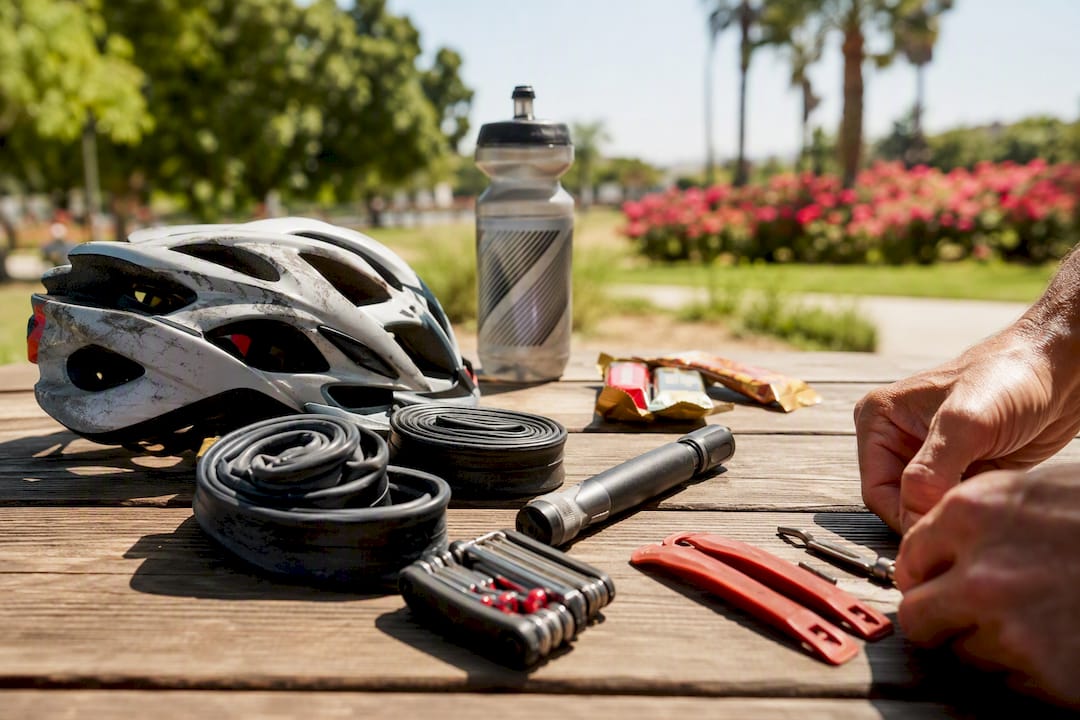
Before your first ride, confirm you have:
- A helmet that fits properly
- Two spare tubes, tire levers, and a mini-pump
- A multi-tool for on-road fixes
- Water and enough food for the stated distance
Key Takeaways
Finding the right bike club comes down to matching your actual pace to a club’s stated pace groups, then judging fit through three trial rides rather than one.
| Point | Details |
|---|---|
| Start with three channels | Check your local bike shop, a national club finder, and Strava or Meetup activity feeds. |
| State your pace upfront | Message clubs with your solo average speed so they can recommend the right pace group. |
| Confirm drop policy | Ask whether rides are no-drop or drop before showing up to avoid getting left behind. |
| Judge fit over three rides | Try, test, and commit, watching for consistent pace and genuine group interaction. |
| Look beyond weekly rides | Evaluate a club’s races, socials, and charity events to gauge its full community. |
Table of Contents
- Where To Find Local Cycling Groups That Actually Ride
- What Happens On A Typical Club Ride
- Choosing The Right Club: Questions To Ask Before You Show Up
- Your First Three Club Rides: A Simple Plan
- Why Club Membership Actually Changes How Often You Ride
- Races, Socials, And Charity Rides: What Else Clubs Actually Do
- Partner With Clubs Through SoCalCycling’s Event Resources
- What Most Advice On Finding A Club Gets Wrong
- Sources
Where To Find Local Cycling Groups That Actually Ride
Your local bike shop is still the single best source of unfiltered intel about local cycling groups. Shop staff know which club rides fast and unforgiving versus which one waits at every stop sign, and that kind of candid detail rarely makes it onto a club’s website or Instagram bio. Bike shop staff routinely have insight into local club culture that saves you from showing up to the wrong pace group entirely.
Beyond the shop counter, three resources cover most of the ground:
- National and regional club finders. SoCalCyclng.com’s Clubs and Teams Directory and similar U.S. tools like USA Cycling’s club search let you find a club by location. Municipal and regional bicycling program pages often list clubs that never show up in a general search.
- Strava clubs. Search your city name plus “cycling club” inside Strava’s club directory, then check the activity feed. A club posting weekly rides with a dozen or more participants tells you more about consistency than any “About” page.
- Meetup and Facebook groups. Read the last month of posts, not just the group description. Active member comments, photos from recent rides, and quick replies to newcomer questions are the real signals.
Regional aggregators like Silicon Valley Bicycle Coalition’s club directory also show the range of club types in one area, from weekend touring groups to competitive racing teams. If you’re weighing local directories generally, sites like regional business listings sometimes surface smaller clubs that don’t invest in their own web presence.
Pro Tip: Before messaging a club, scroll its Strava or Facebook feed for the phrase “no drop” or “all paces welcome.” Clubs that spell this out upfront tend to be the most organized about matching new riders to the right group.
A club that clearly lists multiple pace groups, whether labeled A/B/C or social/intermediate/fast, is usually more beginner-friendly and better at retaining new members than one with a single vague “all levels” listing. For more on reading these signals, Socalcycling’s guide to finding a cycling group near you walks through what active versus dormant clubs look like online.
What Happens On A Typical Club Ride
Most clubs sort riders into pace groups, commonly labeled A, B, and C, or social, intermediate, and fast. British Cycling’s breakdown of club-ride structure confirms this format is close to universal: the C or social group typically rides at a relaxed, conversational pace, while the A or fast group holds a steady tempo with minimal stopping.
Riding in a group feels noticeably easier than riding solo at the same speed. Drafting behind another rider cuts the power you need to hold pace, often by roughly 25 to 30 percent for the same speed. That’s why a club’s “moderate” group might move faster than your solo average suggests you can handle. Don’t judge a group by your solo numbers alone.
Every club ride falls into one of two categories, and you should confirm which before you show up:
- No-drop rides regroup at intersections and hills so nobody gets left behind.
- Drop rides state upfront that the group will not wait, and riders who fall off the back are expected to find their own way home or follow a cue sheet.
A typical social ride runs around 30 miles, with C-group paces often centered near 14 to 15 mph. Etiquette matters as much as fitness: signal turns and hazards, rotate through the front if the group is paceline riding, hold a predictable line, and expect a cafe stop partway through. That stop isn’t filler. Cafe stops and shared post-ride rituals are often what actually keeps riders coming back week after week, more than the riding itself.
Carry a helmet, two spare tubes, tire levers, a mini-pump, a multi-tool, and enough food and water for the distance. Nobody wants to be the rider who holds up the group over a preventable flat.
Choosing The Right Club: Questions To Ask Before You Show Up
Not every club that welcomes new members will actually fit you, and figuring that out before your first ride saves you an awkward morning. Run through this checklist:
- Does the club list specific pace groups with mph ranges, or just vague “all levels welcome” language?
- What’s the typical route distance, and does it match what you’re training for?
- How often do they ride, weekly, monthly, or only for scheduled events?
- Is the culture social and conversational, or built around racing and structured training?
- Is there a membership fee, and does a trial ride cost anything?
Watch for red flags before you commit any time. A club that can’t tell you its typical pace, takes days to reply to a simple question, or posts rides sporadically with no consistent schedule usually struggles with the same disorganization once you’re actually on the road with them.
When you reach out, keep your message short and specific:
- State your average solo speed on flat ground.
- Note your typical weekend or weekday availability.
- Ask directly which group or ride best matches that pace.
A strong club reply names an actual contact person, recommends a specific sub-group for your stated pace, and gives you a clear meeting time and landmark. That kind of specific, organized response is a reliable signal that the club runs its rides the same way it runs its communication: with structure.
Your First Three Club Rides: A Simple Plan
Treat your first three rides as a trial period, not a commitment. Each one tells you something different about fit.
- Ride one: try it. Check your bike the night before, pack your gear, and arrive 10 to 15 minutes early. Find the ride leader and introduce yourself so someone knows you’re new.
- During the ride: ease into the pace during the first mile, hold a position in the middle or back of the group until you’re comfortable, and take a turn in a rotating paceline only once you understand the hand signals being used. If you get dropped, don’t panic. Most clubs regroup at the top of climbs or major intersections.
- Ride two: test the fit. Pay attention to whether the pace matches what was promised and whether other riders talk to you at the cafe stop.
- Ride three: commit. If the group, pace, and vibe all check out, ask about membership or a regular meeting schedule.
Pro Tip: Send a short thank-you message to the ride leader after your first ride, even a one-line text. It’s a small gesture that often gets you added directly to the club’s group chat or next event invite.
Why Club Membership Actually Changes How Often You Ride
Consistency is the real payoff of joining a club, more than any single group ride. Social commitment and a no-drop policy create a mild sense of obligation that keeps people showing up on weeks they’d otherwise skip a solo ride, and that social accountability is a documented driver of long-term riding consistency.
Socalcycling’s own event calendars, club guides, and shop-focused reporting exist specifically to help riders close the gap between wanting to ride more and actually finding people to ride with. Pieces like why local clubs matter to bike shops explain how these two institutions reinforce each other.
- Bike shops, club organizers, and local cycling media together form the most reliable trust signal for judging a club’s reputation.
- A shop that’s been recommending the same club for years is a stronger endorsement than any five-star Facebook review.
- Local media coverage of a club’s charity rides or race results confirms it’s an active, functioning organization, not just a dormant Facebook page.
Races, Socials, And Charity Rides: What Else Clubs Actually Do
Weekly group rides are just the entry point. Most established clubs run a full calendar of events beyond the standard Saturday loop, and understanding that range helps you pick a club that matches more than just your pace preference.
Racing programs are common among performance-oriented clubs, which often field teams for local criteriums, road races, or cyclocross series. If competition interests you down the line, ask whether the club sponsors racers or simply supports members who race independently.
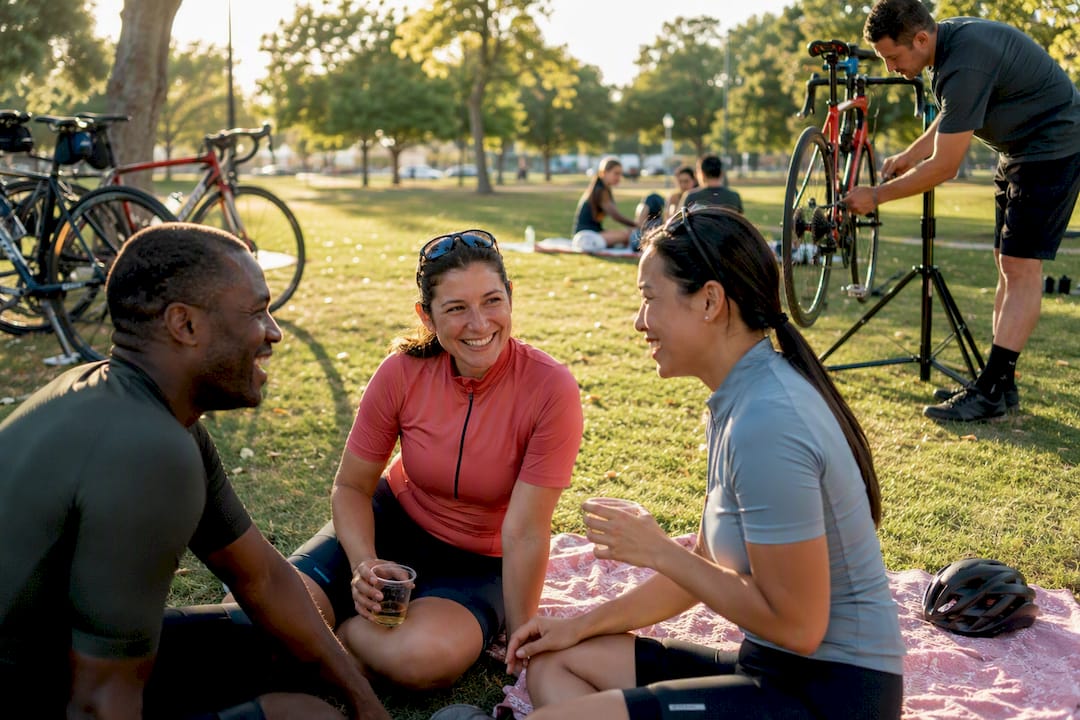
Social gatherings extend the cafe-stop culture into dedicated events: holiday parties, post-season banquets, and casual weeknight meetups that have nothing to do with mileage. These are often where the real community-building happens, away from the pressure of keeping pace on a group ride.
Charity rides and fundraisers are a staple for clubs of every size. Many organize or participate in centuries and gran fondos benefiting local causes, giving members a structured goal to train toward beyond weekly rides. Weekend group ride examples show how these bigger events typically unfold, from staggered starts to rest-stop logistics.
Some clubs also host clinics, bike maintenance workshops, or new-rider skills sessions, particularly heading into spring when membership tends to spike. Ask about this full calendar during your evaluation phase. A club with only one type of event on its calendar is telling you something about how narrow its community really is.
Partner With Clubs Through SoCalCycling’s Event Resources
Joining a club is only half the equation. If you’re organizing rides, sponsoring a team, or planning a club event calendar, Socalcycling’s editorial resources cover the operational side too. The guide on bike shop community events breaks down formats that actually draw riders, useful whether you’re a club leader trying to grow membership or a shop owner deepening ties with local cycling groups. For clubs running toward competitive goals, Socalcycling’s strength training plan for cyclists offers a structured 12-week approach that pairs well with a club’s group-ride schedule.
What Most Advice On Finding A Club Gets Wrong
Most guides treat finding a club like a search problem: filter a directory, pick the closest result, show up. That undersells how much the actual answer depends on human intelligence that no directory captures. A shop mechanic who says “the Tuesday group is fast, but Thursday is chill” gives you more useful information in one sentence than an hour of scrolling club websites.
The bigger mistake new riders make is assuming their solo pace translates directly to a group’s stated pace. It doesn’t, drafting changes the math, and a “moderate” group can move faster than a solo rider expects. Trust the club’s own group labels over your own speed estimate.
If there’s one thing worth prioritizing above all else, it’s the quality of a club’s first reply to you. A specific, organized response, one that names a contact and a group, predicts an organized club. A vague or slow one predicts a frustrating first ride.
— SoCalCycling.com
Sources
- Local groups and cycling clubs | Cycling UK
- How to Find a Cycling Club That Actually Fits You – Cycling Events Today
- How to Find and Join a Cycling Club — 2026 Guide | Roadman Cycling
Recommended
- Find a Cycling Group Near Me: Your 2026 Guide
- Why Local Cycling Clubs Matter to Bike Shops
- Bike Shop Community Events: 10 Ideas That Actually Work
- How to Find Gravel Races Near Me in 2026