


This is the consolidated US gravel calendar for planning your 2026 season, built to help you find upcoming races and registration windows fast. Check Unbound Gravel, SBT GRVL, and the Belgian Waffle Ride series first. They fill fastest. Jump to the month-by-month breakdown below to find your window, your region, and your next start line.
TL;DR:
- The most competitive and prestigious US gravel races, like Unbound Gravel, require early registration through lotteries, which often open 60 to 90 days before the event.
- Race calendars are regionally clustered, with southern and southwestern events in winter and early spring, and mountain and northern races peaking in summer and fall.
- Building a season around one or two key races and supporting lower-stakes events helps prevent burnout and aligns training with race demands.
- Travel and gear costs, especially for top-tier events, can surpass registration fees, so early planning and booking are essential.
- Variations in race format, terrain, and distances demand careful selection of events to match rider skill, goals, and terrain familiarity.
Table of Contents
- Your Month-by-Month US Gravel Calendar
- Which Iconic US Gravel Races Should Be on Your List?
- How Should Region and Season Shape Your Race Choices?
- How Do You Win the Registration Game Without Burning Out?
- How Do You Turn This Calendar Into an Actual Season Plan?
- How Does Socalcycling Keep This Calendar Accurate?
- What Does It Cost to Race Gravel in 2026?
- What Race Formats and Distances Should You Expect?
- What Logistics Should You Plan Before Race Day?
- Editor Perspective: Choose Experiences Over a Crowded List
- Plan Smarter With Socalcycling’s Race-Day Resources
- Where to Verify Dates and Details
- Sources
- FAQ
Your Month-by-Month US Gravel Calendar
The gravel racing schedule in the United States runs essentially year round now, which is a shift from even five years ago. Outsides compiled 2026 gravel racing calendar shows a mature scene with recurring series anchoring nearly every month and region. That stability is good news for planning. It means you can build a season around known dates instead of guessing.
Here’s how the year typically breaks down by region and event type.
January through March belongs to the Southwest and Southern California. Desert and coastal courses stay rideable when the rest of the country is buried or muddy. This window is ideal for early-season fitness tests and races that don’t demand peak form.
April and May bring the calendar’s biggest surge. This is when Belgian Waffle Ride events kick off across several states, and when many riders start their build toward summer’s marquee races. Midwest gravel also wakes up here, with courses drying out enough for fast, rolling routes.
June through August is peak season for the mountain events. Unbound Gravel runs in Emporia, Kansas in late May into June, SBT GRVL takes over Steamboat Springs, Colorado in summer, and Crusher in the Tushar hits Utah’s high country when the passes are clear. This stretch is also when Gravel Worlds typically runs its Nebraska edition, trading altitude for heat and relentless flat-to-rolling terrain.
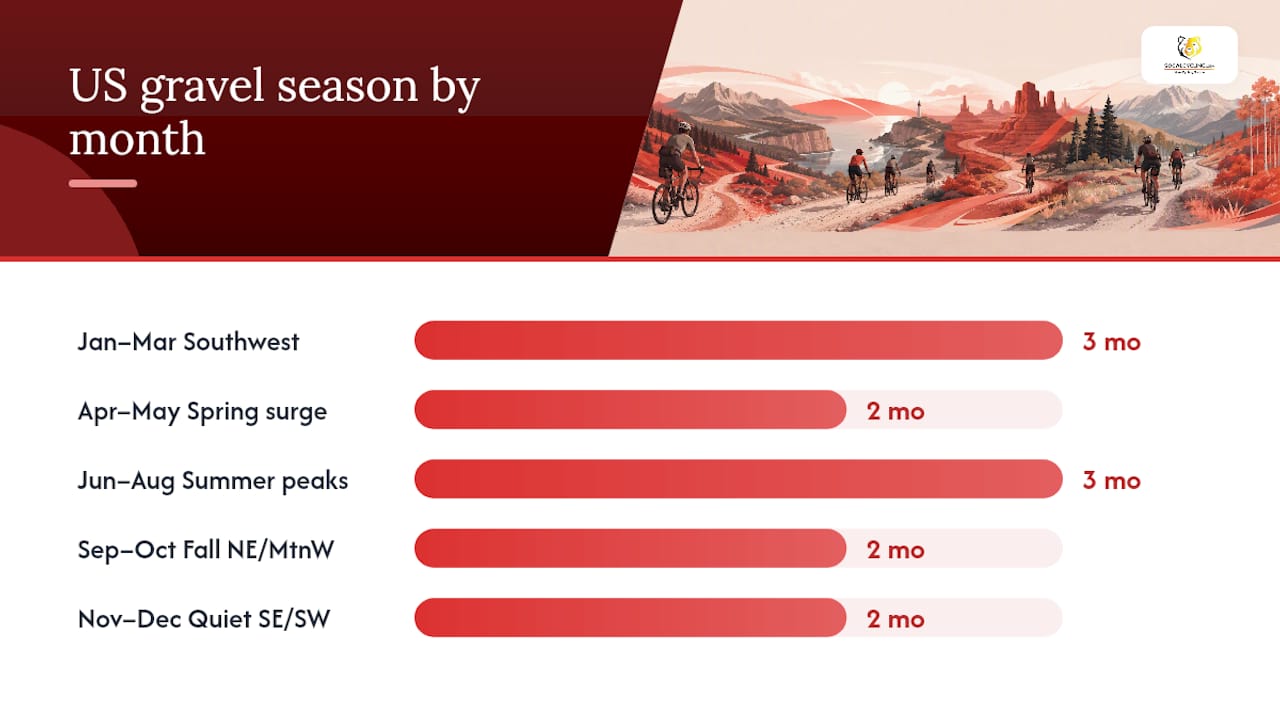
September and October shift the spotlight to New England and the Mountain West’s second wave. Rebecca’s Private Idaho runs in the fall shoulder season around Ketchum, timed to catch cooler temperatures and changing aspen color. Foliage-driven gravel festivals cluster here too, especially across the Northeast.
November and December quiet down nationally, though the Southeast and parts of the Southwest keep events running into early winter. Barry-Roubaix, based in Hastings, Michigan, actually opens the following spring calendar in March, so if you’re looking at 2027 planning, that’s typically one of the first dates on the board.
A few practical notes on tracking this:
- Set calendar reminders 60 to 90 days ahead of registration opening for any event you consider a priority. Unbound and similarly high-demand races often use lottery systems rather than simple first-come sign-ups, and missing the entry window means waiting a full year.
- Follow organizer social accounts and email lists directly. Registration dates shift year to year, and organizers post updates faster than any third-party aggregator can catch them.
- Bookmark or subscribe to a running list like the one on Socalcycling’s gravel race event roundup so you have a single reference point instead of ten open browser tabs.
Cycling Weekly’s rundown of 2026 registration dates is worth checking directly too, since it tracks lottery timelines and open-registration windows for the events that sell out first. If you’re still building your shortlist, our guide to finding gravel races near you walks through regional search tools that catch smaller, local events this calendar can’t cover exhaustively.
Aggregator sites like Battistrada’s North American gravel calendar list hundreds of additional events if you want to go deeper into your specific region, though they won’t carry the same editorial context on which races actually suit your goals.
Which Iconic US Gravel Races Should Be on Your List?
Seven events define the American gravel scene right now, and each one asks something different of the rider who shows up.
Unbound Gravel runs out of Emporia, Kansas, typically in late May or early June, and offers distances from 25 miles up to the full 200-mile flagship route. It’s the closest thing gravel has to a world championship in prestige, with a lottery-based entry system that reflects overwhelming demand. Rocky, remote, and long, it rewards riders who’ve built real endurance, not just fitness.
SBT GRVL takes place in Steamboat Springs, Colorado, in August, pairing high-altitude mountain terrain with a genuinely festival-like atmosphere. Distance options range from a short course up to around 140 miles. Registration tends to open well ahead of the event and moves through tiers rather than a single lottery, so early sign-up matters.
Belgian Waffle Ride isn’t one race. It’s a series that runs across multiple states, mixing pavement, singletrack, and gravel into what organizers call a “mixed surface” format. The original San Diego edition anchors the calendar in spring, with sister events spread through the year. Expect a party atmosphere alongside a genuinely tough, technical course.
Gravel Worlds happens in Lincoln, Nebraska, typically in August, and has built a reputation as one of the most grassroots, no-frills races on the calendar despite its ambitious name. Flat-to-rolling terrain and brutal heat define it more than technical difficulty.
Crusher in the Tushar, based in Beaver, Utah, combines gravel and paved climbing at altitude, usually run in July. It’s considered one of the hardest single-day races in the country because of sustained elevation gain rather than distance alone.
Rebecca’s Private Idaho, hosted near Ketchum in September, leans into festival energy with multiple distance options and a laid-back, community-driven vibe that draws first-timers and veterans alike.
Barry-Roubaix, in Hastings, Michigan, opens the season in late March and holds claim as one of the largest gravel races in the country by participant count, with distances built for everyone from beginners to elite racers chasing a fast, punchy course.
More than seven distinct events shape the national gravel identity, and no two demand the same preparation, terrain skill, or travel plan.
If you want a gateway race, Barry-Roubaix or a shorter Belgian Waffle Ride distance fits. For altitude and suffering, Crusher and SBT GRVL deliver. For the bucket-list ultra experience, Unbound remains the benchmark.
How Should Region and Season Shape Your Race Choices?
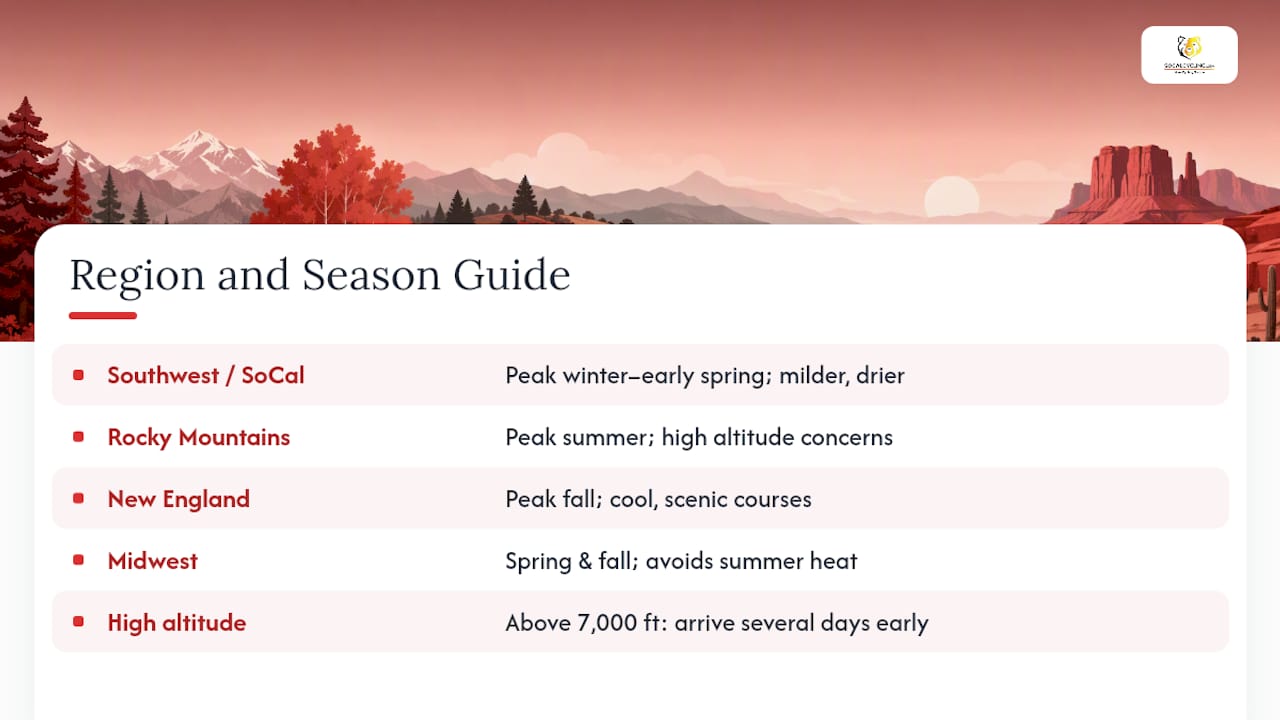
Geography decides more about your race day than fitness does. The Southwest and Southern California regions peak from winter into early spring, when temperatures tend to stay rideable and courses experience less rain. The Rocky Mountain states peak in summer, but altitude changes the math entirely. New England hits its stride in fall, when foliage and cooler air make for some of the most scenic courses in the country. The Midwest splits the difference, running strong seasons in both spring and fall while mostly sitting out summer’s heat and humidity.
Altitude events deserve special planning. Ergon’s US gravel guide notes that riders coming from sea level benefit from arriving several days early, since acclimatization to elevations above 7,000 feet takes real time, not just a night’s rest.
Heat is the other variable people underestimate. Races like Gravel Worlds or summer events in the Southeast can turn brutal fast, and staged heat exposure in the weeks before travel helps more than most riders expect.
Pro Tip: Remote gravel courses often run through dead zones with no cell service. Download offline maps and the organizer’s GPX file before race day, and carry a backup navigation method. A missed turn on a 150 mile course costs far more time than a flat tire ever will.
How Do You Win the Registration Game Without Burning Out?
Major gravel events split into two registration models, and knowing which is which saves you from missed opportunities. Unbound uses a lottery, meaning entry isn’t guaranteed even if you’re ready to pay the moment registration opens. SBT GRVL and the Belgian Waffle Ride series generally run open, tiered registration, where being fast on the sign-up page matters more than luck.
Coaches consistently recommend a simple framework for building your season:
- Pick one or two “A” races, the events you’re building your whole year around.
- Fill the rest of your calendar with lower-stakes local or regional events that support fitness and fun without the same pressure.
- Leave real recovery weeks between big efforts instead of stacking races back to back.
TrainingPeaks’ advice on selecting your next gravel race backs this up directly: matching your race calendar to your actual training capacity, not your ambition, prevents the burnout that derails more riders than any single bad race day.
A few habits keep this manageable:
- Set a calendar reminder the moment you learn an event’s registration date.
- Join the organizer’s email list, since many announce waitlist openings there first.
- Use a shared family or team calendar app so travel conflicts show up early, not the week before.
How Do You Turn This Calendar Into an Actual Season Plan?
A calendar full of great races doesn’t help until you build backward from your A events. Most coaches structure a season in base, build, and peak blocks, timing your hardest training to land six to ten weeks out from your priority race rather than piling volume on right up to race week.
A published 12-week training framework for the 2026 gravel season emphasizes building durability and fatigue resistance before chasing intensity, which matters more for a 100-plus mile gravel race than it does for a criterium.
Local B and C races serve a real purpose beyond fun: they’re low-stakes chances to test nutrition, pacing, and gear before your big day. If you’re still working out bike setup for varied terrain, our guide on choosing the right gravel bike setup covers tire width and gearing decisions worth locking in before your first big block.
Off-bike conditioning matters too. Riders who add structured cardio training alongside their base miles tend to handle long, exposed courses better than those who rely on saddle time alone.
For remote or ultra-distance events, self-sufficiency becomes part of your training. Practicing with offline GPS and organizer waypoint files during local rides means you’re not learning that system for the first time at mile 80 of Unbound.
How Does Socalcycling Keep This Calendar Accurate?
Dates move. Organizers change venues. Registration windows shift without much warning, and a calendar that goes stale by March isn’t useful to anyone planning a season around it.
Socalcycling runs monthly sweeps of organizer announcements, cross-checks race dates against official event pages, and updates entries as registration windows open or lotteries close. Reader submissions factor in too. If you know a regional race that deserves a spot, that tip often shapes the next update.
What that means for you:
- Timely edits when an organizer moves a date or changes a registration model.
- Annotated notes on lottery versus open registration so you’re not caught guessing.
- A regional focus that surfaces smaller races alongside the national names.
What Does It Cost to Race Gravel in 2026?
Entry fees vary more than most first-timers expect. Local and regional gravel races, the kind that fill your B and C calendar slots, often run in a modest range that won’t strain a season budget. The marquee national events cost considerably more, and that fee usually covers more than a start line: aid stations, mechanical support, timing, and often a post-race festival with food and vendors.
Budget beyond the entry fee, too. Travel, lodging, and bike transport frequently outweigh the registration cost itself, especially for events like Unbound or Crusher in the Tushar that pull riders from across the country to a single small town. Booking lodging the moment you secure your entry matters, since host towns for these races often sell out hotel rooms and short-term rentals within days of a lottery announcement.
Factor in incidentals too: extra tubes and sealant for rocky courses, nutrition for six-plus-hour efforts, and sometimes a mandatory or strongly recommended tracking device for remote sections. None of these costs alone breaks a budget, but stacked together across a season with two or three target events, they add up fast enough to plan for in advance rather than absorb as a surprise.
What Race Formats and Distances Should You Expect?
Gravel racing formats vary more than road racing ever did, and that variety is part of the appeal. Most major events offer a tiered distance structure: a short course around 30 to 50 miles for newer riders or those short on time, a mid-distance option in the 60 to 100 mile range, and a flagship distance that can stretch past 150 miles for events like Unbound.
Format matters as much as distance. Some races, like Belgian Waffle Ride events, deliberately mix pavement, singletrack, and gravel into a single course, testing bike handling as much as endurance. Others, like Gravel Worlds, stay almost entirely on unpaved rural roads, rewarding steady pacing over technical skill.
Timed mass-start races differ from the growing number of self-supported or lightly supported ultra formats, where riders manage their own resupply across remote stretches. Knowing which format you’re signing up for changes everything from your gear list to your nutrition plan, so read the course description closely rather than assuming distance alone tells the whole story.
What Logistics Should You Plan Before Race Day?
Travel logistics for gravel racing look different from a local road race, mostly because the best events sit in small towns far from major airports. Emporia, Kansas and Ketchum, Idaho weren’t built for a sudden influx of a few thousand riders, which means flights, rental cars, and lodging all require earlier booking than you’d assume.
Bike transport deserves its own line item. Flying with a bike means budgeting for a hard case or box, checking airline-specific bike fees, and building in buffer time in case luggage handling goes wrong. Some riders opt to ship bikes ahead through a dedicated shipping service instead, which avoids airport handling entirely but adds cost and requires planning a week or more out.
Once you’re on the ground, plan your pre-race days around the course, not just the hotel. Driving even part of the route, checking key turns, and knowing where aid stations sit can save real time on race day. For altitude events, that pre-race window doubles as acclimatization time, so arriving with a few extra days serves two purposes at once. Pack redundancy into your plan too. A spare derailleur hanger, extra tire sealant, and a backup navigation method have saved more race days than any single piece of high-end gear.
Editor Perspective: Choose Experiences Over a Crowded List
The biggest mistake we see riders make isn’t picking the wrong race. It’s picking too many. A season built around one bucket-list event and a handful of local races beats a calendar crammed with every name on this list. If you’ve found a regional gem worth adding here, tell us. This calendar gets better with every reader who shares one.
— SoCalCycling.com
Plan Smarter With Socalcycling’s Race-Day Resources
Building a season takes more than a list of dates. It takes checklists, gear guidance, and a clear sense of what each event actually demands, which is exactly the gap Socalcycling’s library fills alongside this calendar.

Our gravel race event roundup breaks down specific races by region if you’re still narrowing your shortlist, and our explainer on gravel event categories helps you understand what separates a festival ride from a competitive race before you register for the wrong one. If you like planning with a printable framework, our cyclocross calendar checklist shows the format we use, and riders building strength for longer efforts often pair their season with a structured 12-week power plan. None of this replaces your own judgment about what fits your year. Consider it a companion set of tools, not a substitute for it. Bookmark the calendar, pull up the checklist that matches your goal race, and start building your season this week.
Where to Verify Dates and Details
Registration dates and courses can shift after publication, so confirm details directly before booking travel or paying an entry fee.
- Official event pages for Unbound Gravel, SBT GRVL, Belgian Waffle Ride, Gravel Worlds, Crusher in the Tushar, Rebecca’s Private Idaho, and Barry-Roubaix.
- Cycling Weekly’s 2026 registration date tracker for lottery and sign-up windows.
- Outside’s 2026 gravel racing calendar for a broader month-by-month cross-check.
Sources
- 5 Tips for Selecting Your Next Gravel Race — TrainingPeaks
- Riders ready? Your guide to 2026’s biggest gravel events and key registration dates — Cycling Weekly
- The Complete 2026 Gravel Racing Calendar — Outside / Velo
- The Complete US Gravel Bike Guide: Gear, Training & Routes — Ergon Bike
FAQ
What Is the Biggest US Gravel Race?
Unbound Gravel, held in Emporia, Kansas, is widely considered the most prestigious US gravel race, with distances up to 200 miles and a lottery entry system due to overwhelming demand.
When Does Gravel Season Start in the US?
Southwest and Southern California events kick off the season as early as January, while Barry-Roubaix in Michigan typically opens the broader national calendar in late March.
How Far Ahead Should I Register for Major Gravel Races?
Register the moment windows open, ideally 60 to 90 days before you expect an event to announce dates, since events like Unbound use lotteries rather than simple first-come sign-ups.
How Do I Find Gravel Races Near Me?
Start with a regional search using Socalcycling’s guide to finding nearby gravel races, then cross-check smaller aggregator listings for events this calendar doesn’t capture.
How Many Gravel Races Should I Do in a Season?
Most coaches recommend one or two priority “A” races paired with several lower-pressure local events, leaving real recovery weeks between your biggest efforts to avoid burnout.
Recommended
- Cyclocross Race Calendar Checklist for 2026–2027
- Why Gravel Events Have Different Categories: 2026 Guide