


A cycling sportive is a mass-participation, timed long-distance ride on marked public roads where every rider’s time is recorded, typically using a timing chip. Think of it as the cycling equivalent of a running marathon: open to all fitness levels, structured around a set course, and measured by personal completion rather than outright victory. The Cambridge Dictionary defines a sportive as a cycling event with a marked route on public roads and recorded times. You will also hear the terms gran fondo, cyclosportive, and cyclo-sportif used interchangeably depending on the country, though each carries slight format differences covered below.
What is a cycling sportive explained: structure and how events run
A sportive is not a race in the traditional sense, but it is far more organized than a casual group ride. Every registered rider receives a number and a timing chip, usually collected at registration on the morning of the event. Events like Ride Wessex Downs open registration at 6:30am, distribute chips on the day, and operate a firm ride closure at 17:00, redirecting slower riders to shorter routes to maintain safety and logistics.
Most sportives offer multiple route options, typically a short, medium, and long course, so riders self-select based on ability. Start windows are staggered or use a mass-start format, and aid stations appear at regular intervals along the route. Support vehicles, route marshals, and clear road markings keep riders on course and safe on public roads that remain open to traffic.
Here is what a typical sportive event day looks like from arrival to finish:
- Registration and chip collection (usually 6:00am to 7:30am): Arrive early to collect your timing chip and rider number. Event-day logistics like chip pickup and start wave timing require planning to avoid delays that eat into your cut-off buffer.
- Kit and bike check: Confirm your repair kit, nutrition, and layered clothing are packed before you queue at the start.
- Rolling start or mass start: Riders set off in waves or together depending on the event format.
- Feed stations: Stocked with water, energy drinks, bananas, and bars at roughly 25 to 40 mile intervals.
- Cut-off checkpoints: Marshals monitor pace. Riders who fall behind the minimum pace may be redirected to a shorter route.
- Finish line timing: Your chip records your official time, which is posted to results boards or an online portal after the event.
Pro Tip: Register for the event online well in advance and confirm your chip collection time the night before. Arriving late to registration is the most common cause of a rushed, poorly paced start.
What distances and challenges do sportives typically involve?
Sportive distances range from roughly 50 miles for entry-level events to 150 miles or more for the most demanding gran fondo formats. Gran Fondo events are certified at a minimum of 120 km with chip timing, mass starts, and significant elevation, often reaching 200 km with 3,000 to 4,000 meters of climbing. That kind of elevation puts them firmly in the category of serious endurance challenges, not just long bike rides.
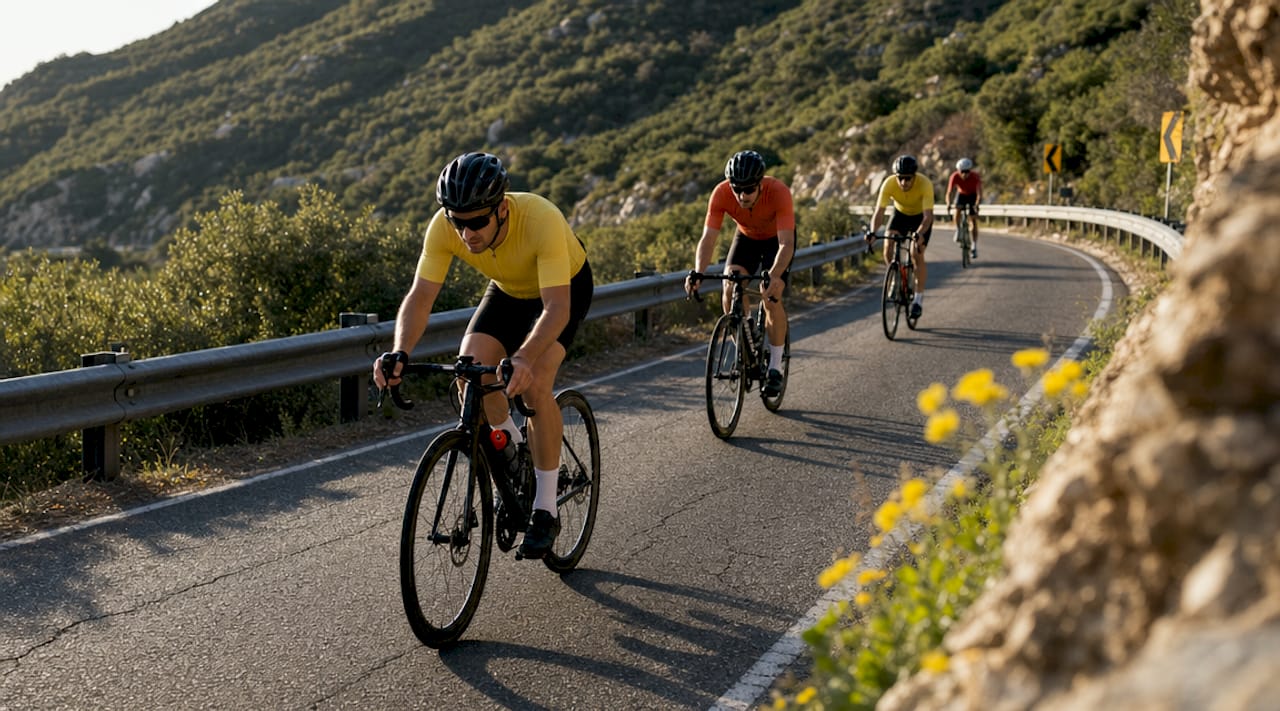
Shorter sportive routes, often called the medio fondo, typically cover 80 to 100 km with 1,500 to 2,500 meters of climbing. These suit riders building toward longer events or those returning after a break. The terrain varies enormously by region: a sportive in the English countryside may feature rolling hills and narrow lanes, while a California gran fondo can include sustained mountain climbs and exposed ridge roads.
| Route type | Typical distance | Typical climbing | Suitable for |
|---|---|---|---|
| Short / Medio Fondo | 50 to 80 miles | 1,000 to 2,000 m | Beginners and intermediate riders |
| Standard Sportive | 80 to 110 miles | 2,000 to 3,000 m | Intermediate to experienced riders |
| Gran Fondo / Long | 110 to 150+ miles | 3,000 to 4,000+ m | Experienced and competitive riders |
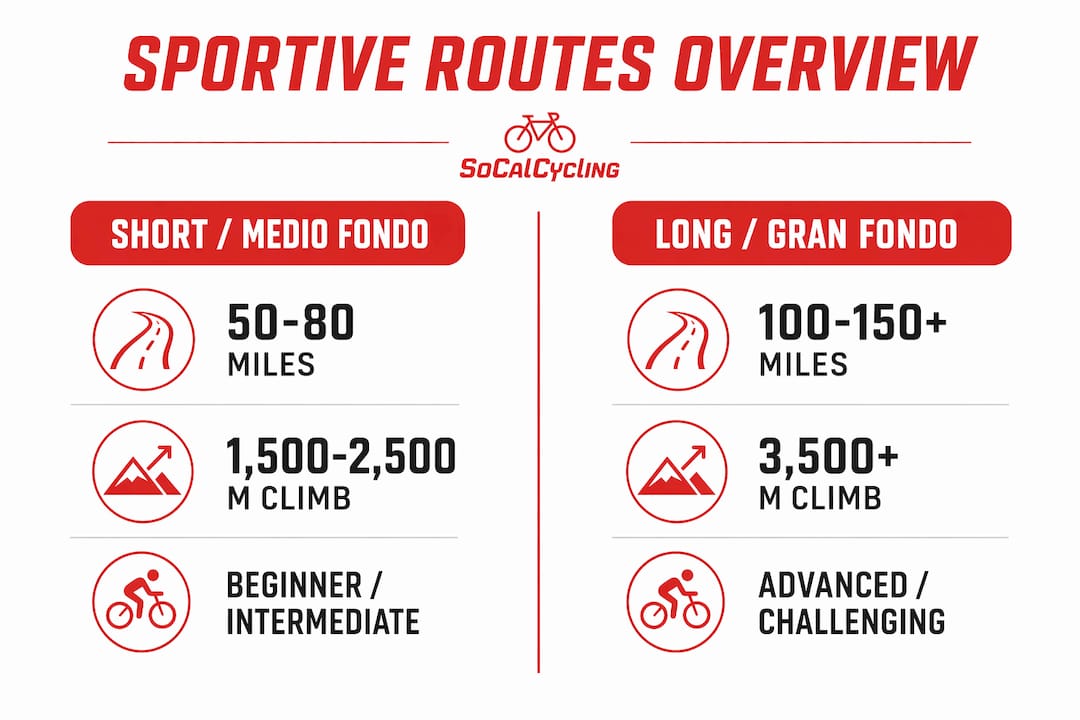
Elevation is the variable that separates a hard day from a genuinely punishing one. A 100-mile route with 3,500 meters of climbing demands a completely different pacing and fueling strategy than a flat century. Study the elevation profile before you commit to a distance category.
Pro Tip: Download the GPX file for your chosen route and load it onto a Garmin Edge, Wahoo ELEMNT, or similar GPS computer. Seeing the climb profiles in real time prevents the common mistake of burning too many matches on an early ascent.
How do cycling sportives differ from races and non-competitive rides?
The clearest way to understand a sportive is to place it between a traditional race and a casual group ride. It is timed, structured, and takes place on a marked course, but the vast majority of riders are competing against the clock and their own personal targets rather than each other.
Here is how sportives compare to related event formats:
- Traditional road race: Riders compete directly for position and victory. Tactics, team dynamics, and sprinting matter. Sportives carry none of that pressure for most participants.
- Gran Fondo: Functionally similar to a sportive, but the Italian gran fondo format is certified with chip timing, prizes for top finishers, and often full road closures. The competitive element is stronger at the front of the field.
- Cyclosportive: Cyclosportives carry rider numbers and recorded times with upper time limits, bridging the gap between races and long non-competitive rides. The format is nearly identical to a sportive in practice.
- Randonneuring / Audax: These are non-competitive, self-supported long-distance rides with minimum and maximum time windows. No prizes, no chip timing, and a strong culture of self-sufficiency. The ethos is entirely different from a sportive.
- Casual group ride: No timing, no registration, no cut-offs. The social element dominates. A sportive adds structure and personal accountability that a group ride does not provide.
The key distinction for new participants is this: a sportive rewards pacing and endurance management, not raw speed. Cut-off times are real constraints. Ride Wessex Downs enforces a 17:00 ride closure and redirects riders who fall behind, which means your finishing strategy must account for time, not just distance.
How to prepare for a sportive: training, nutrition, and event-day strategy
Preparation for a sportive covers three distinct areas: physical training, fueling, and event-day logistics. Most first-timers focus entirely on fitness and underestimate the other two. Logistics and pacing errors impact sportive performance more than raw fitness for first-timers, which is a finding that surprises almost everyone who hears it.
Building your training base
- Set your longest training ride at 70 to 80% of your event distance, completed about four weeks before the event. If you are riding a 100-mile sportive, your longest training ride should reach 70 to 80 miles. This builds confidence and tests your fueling strategy without leaving you fatigued on race day.
- Practice your nutrition on long rides, not just in training sessions under two hours. Your stomach behaves differently at hour four than it does at hour one.
- Include back-to-back ride days in your final eight weeks. Riding Saturday and Sunday on consecutive days teaches your body to perform on accumulated fatigue, which mirrors sportive conditions.
Pacing and fueling on event day
Pace the first half of your sportive at 65 to 75% of your functional threshold power (FTP) or heart rate zone 2 to 3. The adrenaline of a mass start pulls almost every rider out too fast. Starting conservatively at 65 to 75% FTP early on is the single most effective tactic for finishing strong.
Fueling is non-negotiable on rides exceeding three hours. Consume 60 to 80 grams of carbohydrates per hour starting within the first 30 minutes, before you feel hungry. Feed stations supplement but do not replace your personal food supply, so carry your own energy gels, bars, or chews tailored to what your stomach tolerates in training.
Pro Tip: Drafting in a group saves 20 to 30% of your energy output. Find riders at your pace within the first 10 miles and work together. Group riding is one of the highest-return strategies available to any sportive rider.
Essential gear checklist
- Timing chip and rider number (collected at registration)
- Spare inner tubes, tire levers, and a CO2 inflator or mini pump
- Layered clothing suited to morning cold and afternoon warmth
- Two full water bottles plus electrolyte tabs or powder
- Personal nutrition supply covering at least 50% of your estimated calorie needs
- GPS computer loaded with the route file
- Emergency contact details and a fully charged phone
Key takeaways
A cycling sportive is a timed, mass-participation endurance ride on public roads where pacing, fueling, and logistics matter as much as physical fitness.
| Point | Details |
|---|---|
| Sportive definition | A timed, mass-participation ride on marked public roads with chip-recorded finish times. |
| Distance and elevation | Routes range from 50 to 150+ miles with climbing from 1,000 m to 4,000+ m depending on the event. |
| Not a race | Sportives are timed but focus on personal completion, not direct competition against other riders. |
| Fueling is critical | Consume 60 to 80 grams of carbohydrates per hour from the first 30 minutes to avoid energy depletion. |
| Logistics matter | Arrive early for chip collection, study cut-off times, and plan your pacing strategy before the start. |
The sportive mindset: what we have learned from covering these events
At SoCalCycling.com, we have covered gran fondos and sportives across Southern California and beyond for years, and the pattern we see repeat itself at every event is the same. Riders who train hard but skip nutrition practice and arrive late to registration consistently underperform riders with less fitness but sharper logistics. The sportive is a timed logistics problem as much as it is a physical one. Match your fueling to feed station spacing and your expected finish time, and you remove the biggest variable standing between you and a strong result.
We also think the mental side of sportives is underrated. Knowing you are not racing other riders should free you to ride your own pace, but many first-timers still get pulled into chasing groups that are too fast. Find riders at your level within the first few miles and commit to that pace. The satisfaction of finishing a 100-mile sportive well-fueled and strong in the final 20 miles is a completely different experience from limping in after blowing up at mile 60.
Our honest advice: treat your first sportive as a practice run for your second. Use it to test your nutrition, your pacing, and your event-day routine. The riders who enjoy sportives most are the ones who show up with a plan and the flexibility to adjust it.
Explore California cycling events with SoCalCycling.com
SoCalCycling.com is the go-to resource for cyclists in Southern California and beyond who want to stay current on sportives, gran fondos, road races, and gravel events. Whether you are searching for your first local sportive or tracking results from major California events, the site delivers independent coverage, event calendars, and preparation guides built for serious riders.

From event previews and race reports to gear reviews and training advice, SoCalCycling.com covers the full spectrum of cycling in California and across North America. Check the event calendar, read up on upcoming gran fondos, and connect with a community of riders who take their sportive preparation as seriously as you do.
FAQ
What is the difference between a sportive and a gran fondo?
A gran fondo is a specific certified format, typically at least 120 km long with chip timing, a mass start, and prizes for top finishers. A sportive is a broader term for any timed, mass-participation long-distance ride on public roads, and the two formats overlap significantly in practice.
Do I need to be a competitive cyclist to enter a sportive?
No. Sportives are open to all fitness levels, and most events offer multiple route distances to match different abilities. The focus is on personal completion and endurance rather than racing other riders.
What happens if I miss a cut-off time during a sportive?
Marshals at cut-off checkpoints redirect riders who fall behind the minimum pace to a shorter route. Events like Ride Wessex Downs enforce a firm ride closure time to maintain safety and operational compliance.
How many calories should I consume during a sportive?
Aim for 60 to 80 grams of carbohydrates per hour starting within the first 30 minutes of riding. For a six-hour event, that means carrying or accessing roughly 360 to 480 grams of carbohydrates across the full ride.
What gear is non-negotiable for a sportive?
Your timing chip, rider number, spare inner tubes, a pump or CO2 inflator, layered clothing, two water bottles, and personal nutrition are the minimum. A GPS computer loaded with the route file is strongly recommended for any event over 60 miles.
Recommended
Article generated by BabyLoveGrowth