


Century ride training is the process of building your body’s aerobic capacity, muscular endurance, and fueling efficiency through progressive cycling workouts designed to carry you across 100 miles. The industry term for this structured approach is periodized endurance training, and it applies whether you are a first-timer or a returning rider looking to improve your finish time. Cyclists comfortable riding 30–40 miles can follow a 12–16 week plan, while complete beginners need 20–28 weeks to build safely without injury. Getting the structure right from week one is what separates riders who finish strong from those who blow up at mile 70.
What is the ideal timeline to plan century ride training?
The right training duration depends entirely on where you are starting. A rider who already logs 30–40 miles on weekends needs a 12–16 week structured plan to peak safely. A rider starting from scratch needs 20–28 weeks to build the aerobic base required to sustain 6–8 hours of effort without breaking down.
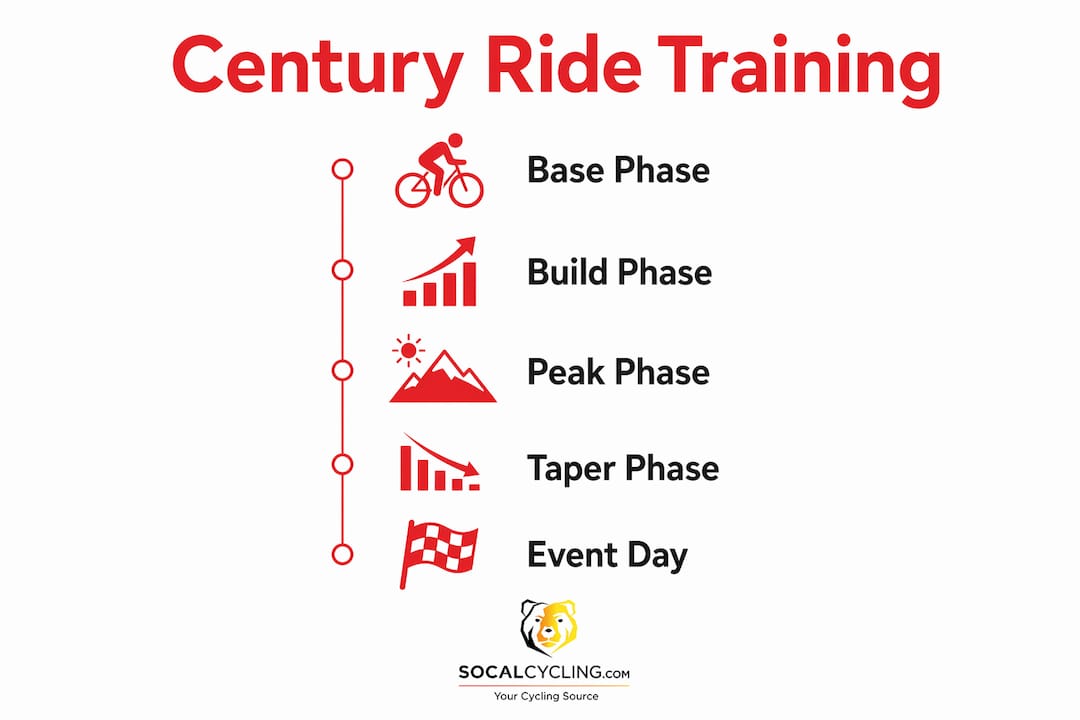
Both timelines share the same four-phase structure:
- Base phase (weeks 1–4 or 1–8): Low intensity, high volume. You build your aerobic engine with Zone 2 rides and establish weekly mileage habits.
- Build phase (weeks 5–10 or 9–18): Intensity increases. You add tempo intervals and longer weekend rides to stress the system.
- Specialty phase (weeks 11–14 or 19–24): Ride-specific simulation. Long rides approach 70–80 miles. You practice nutrition and pacing under real conditions.
- Taper phase (final 1–2 weeks): Volume drops sharply. Your body absorbs the training load and arrives at the start line fresh.
The 3:1 build-to-recovery rule is the single most important structural principle in any century plan. Three weeks of progressive load followed by one reduced-volume recovery week prevents overtraining and gives your muscles time to adapt. Skipping recovery weeks is the fastest way to arrive at your event fatigued instead of sharp.
Weekly mileage should progress from roughly 100 miles per week at base phase to a peak of 180–220 miles per week before tapering begins. That progression is gradual, not sudden. Jumping mileage too fast is the primary cause of overuse injuries in century training.
Pro Tip: Mark your recovery weeks on your calendar before you start training. Treat them as non-negotiable appointments, not optional rest days you can skip when motivation is high.
How to plan your weekly training rides for endurance and strength
A well-structured training week for a century ride is not just about logging miles. It is about riding the right types of miles at the right intensities.
Zone 2 endurance rides form the foundation of your weekly schedule. Zone 2 is a conversational pace where your heart rate stays at roughly 60–70% of maximum. At this intensity, your body learns to burn fat efficiently, sparing glycogen for the hard miles later in a long ride. Coaches consistently prioritize long Zone 2 rides over hard intervals for century preparation because fat-burning efficiency is what keeps you moving after mile 60.
Your weekly schedule should include:
- Two to three weekday rides of 45–90 minutes each, mixing Zone 2 base work with one tempo or threshold interval session
- One medium-distance ride mid-week of 40–60 miles to build time in the saddle
- One long ride on the weekend that progressively increases from 40 miles in base phase to 70–80 miles in specialty phase
- One full rest day and one active recovery day (easy spinning or light cross-training)
Tempo and threshold intervals belong in your plan, but they are supporting characters, not the lead. One interval session per week is enough. These efforts, held at 80–90% of maximum heart rate for 10–20 minute blocks, build muscular endurance and teach your legs to sustain harder efforts without accumulating fatigue too quickly.
Pro Tip: Ride your long weekend ride on the same day of the week as your target event. Your body adapts to the timing of effort, so Saturday long rides prepare you better for a Saturday century than Sunday rides do.
What nutrition and hydration strategies support century ride training?
Nutrition is where most first-time century riders lose the most time and energy. Getting it wrong does not just slow you down. It ends your ride.
The target carbohydrate intake during a century ride is 60–90 grams per hour, starting after the first 45 minutes of riding. That translates to roughly two energy gels, one energy bar, or a combination of real food and sports nutrition products every hour. Fluid intake should stay at 500–750 ml per hour in mild conditions and climb to 1–1.5 liters per hour in heat. Electrolyte supplementation becomes critical on rides exceeding three hours, especially in warm weather where sweat rates increase significantly.
Key fueling principles to follow on every long training ride:
- Start fueling at 45 minutes, not when you feel hungry. Hunger is a late signal that means your blood sugar has already dropped.
- Drink on a schedule, not on thirst. Thirst signals dehydration that has already begun.
- Test every product in training before using it on event day. Gels, bars, and chews that work for other riders may cause stomach distress for you.
- Carry more than you think you need. Rest stops at events can run low, and you never want to be rationing calories at mile 80.
Waiting until you feel thirsty or hungry during a century ride is one of the most common and costly mistakes a rider can make. By the time those signals arrive, your fueling deficit is already working against you. Proactive eating and drinking, practiced in training, is the skill that gets you to the finish line.
The best time to practice your nutrition plan is during your long weekend rides. Treat every ride over two hours as a dress rehearsal for event day. By the time you line up at the start, your fueling routine should feel automatic.
Check out SoCalCycling.com’s guide on why events have rest stops to understand how to use on-course support without depending on it.
How to pace and prepare for your century ride day
Pacing is the skill that separates riders who finish feeling strong from those who crawl through the final 20 miles. The most common mistake is starting too fast. Ride the first 30 miles at 60–70% of your maximum effort. That feels almost too easy at the start. That is exactly the point.
A power meter or a rate of perceived exertion (RPE) scale gives you an objective check on your effort. Riding by feel alone in the excitement of event day almost always leads to going out too hard, depleting glycogen before mile 70, and suffering through the final stretch.
Final preparation checklist:
- Complete your longest training ride of 70–80 miles at least two weeks before the event. You do not need to ride the full 100 miles in training. Adrenaline, crowd energy, and proper tapering carry you the rest of the way.
- Schedule a professional bike fit at least four weeks before the event. A fit that causes discomfort at 40 miles becomes serious pain at 80.
- Taper for the final 1–2 weeks before the ride. Cut volume by 40–50% while keeping a few short, slightly intense efforts to stay sharp.
- Prepare your nutrition kit the night before. Pack gels, bars, electrolyte tabs, and a backup food source.
- Plan your post-ride recovery. Most recreational cyclists finish in 6–8 hours and need 3–4 days of light activity or rest before returning to normal training.
| Preparation area | Recommended action |
|---|---|
| Longest training ride | Cap at 70–80 miles, completed 2+ weeks before event |
| Bike fit | Professional fit completed 4+ weeks before event |
| Taper duration | Reduce volume 40–50% in final 1–2 weeks |
| Nutrition kit | Packed and tested the night before the event |
| Post-ride recovery | 3–4 days of light activity after finishing |
Key Takeaways
A successful century ride requires a phased training plan, consistent Zone 2 mileage, proactive fueling, and disciplined pacing from the first mile to the last.
| Point | Details |
|---|---|
| Match plan length to fitness | Beginners need 20–28 weeks; riders with a 30–40 mile base need 12–16 weeks. |
| Use the 3:1 build rule | Three weeks of progressive load followed by one recovery week prevents overtraining. |
| Prioritize Zone 2 rides | Long, low-intensity rides build fat-burning efficiency critical for 100-mile efforts. |
| Fuel proactively | Consume 60–90g of carbohydrates per hour starting at 45 minutes, not when hungry. |
| Cap your longest training ride | Stop at 70–80 miles in training; tapering and adrenaline cover the rest on event day. |
What we have learned from covering century rides
The single biggest mistake we see riders make is treating their training plan as a rigid contract. Life happens. A week of bad weather, a work deadline, or a minor illness will disrupt your schedule. The riders who finish well are not the ones who never missed a session. They are the ones who adapted and kept showing up.
Consistency over perfection is the real training philosophy behind every successful century. Missing one long ride does not derail a 16-week plan. Missing three weeks because you pushed through fatigue and got injured does. Recovery weeks feel counterproductive when your motivation is high, but incomplete recovery leads to reduced gains and eventual burnout. Trust the process.
We also strongly recommend joining a local group ride or cycling club during your training block. Riding with others pushes your pace naturally, exposes you to different terrain, and makes the long weekend rides far more enjoyable. The social accountability alone improves training consistency more than any app or spreadsheet. Check out SoCalCycling.com’s piece on local cycling clubs to find community near you.
One more thing: practice your nutrition on every ride over 90 minutes. Riders who show up on event day having never tested their gels or hydration mix are gambling with their finish. The century itself is not the place to experiment.
— SoCalCycling.com
SoCalCycling.com has the events and resources you need
Training for a century ride is more rewarding when you have a real event on the calendar and a community behind you.

SoCalCycling.com covers cycling events across California and beyond, from gran fondos and century rides to gravel events and road races. The event calendar gives you a concrete target to train toward, and the athlete stories and training articles give you the context to train smarter. Whether you are looking for your first century or your fastest one, browse the cycling event category guide to find the right event for your fitness level and goals. The right event makes every training mile feel purposeful.
FAQ
How long does it take to train for a century ride?
Cyclists with a 30–40 mile base need 12–16 weeks of structured training. Complete beginners require 20–28 weeks to build safely and avoid injury.
What is the longest ride I should do before a century?
Your longest training ride should reach 70–80 miles, completed at least two weeks before the event. Riding the full 100 miles in training increases fatigue and injury risk without meaningful benefit.
How much should I eat during a century ride?
Target 60–90 grams of carbohydrates per hour after the first 45 minutes of riding. Start fueling on a schedule, not when hunger signals appear, since hunger indicates your energy reserves are already low.
What pace should I ride at the start of a century?
Hold 60–70% of your maximum effort for the first 30 miles. Starting too fast is the most common cause of bonking in the final quarter of the ride.
How do I recover after finishing a century ride?
Most riders need 3–4 days of light activity or complete rest after a century. Prioritize sleep, protein intake, and gentle movement before returning to structured training.
Recommended
- Cyclocross Race Calendar Checklist for 2026–2027
- Find a Cycling Group Near Me: Your 2026 Guide
- Cycling Sportive Explained: Your Complete Ride Guide
- How to Join a Charity Cycling Ride Fundraiser