
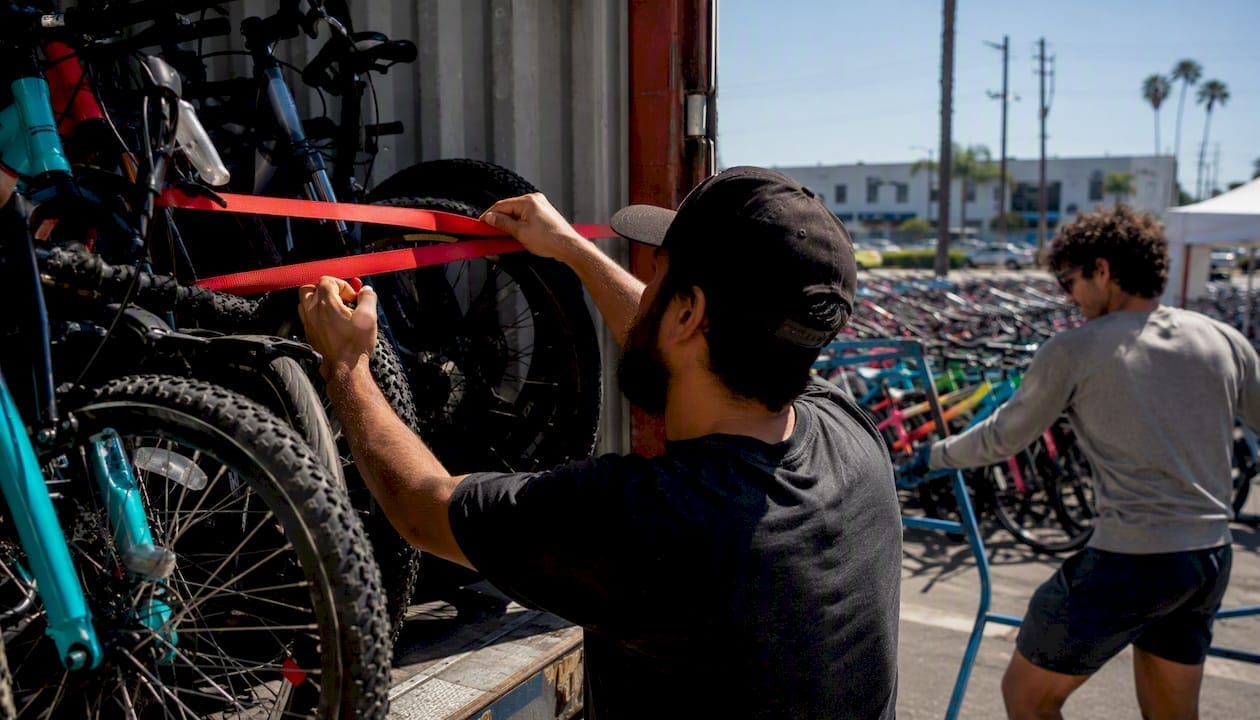
For most mid-size brands targeting California specialty retailers, a hybrid approach works best: go dealer-direct in key metros like Los Angeles, San Diego, and the Bay Area, then layer in a national distributor for statewide reach. Here are your three immediate moves:
- Open a QBP account inquiry. Quality Bicycle Products serves a large number of retailers through a multi-warehouse network, giving you instant access to independent shops across California without building your own logistics.
- Study the e*thirteen model. The brand shifted to U.S. dealer-direct distribution in 2025, publishing dealer margins on select lines and launching custom B2B programs. That margin signal matters: specialty shops capture a significant share of bicycle dollars precisely because they add fitting, assembly, and repair value.
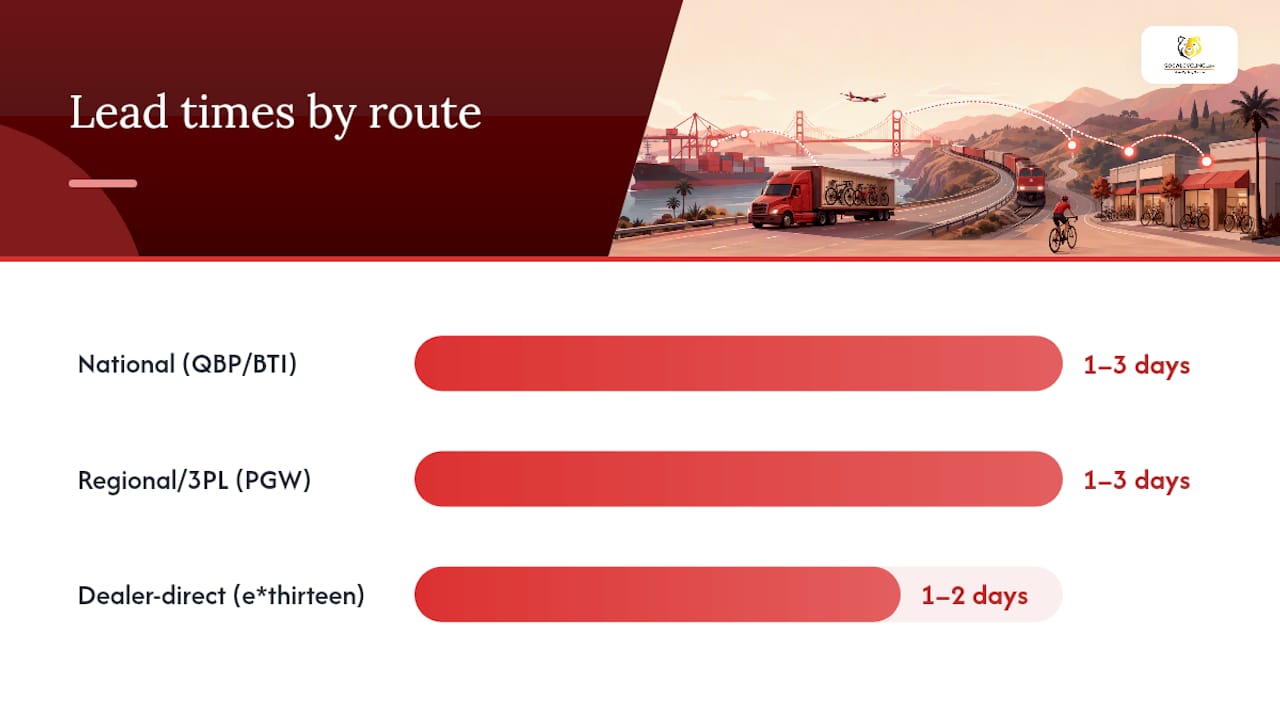
- Identify a California 3PL. Regional fulfillment from a Southern California warehouse cuts dealer lead times to 1–2 days and is the operational backbone of the hybrid model.
Industry analysis confirms that brands are actively reconsidering pure distributor reliance. The direction is clear: more control, better margins, and closer dealer relationships.
Key Takeaways
Distributing bicycles into California specialty shops requires choosing the right channel structure before the first purchase order ships.
| Point | Details |
|---|---|
| Hybrid model is the practical default | Dealer-direct in key CA metros plus one national distributor gives you both margin control and statewide reach. |
| QBP delivers instant scale | Quality Bicycle Products reaches roughly 5,500 retailers through a multi-warehouse network, the fastest path to statewide coverage. |
| Dealer-direct improves margins | e*thirteen’s 2025 move to dealer-direct achieved dealer margins on select lines with custom B2B programs. |
| Store-level support determines advocacy | Slotting, demo fleets, training, and co-op funds decide whether shop staff actively sell your brand. |
| Socalcycling amplifies your CA launch | Socalcycling’s California cycling media reach connects brands with the shops, clubs, and riders who drive specialty sales. |
Table of Contents
- How do you compare distribution routes for California bike shops?
- What actually works in California, and where do manufacturers go wrong?
- Socalcycling reaches the California riders your shops sell to
- Sources
How do you compare distribution routes for California bike shops?
The four practical routes differ most on margin, control, and the logistics burden you’re willing to carry.
| Approach | Best For | Geographic Coverage | Services Provided | Standout | Lead Time | Typical Fees/Chargebacks | Contract Terms |
|---|---|---|---|---|---|---|---|
| National distributor (QBP, BTI) | Brands needing immediate statewide reach | National, incl. all CA regions | Breaking bulk, warehousing, freight, ordering portal | Scale: — retailers (QBP) | 1–3 days typical | Distributor margin varies; possible co-op requirements | Annual; exclusivity negotiable |
| Regional/3PL-supported (PGW model) | Brand-managed logistics with dealer-only control | Regional/national via 3PL nodes | 3PL warehousing, dealer-only fulfillment, brand oversight | Multi-warehouse 3PL footprint for U.S. dealer servicing | 1–3 days from regional node | 3PL fees; brand retains pricing control | Flexible; brand sets dealer terms |
| Dealer-direct (e*thirteen model) | Margin control, pricing discipline, direct relationships | Targeted metros; scalable | B2B portal, custom dealer programs, direct support | dealer margins on select lines | 1–2 days from brand warehouse | Minimal third-party fees; brand absorbs logistics cost | Brand-defined; MAP strictly enforced |
| Hybrid | Mid-size brands balancing reach and control | Statewide CA + national | Mix of distributor reach and direct dealer programs | Combines QBP scale with direct metro accounts | Varies by channel | Blended cost structure | Dual agreements; requires active management |
Quality Bicycle Products (QBP) is the default entry point for brands that need statewide California coverage fast. Its catalog depth and breaking-bulk logistics mean shops can order your product alongside hundreds of other brands in a single PO. The trade-off: your SKUs compete for floor and staff attention in a very large catalog.
Bicycle Technologies International (BTI) focuses on specialty channels and offers category management support, making it a strong fit when your product requires more sales context than a standard distributor rep provides.
Pacific Glory Worldwide (PGW) operates a brand-managed, dealer-only model using two 3PL warehouses for U.S. fulfillment. It’s the clearest current example of a manufacturer retaining distribution control while outsourcing physical logistics.
BikeCo brings established regional dealer relationships and existing inventory positions, useful when you need continuity with a specific California dealer network rather than building from scratch.
e*thirteen is the dealer-direct case study worth studying closely. Its 2025 move to direct U.S. distribution included published B2B margins and tailored dealer programs, demonstrating that a brand with the operational capacity can improve both dealer economics and brand control simultaneously.
What actually works in California, and where do manufacturers go wrong?
California’s specialty bike market rewards brands that treat shops as partners, not just wholesale accounts. The consolidation happening across the state means surviving shops are more service-oriented and more selective about the brands they actively promote.
The most common mistake: shipping product and expecting placement to follow. Shops expect slotting support, demo fleet contributions, staff training, and marketing co-op funds before they’ll put your brand at the front of the floor. Manufacturers who skip that investment become invisible SKUs, regardless of which distribution route they chose.
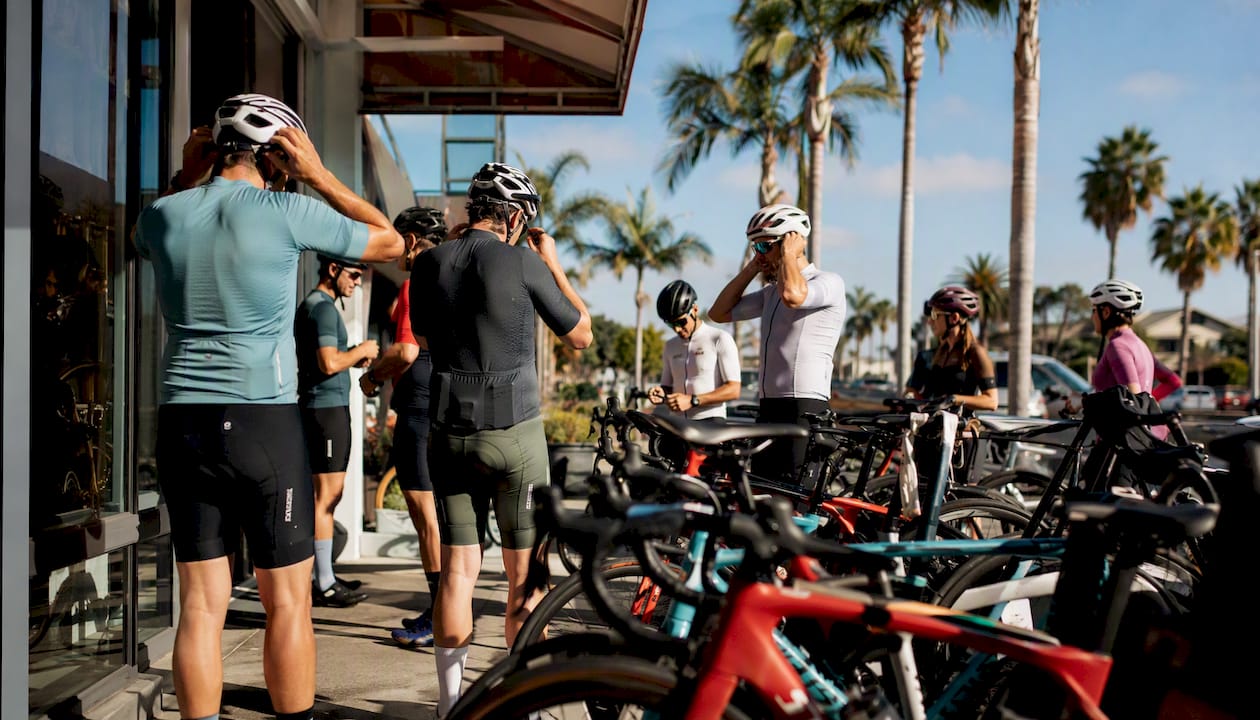
Demo culture is particularly strong in Southern California. Shops in the LA basin, San Diego, and Orange County run regular group rides and events where product gets evaluated in real conditions. Brands that supply demo units and show up at those rides build the kind of shop-staff advocacy that no distributor relationship can replicate. Check how local cycling clubs drive shop engagement to understand the community dynamics at play.
Pro Tip: When negotiating with a California shop, bring sell-through data, category margin benchmarks, and an open-to-buy estimate. Shops respond to numbers, not pitch decks. A POS-integrated live product feed also lets smaller shops carry your virtual inventory without tying up cash in physical stock.
Socalcycling reaches the California riders your shops sell to
There are solid routes to place bikes in California shops: QBP for scale, dealer-direct for margin, PGW’s 3PL model for brand control. What none of them provide is direct access to the California cycling community that walks through shop doors.
Socalcycling covers road racing, mountain biking, gravel, cyclocross, and gran fondos across Southern California and beyond, reaching the riders and club members who influence shop buying decisions. For brands launching into California specialty retail, a presence in Socalcycling’s event coverage, product reviews, and shop community event guides puts your product in front of the audience before they ever walk into a dealer. Check the cyclocross race calendar checklist to align your demo fleet timing with California’s biggest seasonal sales windows.
Sources
- Behind the Curtain at QBP – America’s Biggest Cycling Distributor
- e*thirteen moves dealer‑direct distribution in USA | Bicycle Retailer and Industry News
- Bicycle Industry Data overview | NBDA
Recommended
- Bike Shop Community Events: 10 Ideas That Actually Work
- Why Local Cycling Clubs Matter to Bike Shops
- Best Cyclocross Events California Riders Should Race