


Bicycle crashes injure far more people than the fatality numbers suggest. The National Highway Traffic Safety Administration (NHTSA) recorded 1,103 bicyclist deaths and an estimated 52,887 injuries in traffic crashes in 2024 alone, and the Consumer Product Safety Commission separately tracked over 454,000 emergency department-treated bicycle injuries that same year.
What happens in the hours and days after a bike crash has a direct, lasting effect on what recovery ends up being available. Evidence degrades, insurance notification deadlines run out, and an account given before a rider understands their rights can complicate a claim that would otherwise be straightforward.
Cyclists Have the Same Legal Road Rights as Motor Vehicles
A key point to keep in mind here is the principle that cyclists are entitled to use any public road just like every other driver. Until a different law comes into force, a cyclist is allowed to take up one of the lanes and is due the same privilege as any other automobile.
Liability in a bicycle collision is determined in much the same way as in any other motor vehicle accident under similar legal principles in most jurisdictions. In modified comparative fault states, a cyclist found to share less than 50 or 51 percent of the fault can still recover damages, reduced by their percentage of responsibility. In the small number of states applying pure contributory negligence, any assigned fault at all can bar recovery entirely.
These rights can be asserted by hiring a competent lawyer. The law firm of bicycle accident lawyer Stephen B. Goethel uses high-caliber experts to aggressively advocate for clients and secure full and fair recovery for those who have suffered serious and permanent injuries.
What to Document at the Scene and Why Each Item Matters
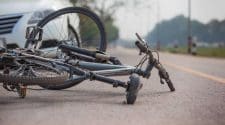
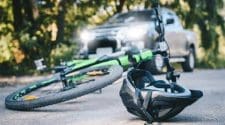
Scene documentation must be carried out before anyone leaves. Photographs taken immediately after the crash capture evidence that changes or disappears within hours. Details such as vehicle positions, skid marks, road conditions, nearby traffic signs and signals, the door zone configuration in a dooring crash, and the physical state of the bike and rider’s equipment must be preserved through photos. Failure to do so risks losing them and having no supporting evidence for your claim.
Vehicle position photographs establish the geometry of the collision and can refute later claims about speed or direction. The existence of skid marks or the lack of them tackles the question as to whether the driver hit the breaks in time. The condition of the road in relation to potholes, lack of lane markers, and impaired visibility due to obstructions is thought of in terms of the liability of the owner of the road or the party that maintains it.
Collect witness contact information before anyone leaves. Securing evidence at the earliest stage is an important aspect of any bicycle accident compensation process.
Seek Medical Evaluation Before Deciding How Injured You Are
A cyclist who refuses to be taken to the hospital at the scene and opts to ignore their injuries places themselves in serious legal jeopardy in addition to health risks. Pain at the site of a collision often tends to be nullified by adrenaline. Any latent injuries that might be present can go undetected and become aggravated with time.
Insurance Coverage in Bike Crashes Is More Complex Than Most Riders Expect
When a motor vehicle driver causes a crash, the primary source of compensation is the driver’s auto liability insurance. Depending on the policy limits, it is expected to cover medical expenses, bicycle damage, and other compensable losses. The cyclist is a third-party claimant against that policy. Early recorded statements to the at-fault driver’s insurer are best deferred until the full scope of injuries is understood.
In a hit-and-run where the driver’s never identified, or where the at-fault driver carries no insurance or not enough of it, uninsured and underinsured motorist coverage becomes the relevant source of compensation. Many cyclists don’t realize their own auto policy, if they have one, may extend UM/UIM coverage to them even as a pedestrian or cyclist.
Getting an Ohio bicycle accident lawyer or other legal professionals in other states is advised when dealing with insurance companies. These legal professionals represent injured cyclists across commonly disputed matters, including emergency care, lost wages, reduced earning capacity, and pain and suffering. Reviewing every applicable policy promptly after a crash matters, since notification deadlines can pass before the full range of available coverage is even understood.
In no-fault auto insurance states, a cyclist hurt in a crash involving a motor vehicle may be able to access personal injury protection benefits through their own policy. In some states, protection is availed through the at-fault driver’s policy, regardless of who was at fault. In some states, PIP coverage is available to cyclists injured by insured vehicles even though the cyclist wasn’t in a vehicle themselves. Medical Payments coverage, an optional add-on in most states, similarly provides a first-pay source for medical bills without needing a fault determination first.
The Dooring Problem: A Crash Type With Its Own Legal Framework
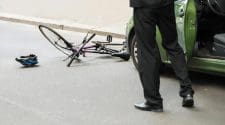
Dooring crashes involve a vehicle door opening into a cyclist’s path and often have specific legal rules. Many jurisdictions have specific statutes assigning the duty to check for approaching traffic before opening a door. New York Vehicle and Traffic Law Section 1214 is one example, prohibiting anyone from opening a door unless it’s reasonably safe to do so. Where a statute like that exists and a door opens into a cyclist’s path, the door opener’s liability is fairly clear.
Dooring crashes still raise a specific comparative fault argument insurers commonly make. This argument involves saying that a cyclist was riding too close to parked cars and should have stayed farther from the door zone. Whether that argument actually reduces a cyclist’s recovery depends on the state’s comparative or contributory negligence standard. The presence of a designated bike lane that caused the cyclist to be in a fixed position is another factor. The cyclist’s actual speed and lane position will also be looked at.
Photographs taken at the scene, a medical record made within hours, witness contact information collected before people disperse, and notice given to every applicable insurer before contractual deadlines run are important. Each of these pieces of evidence either happens or doesn’t happen inside a narrow window. The legal rights cyclists have on the road are the same rights any road user has. What protects those rights afterward is how complete the factual record is before the scene clears and memories start to fade.