


The Manhattan Beach Grand Prix is an annual criterium held on a 1.3-mile course through downtown Manhattan Beach, organized by the South Bay Wheelmen and sanctioned as the NCNCA California State Championship Criterium. The event day typically runs from about 7:00 AM to 5:00 PM, opening with the Manhattan Mile and closing with pro finals, with a kids’ race around midday. For registration deadlines and the final race-day schedule, check the official event site directly.
TL;DR:
- Register online early, as popular categories tend to fill before race week, and late registration often incurs extra fees or may not be available.
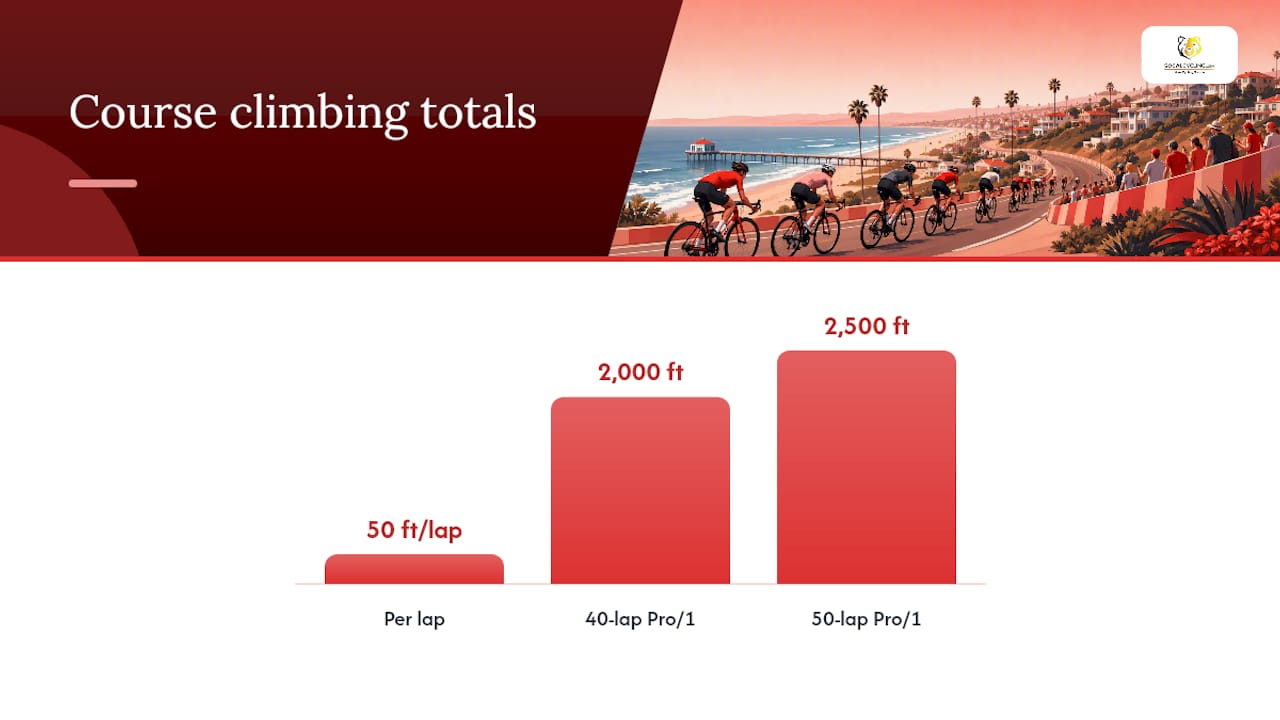
- The course features two sweeping 180-degree turns and about 50 feet of climbing per lap, with a persistent headwind along Valley Drive that challenges breakaways.
- Racers should gear up with a mid-compact setup and fresh tires, as the course demands technical handling and can result in a brutal grind over multiple laps.
- The event day runs from early morning to late afternoon, with a series of races, kids’ events, and award ceremonies, requiring spectators to arrive early and be prepared.
- Safety relies on course marshals and rider communication, especially around the tight turns and uphill finish, with medical support stationed near the start/finish zone.
Table of Contents
- What Is the Manhattan Beach Grand Prix at a Glance?
- How Do You Register for the Manhattan Beach Grand Prix?
- What Makes the Manhattan Beach Grand Prix Course So Demanding?
- What Does a Typical Race Day Schedule Look Like?
- Who Has Won the Manhattan Beach Grand Prix Over the Years?
- What Should Spectators Know Before Heading to Manhattan Beach?
- How Can You Volunteer or Contact the Organizers?
- How Does the Race Handle Safety and Medical Support?
- What Prizes and Awards Can Racers Expect?
- What Categories and Age Groups Can Race?
- What Should You Know About SoCalCycling’s Coverage of This Race?
- Where to Find More Race-Day Resources
- Sources
What Is the Manhattan Beach Grand Prix at a Glance?
The Manhattan Beach Grand Prix has run on the same closed-circuit course since it launched in 1962, and it hit its 63rd edition as of July 2026, making it one of the longest-running single-day criteriums still using its original layout, according to the Manhattan Beach city calendar. The South Bay Wheelmen organize the event, and Greg Aden has served as race director in recent official listings.
Here’s what defines the event on paper:
- Organizer: South Bay Wheelmen, a longstanding South Bay cycling club
- Race director: Greg Aden (per official race materials)
- Course length: 1.3 miles, run as multiple laps depending on category
- Editions: 63 as of July 2026, dating back to a 1962 founding
- Venue: Live Oak Park area, which serves as the start/finish zone
- Bonus events: the Manhattan Mile and a dedicated kids’ race round out the program
The course itself hasn’t changed shape in decades, which is part of why longtime racers treat it as a benchmark. You’re not learning a new circuit every year. You’re learning to ride the same 1.3 miles faster than you did last time.
How Do You Register for the Manhattan Beach Grand Prix?
Online pre-registration is the only reliable path into most category fields. Historical race flyers show registration typically closing the week before the event, and mail-in or Saturday walk-up registration has often been discontinued or sharply limited in recent editions, according to the official race flyer.
Entry fees have historically landed in the $20 to $60 range depending on category, with late-entry surcharges kicking in as the deadline approaches. Popular fields, especially Masters and Cat 4/5 categories, tend to fill early.
- Register online through the portal linked from mbgp.com well before the posted deadline
- Expect a late fee if you register in the final days before the cutoff
- Confirm whether race-day registration is offered for your category. It’s not guaranteed
- Bring a valid USA Cycling license or day-license payment if you’re racing outside a permanent membership
Pro Tip: Register the moment the flyer drops. Fields for popular categories at MBGP have historically filled before race week, and there’s no guarantee a race-day option exists for latecomers.
What Makes the Manhattan Beach Grand Prix Course So Demanding?
Racers describe the layout as a “bent paperclip”: two long straightaways connected by two sweeping 180-degree turns, with roughly 50 feet of climbing packed into every lap, according to the official course overview. That climbing figure sounds modest until you multiply it across 40 or 50 laps in a Pro/1 race, where the accumulated vertical adds up to a genuine grind by the closing kilometers.
The course’s defining feature: a persistent headwind along Valley Drive that makes solo breakaways brutally hard to sustain, paired with a finish stretch that ramps slightly uphill and rewards riders who can hold a sprint position through the last 180-degree turn.
A few things worth sorting out before you clip in:
- Gearing — a compact or mid-compact setup handles the finishing rise better than a big-ring-only mentality suited to flat crits.
- Tires — fresh rubber and a pre-race pressure check matter more here than on smoother circuits, given the turn load on tire sidewalls.
- Team tactics — because breakaways struggle against the Valley Drive headwind, races often come down to controlled bunch sprints, so committing teammates to chase early attacks pays off.
- Warm-up — get a full 20 to 30 minutes in before your category call, since the first hard corner comes almost immediately off the start.
What Does a Typical Race Day Schedule Look Like?
Event day generally spans about 7:00 AM to 5:00 PM, structured around a predictable rhythm that longtime spectators and racers used to plan their day, based on local event listings from The MB News. Always confirm the exact times against the current year’s official flyer or the race-day results board, since exact start times shift slightly year to year.
A representative running order looks like this:
- ~7:00 AM — Manhattan Mile kicks off the day
- Early morning — Cat 4 fields take the course
- Mid-morning — Masters and Junior categories race
- ~Noon — Kids’ race brings out the youngest riders and their families
- Afternoon — Cat 3, Cat 2, and Cat 1/Pro fields run in sequence, building toward the marquee races
Most category races run somewhere between 30 and 90 minutes depending on field size and lap count, with podium presentations typically following 15 to 20 minutes after each race finishes. If you’re chasing the headline Pro/1 race, plan to arrive by early afternoon at the latest. Late-day fields draw the largest crowds along Valley Drive.
Who Has Won the Manhattan Beach Grand Prix Over the Years?
Founded in 1962 by Ted Ernst, the Manhattan Beach Grand Prix has built one of the deepest results archives in American criterium racing, and its continued run on the same course gives it a rare through-line other events lost decades ago, per Easy Reader’s anniversary coverage. Sixty-three editions means generations of Southern California racers have podiumed on the same 1.3 miles their coaches or teammates once raced.
Several riders have won the event multiple times across its history, including Justin Williams, whose name shows up repeatedly in Pro/1 category results over the years. Full official results, category breakdowns, and archived winner lists live on the event’s own site.
- Check mbgp.com/results for the most recent finishing orders by category
- Cross-reference the year’s official race flyer for field sizes and category structure
- Look to local race reporting for context on breakaways, crashes, and tactical storylines the raw results sheet won’t capture
The event’s longevity is arguably its strongest credential. Plenty of criteriums come and go with sponsorship cycles. Sixty-three years on the same circuit is a different kind of achievement entirely.
What Should Spectators Know Before Heading to Manhattan Beach?
The start/finish area sits near Live Oak Park, and that’s where you’ll find the densest concentration of race-day activity: vendor booths, a food court, and a kids’ zone running alongside the junior and children’s races. Official event materials list attendance scaling into the thousands of spectators on marquee editions, with racer fields sometimes approaching a thousand entrants across all categories combined.
Course-side parking is limited, and team tent or vehicle space near the circuit requires advance approval from the race director rather than a first-come setup.
- Arrive early, ideally before mid-morning, if you want a shaded viewing spot along the back straight
- Bring sun protection and a folding chair. Beach-adjacent race days get hot fast with little natural shade
- Budget extra time for parking. Street spots near Live Oak Park disappear quickly once the Cat 4 fields start
- Watch the finish-line corner if you want to see the tactical payoff of that uphill sprint setup
Pro Tip: If you’re bringing kids to watch, time your arrival around the midday kids’ race. It’s a manageable, low-crowd window before the afternoon fields draw the bigger spectator numbers.
How Can You Volunteer or Contact the Organizers?
The South Bay Wheelmen run the event with support from local groups including the Lions Club, and the race depends heavily on that volunteer base for course marshaling, registration, and race-day logistics, according to a GoneLocal event listing. Volunteers typically get race-day course access and small perks in exchange for a shift.
- Sign up through the volunteer portal linked from the official event page ahead of race week
- Contact the race director directly for team tent approvals or promoter questions. Contact details are listed on the current year’s race flyer
- Reference the official race flyer for rules, category eligibility, and registration fine print
- Check the NCNCA event page for state championship eligibility requirements if you’re racing for the title
How Does the Race Handle Safety and Medical Support?
Criterium racing at speed through repeated 180-degree turns carries real risk, and race organizers structure the event day around that reality. Expect a staffed medical presence positioned near the start/finish area for the duration of racing, standard practice for USA Cycling-permitted criteriums of this scale.
Course marshals, typically drawn from the South Bay Wheelmen volunteer base and supporting community groups, hold intersections and turn points closed to vehicle traffic throughout each race block. That marshaling matters more on a course like this one than on a simple oval. The two sweeping 180-degree turns are where the bulk of contact incidents in bunch-sprint criteriums tend to happen, especially in larger Cat 4 and Cat 5 fields where riders are still building race craft.
If you’re racing, a few habits reduce your own risk regardless of what the organizers provide: hold your line through both 180s, communicate verbally when you’re moving up through the field, and treat the final sprint corner with respect even if you’re not contesting the finish. If you’re a parent bringing kids to the midday race, organizers generally keep that event at a controlled pace with a shorter, simpler loop than the adult categories, though you should confirm exact safety protocols against the current year’s flyer since specifics can shift year to year.
Anyone with a serious mechanical or medical concern on course day should flag race officials near the start/finish line immediately rather than waiting for a marshal to notice.
What Prizes and Awards Can Racers Expect?
Prize structures at the Manhattan Beach Grand Prix follow the standard criterium model: cash or product payouts scaled by category, weighted toward the deeper Pro/1, Pro/1/2, and Masters fields where sponsorship dollars concentrate. Exact purse amounts vary by year and category, so the current race flyer is the authoritative source rather than assuming last year’s numbers carry over.
Given the event’s status as the NCNCA California State Championship Criterium, winners in eligible categories don’t just take home a payout. They earn state championship jersey rights for the following season, which raises the stakes noticeably in fields where NCNCA-licensed riders are chasing that title on top of the win itself.
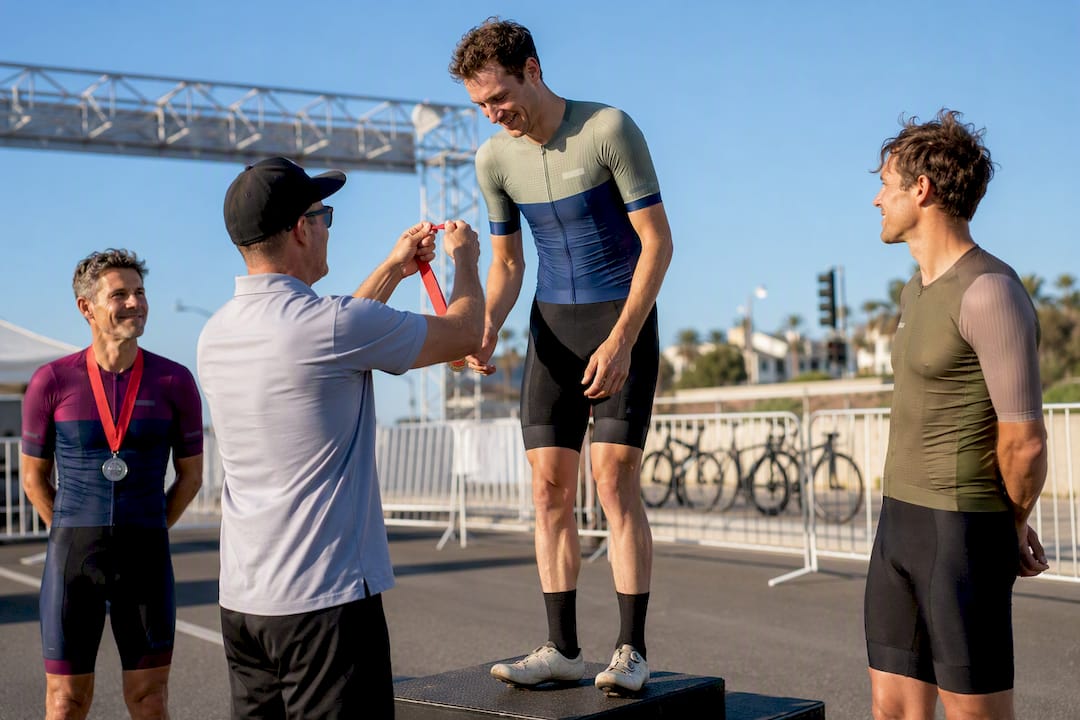
Awards ceremonies typically follow each category’s finish by 15 to 20 minutes, once results are confirmed and any photo-finish or protest issues get sorted. Podium presentations happen near the start/finish area, which doubles as the best spot for spectators who want to catch both the sprint finish and the ceremony without relocating.
If you’re racing multiple categories in a day, which some Masters and Cat 3 racers do, plan your schedule around overlapping award times. It’s common for a podium call to land right as your next race is staging.
What Categories and Age Groups Can Race?
The event runs the standard USA Cycling and NCNCA category structure, which means the field spans from Cat 5 beginners through Cat 1 and Pro riders, plus dedicated Masters age brackets and a Junior category for racers under 18.
- Cat 4 and Cat 5 — entry-level fields, typically the largest by rider count and usually scheduled earlier in the day
- Cat 3 — mid-level field, often a proving ground for racers moving toward elite categories
- Cat 1/2 and Pro — the headline afternoon races, including the fields eligible for the state championship title
- Masters — age-graded categories (commonly split at intervals like 35+, 45+, 55+) that draw some of the deepest, most tactically savvy fields of the day
- Juniors — under-18 racers, often grouped by age bracket within their own field
- Kids’ race — an unsanctioned, low-speed event around midday for younger children, separate from the licensed categories above
Category eligibility ties to your USA Cycling license grade, so confirm your current category before registering. Racers occasionally move up a category intentionally for a tougher field, but a downgrade typically requires documentation submitted ahead of the event rather than a race-day request.
What Should You Know About SoCalCycling’s Coverage of This Race?
Southern California’s crit scene runs deep, and the Manhattan Beach Grand Prix sits near the top of that calendar every year. Our reporters covering South Bay events tend to focus on three threads: the tactical story of how teams handle that Valley Drive headwind, the strength of the club’s youth and junior programming, and the community texture that keeps volunteers coming back decade after decade.
That third thread matters more than it sounds. A race surviving 63 editions on the same course isn’t just a scheduling accomplishment. It reflects a volunteer and sponsorship base, largely built through the South Bay Wheelmen and community partners, that outlasts any single race director’s tenure.
If you want race-day tactics, photo galleries, and category-by-category breakdowns beyond what any single flyer can offer, our race reports on Southern California criteriums dig into the details that raw results sheets skip.
— SoCalCycling.com
Where to Find More Race-Day Resources
Racing well at an event like Manhattan Beach Grand Prix takes more than knowing the course. It takes knowing the calendar around it, and that’s where Socalcycling fills a gap the official race flyer can’t: a running view of every other Southern California criterium worth building your season around.

If you’re racing MBGP as a season opener or a mid-summer test, our guide to finding criterium races in Southern California rounds out the calendar with events at a similar level, sorted by category and region. And if you’re a volunteer, promoter, or someone thinking about stepping into race organizing yourself, our breakdown of the race director role in cycling events walks through what actually goes into running a day like this one, from permitting to volunteer coordination.
Bookmark our event calendar and check back as the current year’s MBGP flyer drops with confirmed dates and fees. That’s the fastest way to catch registration windows before popular categories fill.
Sources
- MBGP official overview — course and event details
- NCNCA event page — Manhattan Beach Grand Prix
- MBGP race flyer (PDF) — registration and fee details
- The MB News — Manhattan Beach Grand Prix event listing