



Gravel racing is defined as competitive or recreational cycling on unpaved roads, dirt tracks, and mixed-surface routes, and finding local gravel races near me has never been more achievable thanks to dedicated platforms, regional cycling communities, and digital event calendars. The sport has grown from a niche pursuit into one of cycling’s most exciting disciplines, with events ranging from 25-mile community rides to 100-mile endurance tests. Platforms like BikeReg, regional gravel race directories, and local Facebook cycling groups give you direct access to upcoming gravel rides in your area. This guide walks you through exactly where to look, how to evaluate events, and how to register and prepare with confidence.
How to find gravel races near me using online platforms
A starting point for discovering gravel cycling events near me is BikeReg.com, which aggregates hundreds of events across the United States and lets you filter by state, date, and discipline. Searching “gravel” in your region returns a sorted list of upcoming events with registration links, distance options, and organizer contact details. Most serious gravel events list on BikeReg months in advance, so checking it regularly gives you the best shot at early registration.
Beyond BikeReg, region-specific directories like GravelCyclist.com and state-level cycling association websites publish gravel race calendars updated throughout the season. These sources often include smaller, grassroots events that never appear on national platforms. Checking your state’s USA Cycling affiliate page is another reliable method, since many sanctioned gravel events register through that system.
Local cycling club websites and Facebook groups are where the real insider knowledge lives. Clubs in Southern California, for example, frequently post about local gravel races before they appear on any public calendar. Joining your regional cycling Facebook group or following local club Instagram accounts puts you in the conversation early. The SoCalCycling.com event calendar is a strong resource for California-based riders looking for curated, up-to-date race listings.
- SoCalCycling.com: Find upcoming gravel races on the gravel race directory
- BikeReg.com: Filter by state and discipline for national event coverage
- GravelCyclist.com: Focused gravel race directory with route profiles
- USA Cycling affiliate pages: Sanctioned events with official registration
- Local cycling club websites: Early announcements and grassroots events
- Facebook cycling groups: Real-time tips from riders in your area
- Cycling newsletters: Subscribe to local club emails like the SoCalCycling.com Newsletter for seasonal calendars
Pro Tip: Set Google Alerts for “[your city/region] gravel race 2026” to receive automatic notifications when new events are announced online.
How to evaluate and choose the right local gravel race
Choosing the right event from your gravel race calendar comes down to matching the race’s format and difficulty to your current fitness and goals. Race distances range from 25 to 100 miles, with many events offering multiple distance options so riders can self-select based on ability. A 25-mile course suits a rider building base fitness, while an 88-mile or 100-mile route demands months of structured training and strong mechanical self-sufficiency.
Reading the event description carefully tells you more than just the distance. Route profiles, elevation gain, surface type (chunky gravel versus packed dirt), and aid station frequency all shape the experience significantly. An event with 8,000 feet of climbing over 60 miles is a fundamentally different challenge than a flat 60-mile gravel cruise through farmland.
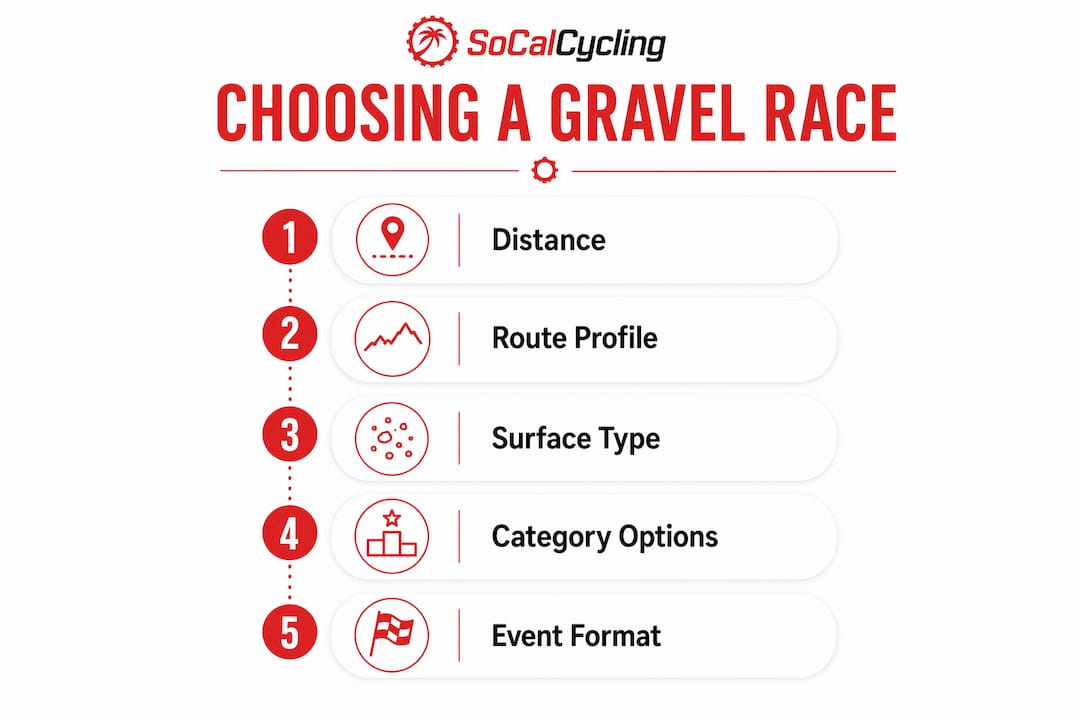
Expanded category options at most modern gravel events now include age-based groups, recreational versus competitive waves, and even paracyclist categories. This inclusivity means you are not racing against elite athletes if you enter the recreational wave. Understanding which category fits you prevents both frustration and unnecessary pressure on race day.
| Factor | What to look for |
|---|---|
| Distance options | Events offering 25, 50, and 100-mile routes give you flexibility |
| Elevation profile | Match climbing totals to your current training load |
| Aid station frequency | More stations mean less self-sufficiency required |
| Category structure | Separate recreational and competitive waves reduce pressure |
| Registration fee | Fees typically range from $35 to $99 with early bird pricing |
| Event culture | Grassroots events prioritize community; commercial events offer more amenities |
Grassroots events like COWabunga! Gravel Race in Arkansas or Funk Bottoms Gravel in New York operate with a community-first philosophy. These events often fund local cycling infrastructure through race proceeds, making your entry fee a direct investment in regional trails and roads. Commercial events offer polished logistics and larger fields but can feel less personal.
Pro Tip: Align your race choice with a training block goal. If you are building toward a century ride, choose a 65 to 88-mile gravel event six weeks out as a benchmark effort.
Step-by-step process for registering and preparing
Registration for most gravel events happens entirely online, and race day registration is increasingly rare. Most events close registration weeks before the start, so waiting until the last minute means missing out entirely. Have your information ready before you start the registration process to avoid losing your spot.
Registration steps:
- Locate the event on SoCalCycling.com, the organizer’s website, or a regional gravel race calendar
- Select your distance category and competitive or recreational wave
- Enter your personal details, emergency contact, and cycling experience level
- Review and sign the event waiver electronically
- Pay the registration fee and save your confirmation email
- Note the packet pickup date, start time, and parking instructions from the event guide
Essential gear checklist for race day:
- Gravel-specific bike with 38mm to 50mm tires suited to the course surface
- Two spare tubes, a CO2 inflator, and a multi-tool
- Hydration system (bottles or a hydration pack depending on aid station spacing)
- GPS device or printed cue sheets loaded with the official route
- Nutrition for the full distance plus 20% extra
- A gravel-rated helmet with MIPS protection for technical terrain
- Cycling computer with backup battery or a power bank
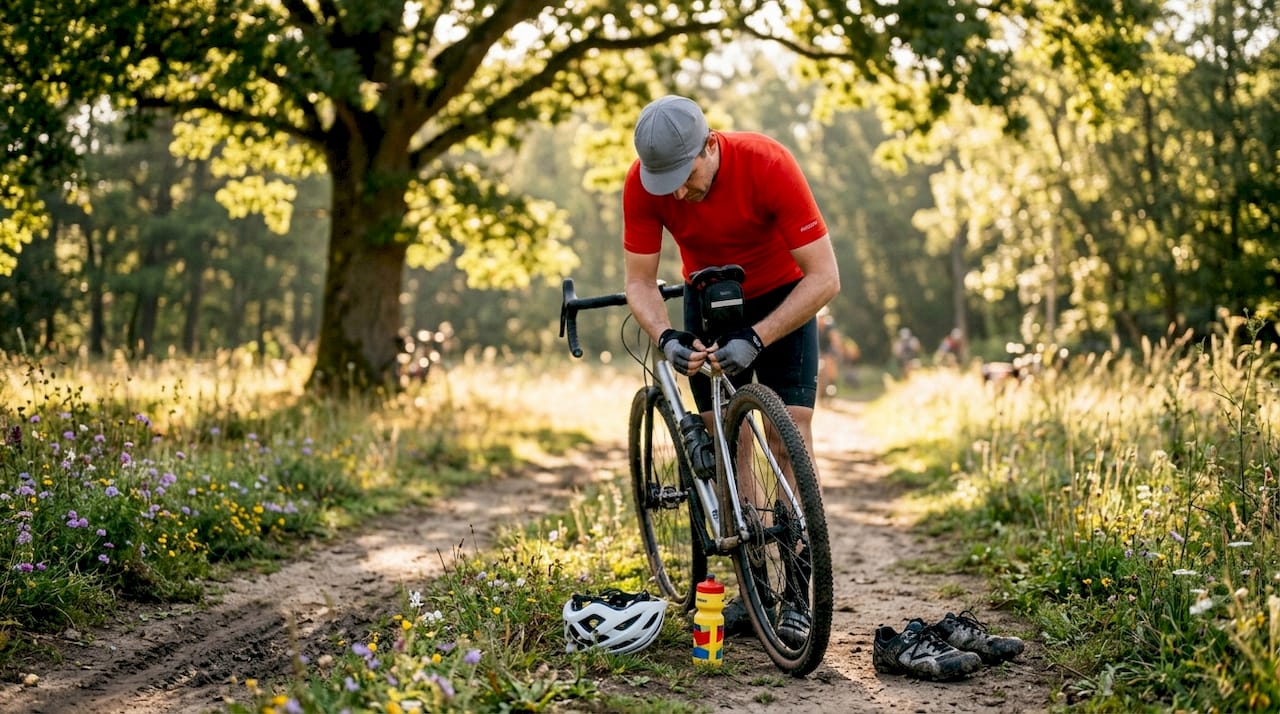
Riders are expected to be self-sufficient between aid stations, carrying their own tools, tubes, and hydration. This is not a road race with neutral support vehicles following the peloton. If you flat on a remote gravel section, you fix it yourself. Practice your tube change until it takes under three minutes before race day.
Understanding the sportive format helps first-time participants set realistic expectations about pacing, aid station etiquette, and finishing protocols. Many gravel events operate more like timed sportives than traditional races, especially in the recreational categories.
Common challenges when searching for and participating in local gravel races
The biggest frustration most riders encounter is discovering a perfect event only to find registration already closed. Early registration is critical because most gravel races cap their fields and stop accepting entries well before race day to manage logistics, aid station supplies, and timing systems. The solution is simple: build a habit of checking your gravel race calendar in January and February for the full season ahead.
Limited local options push some riders to expand their search radius. If your immediate area has few events, searching within a two to three hour drive opens up significantly more choices. Connecting with a local cycling group often reveals events that never appear in online searches, since experienced local riders know about small community races that operate on word-of-mouth registration.
Course navigation is a genuine challenge that catches first-timers off guard. Gravel races often rely on GPS or cue sheets rather than dense course markings, meaning a moment of inattention can send you down the wrong road. Load the official GPX file onto your cycling computer before race day and carry a backup power source.
Safety on open roads deserves serious attention. Many gravel events run on public roads shared with vehicles, farm equipment, and livestock. Riding predictably, signaling turns, and staying alert at road crossings are non-negotiable habits.
“The gravel community is genuinely welcoming. Ask questions in local Facebook groups, introduce yourself at the start line, and you will find experienced riders who are happy to share course knowledge and race-day advice.”
Key takeaways
Finding and racing local gravel events requires early registration, the right search platforms, and honest self-assessment of your fitness and gear readiness.
| Point | Details |
|---|---|
| Use specialized platforms | BikeReg and regional gravel directories surface events that general search engines miss. |
| Register early | Most gravel races close registration weeks before the event with no walk-up option. |
| Match race to fitness | Choose distance and category based on your current training, not your aspirations. |
| Prepare for self-sufficiency | Carry tools, tubes, GPS, and extra nutrition since neutral support is rarely available. |
| Tap local communities | Cycling clubs and Facebook groups reveal grassroots events that never appear online. |
Why local gravel races are worth every mile of searching
We at SoCalCycling.com have covered gravel events from Southern California to the East Coast, and the one thing that consistently stands out is how different the atmosphere feels compared to road racing. The community-first philosophy at grassroots events like KowTown Gravel is not marketing language. It is the actual experience. Post-ride meals, riders swapping stories at the finish line, and organizers who genuinely know their participants by name create something that a large commercial event rarely replicates.
Our honest take: the smaller the event, the richer the experience. A 200-rider gravel race on rural roads where the organizer hand-stamped your bib number will stay with you longer than a 3,000-rider event with a festival footprint. We have seen local races directly fund trail maintenance and gravel road improvements in their host communities, which gives participation a tangible impact beyond personal performance.
If you are new to the discipline, do not wait until you feel “ready.” Sign up for a shorter distance at a local event, connect with other riders at the start, and let the course teach you what your training cannot. The gravel community rewards curiosity and grit in equal measure.
Discover gravel events with SoCalCycling.com
SoCalCycling.com is the go-to resource for California cyclists looking to stay current on gravel cycling events, road races, and community rides across the region and beyond.

The SoCalCycling.com event calendar is updated regularly with upcoming gravel rides, gran fondos, and local race listings across Southern California and the broader West Coast. Whether you are searching for your first gravel event or adding races to a full season calendar, the site gives you direct access to event details, registration links, and race coverage from riders who have been on those roads. Visit SoCalCycling.com to find your next gravel race and connect with one of the most active cycling communities in the country.
FAQ
How do I find gravel races near me?
Search platforms like BikeReg.com filtered by your state and the gravel discipline, and check regional cycling club websites and Facebook groups for local event announcements. Setting a Google Alert for your region plus “gravel race 2026” automates the discovery process.
When should I register for a local gravel race?
Register as soon as registration opens, ideally one to two months before the event, since most races close early with no walk-up option on race day. Early registration also typically secures lower entry fees before prices increase.
What distance should I choose for my first gravel race?
A 25 to 40-mile distance is the right entry point for most first-time gravel racers, giving you a genuine race experience without the self-sufficiency demands of longer formats. Events offer multiple distances so you can select the option that matches your current fitness.
What gear do I need for a gravel race?
At minimum, you need a gravel bike with appropriate tires, two spare tubes, a multi-tool, a CO2 inflator, a GPS device loaded with the route, and enough nutrition and hydration to cover the full distance. Self-sufficiency between aid stations is a core expectation at virtually every gravel event.
Are gravel races suitable for beginner cyclists?
Yes. Inclusive category structures at most modern gravel events separate recreational and competitive riders, and shorter distance options make entry-level participation genuinely accessible. The gravel community is widely regarded as welcoming to riders at all experience levels.
Recommended
- Find a Cycling Group Near Me: Your 2026 Guide
- SoCalCycling.com | California Cycling Events, News and Racing
- How to Join a Charity Cycling Ride Fundraiser
- Cycling Sportive Explained: Your Complete Ride Guide