


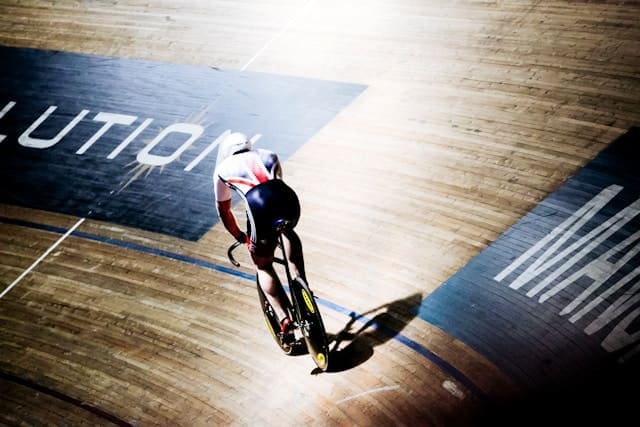
A cycling omnium event is a multi-discipline track or road competition where riders accumulate points across several distinct races to determine the most well-rounded cyclist. The modern track omnium, standardized by the UCI and featured at the Olympic Games, consists of four mass-start events held within a single day: the Scratch race, Tempo race, Elimination race, and Points race. Unlike a time trial or a sprint, the omnium rewards consistency and adaptability above all else. No single specialist dominates it. The rider who manages effort, reads races, and scores across every event wins.
What is a cycling omnium event and how is it structured?
The omnium is best understood as a cycling decathlon. Each event tests a different physical and tactical quality, and your cumulative points total across all four decides your final ranking. The current four-event format replaced a longer six-event schedule after the 2016 season, when the UCI streamlined the program to sharpen competition intensity and improve the experience for spectators watching live or on broadcast.
That restructuring removed the sprint time trial and flying lap, replacing them with the Tempo race. The result is a format that places greater emphasis on mass-start racing skill and reduces the advantage of pure track sprinters. For riders and fans alike, the single-day structure creates a compressed, high-stakes atmosphere that no other track discipline matches.
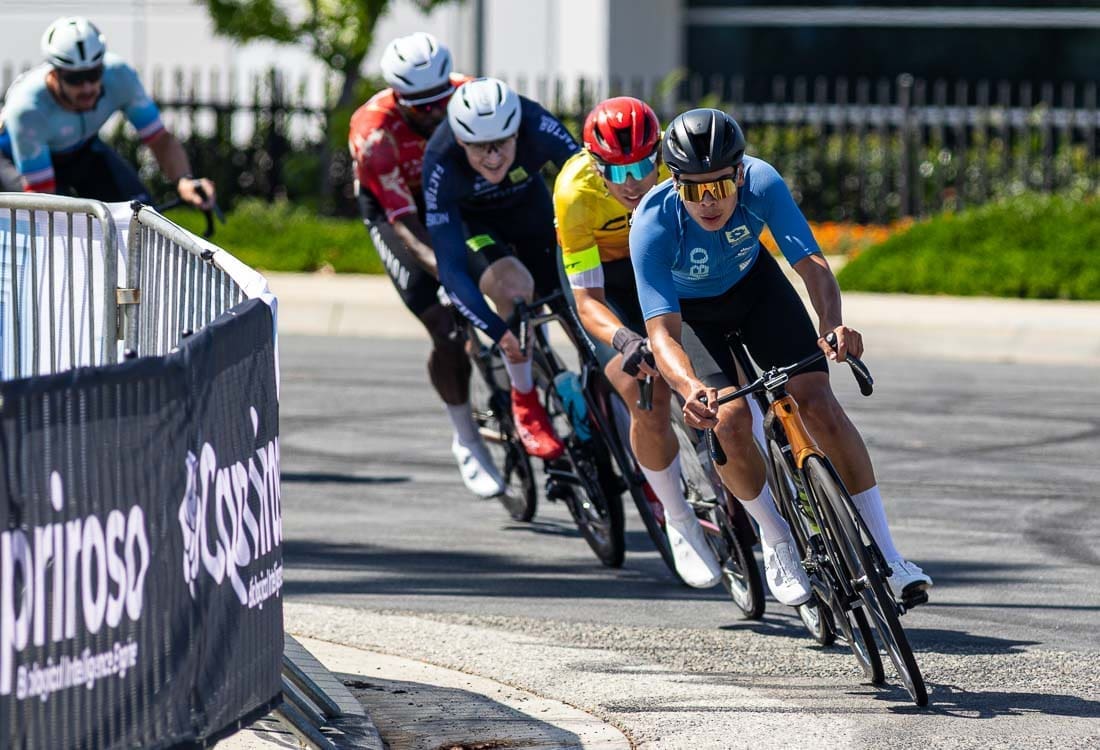
The road version of the omnium follows a different schedule, typically spanning two to three days and incorporating a time trial, criterium, and mass-start road race. Both formats share the same core principle: points accumulate across events, and you must complete every discipline to qualify for the overall standings.
What are the four events in a track omnium?
Each of the four track omnium events has its own rules, rhythm, and demands. Here is how each one works:
- Scratch race: A mass-start race over a set distance (15 km for men, 10 km for women at elite level). The first rider across the finish line wins. No sprint points, no intermediate laps. It rewards pure race-reading ability and a strong finishing sprint.
- Tempo race: Riders sprint for a single point on every lap. A rider who gains a lap on the field earns 20 points. This event rewards aggressive, sustained effort and the ability to read when to attack and when to conserve.
- Elimination race: Every two laps, the last rider across the line is eliminated. The field shrinks continuously until only two riders remain and sprint for the win. Positioning and nerve matter more here than raw power.
- Points race: The final and most complex event. Riders sprint every 10 laps for points (5, 3, 2, 1 for the top four). Gaining a lap on the field earns 20 points and can dramatically alter final standings. This event often decides the overall omnium winner.
Pro Tip: In the Elimination race, do not burn matches trying to win laps. Your only goal is survival. Save your legs for the Points race, where the real points battle happens.
The four events flow back-to-back across the competition day with minimal rest between them. That structure is not incidental. It is the defining feature of the omnium, and it separates riders who pace intelligently from those who blow up early.
How does the omnium scoring system work?
The omnium uses a cumulative points system where your finishing position in each of the first three events earns you points on a descending scale. First place earns 40 points, second earns 38, third earns 37, and so on down the field. Those totals carry forward into the Points race, where your score can rise or fall based on sprint finishes and lap gains.
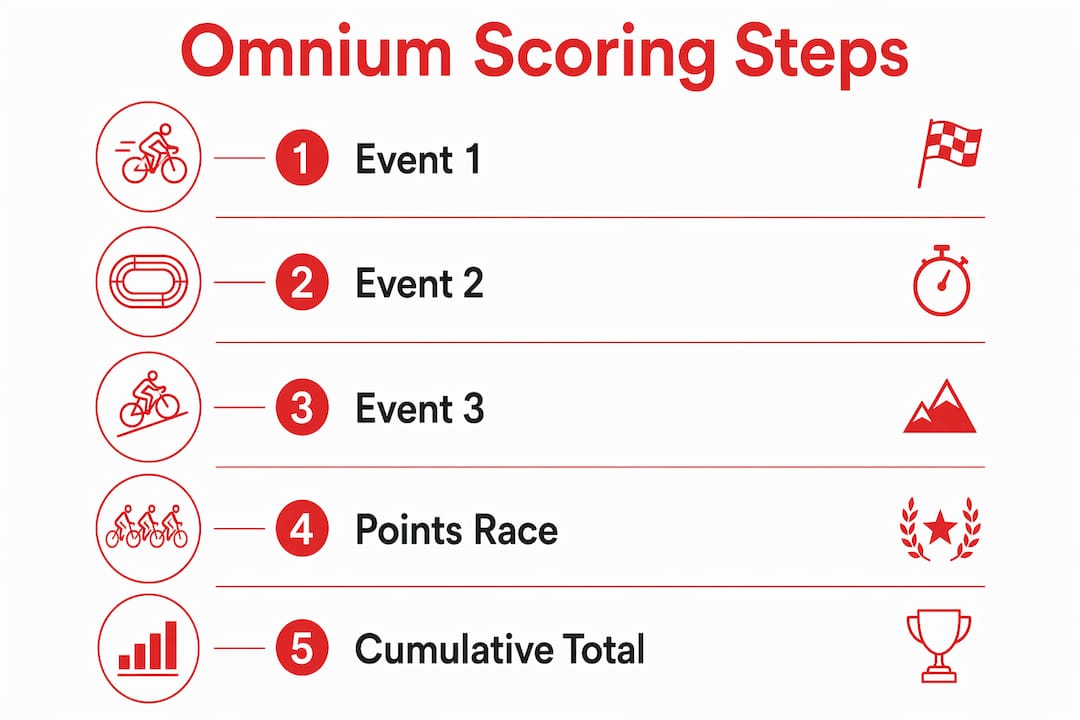
The Points race finale is where the omnium gets genuinely dramatic. A rider sitting in third overall can surge to first by gaining a lap and winning two or three sprint points. Equally, a leader who misjudges effort and misses sprints can drop several places. The system rewards consistent scoring across all four events, not dominance in one.
| Scoring element | How it works |
|---|---|
| Finishing position (events 1-3) | Points awarded on a descending scale; 40 for 1st, 38 for 2nd, 37 for 3rd, etc. |
| Points race sprints | Top four finishers in each sprint earn 5, 3, 2, and 1 point respectively |
| Lap gain (any event) | Rider earns 20 bonus points for gaining a full lap on the field |
| Lap loss (any event) | Rider loses 20 points for being lapped by the field |
| Overall winner | Rider with the highest cumulative total after all four events |
Pro Tip: Track your points total mentally as the day progresses. Knowing exactly how many points separate you from the riders above and below you in the Points race lets you make smarter decisions about when to attack and when to sit in.
Riders excelling at multiple skills tend to score better overall than pure sprinters or pure endurance riders. The scoring architecture makes this inevitable. A sprinter who finishes last in the Tempo race and first in the Points race will likely lose to a versatile rider who finishes third in every event.
What are the physical and tactical demands of competing in an omnium?
The omnium demands a physiological profile that does not exist in most other cycling disciplines. You need explosive sprint power for the Elimination race and the Points race sprints. You need sustained aerobic capacity for the Tempo race. And you need the mental clarity to execute tactics across all four events after your legs are already fatigued.
Mental fatigue from shifting between diverse racing styles rapidly is one of the most underestimated challenges in the omnium. A rider who just survived the Elimination race by a wheel length must immediately recalibrate for the Points race, which requires a completely different strategic mindset. That cognitive reset under physical stress separates experienced omnium competitors from newcomers.
“The omnium rewards the smartest racer who can adapt strategy and manage fatigue rather than just pure sprinters or endurance specialists.” — omnium cycling insight
Pacing across the full day is the tactical skill most riders underestimate. Poor pacing in opening races reduces your ability to contest the Points race, which carries the most potential for points swings. Riders who go all-out in the Scratch race and Tempo race often find themselves unable to respond to attacks in the final event, where the omnium is actually won or lost.
The omnium blends explosive and endurance traits, uniquely rewarding cognitive adaptability under fatigue. Think of it as four separate races where your performance in race one directly affects your capacity in race four. That chain of consequences makes every decision consequential from the opening lap.
How does the road omnium differ from the track format?
The road omnium and track omnium share a name and a scoring philosophy, but they are structurally different competitions. Understanding those differences matters if you are planning to compete or follow the events.
| Feature | Track omnium | Road omnium |
|---|---|---|
| Duration | Single day | Multiple days (typically 2-3) |
| Events | Scratch, Tempo, Elimination, Points race | Time trial, criterium, mass-start road race |
| Venue | Indoor velodrome | Open road circuits |
| Scoring | Points by finishing position, cumulative | Points by finishing position, cumulative |
| Completion requirement | All four events required | All disciplines required for overall standings |
| Physical demands | Explosive speed, endurance, tactical agility | Time trialing, criterium handling, road race tactics |
The road omnium’s multi-day structure changes the recovery equation entirely. Riders can sleep, eat strategically, and adjust their approach between events. On the track, you get minutes, not hours. That compression is what makes the track omnium uniquely brutal and uniquely compelling as a spectator event.
Road omnium competitors also need a broader technical skill set. A strong time trialist who cannot handle a criterium circuit will struggle, just as a criterium specialist who fades in a mass-start road race will lose points. The road omnium spans multiple days with cumulative points determining the final winner, which means a bad day one can be recovered from. On the track, a poor Scratch race sets a deficit you carry into every subsequent event.
For riders considering which format suits them, the track omnium favors those with strong track racing backgrounds and the ability to perform under compressed fatigue. The road omnium suits riders with broader road racing experience who can manage multi-day competition.
Key takeaways
The omnium’s defining characteristic is that consistent scoring across all events beats winning any single race outright.
| Point | Details |
|---|---|
| Four-event track format | Scratch, Tempo, Elimination, and Points races all held in a single day at elite level. |
| Cumulative points decide the winner | Points from all four events add up; the Points race finale can swing the overall result significantly. |
| Versatility beats specialization | Riders who score consistently across all events outperform pure sprinters or pure endurance riders. |
| Road omnium differs structurally | Road format spans multiple days with a time trial, criterium, and mass-start race instead of track events. |
| Pacing is the critical skill | Burning too much energy early in the day compromises your ability to contest the decisive Points race. |
The omnium is the most honest test in cycling
We have covered a lot of track racing at SoCalCycling.com, and the omnium consistently produces the most tactically rich racing we see at any level. Here is the thing most people miss: the omnium does not reward the strongest rider. It rewards the most complete one.
We have watched riders with exceptional sprint numbers get outscored by athletes who simply made smarter decisions about when to contest points and when to sit in. The key is consistent scoring and strategic energy allocation, not winning every event. That insight sounds obvious until you watch a talented sprinter blow their legs in the Tempo race and limp through the Points race finale.
The mental side is genuinely underappreciated. Riders must rapidly reset tactics between races, juggling survival in the Elimination race with aggression in the Points race. We have seen athletes with superior fitness lose omnium competitions because they could not make that cognitive shift quickly enough. If you are preparing to compete, practice racing different formats back-to-back in training. The physical adaptation matters, but the mental rehearsal matters just as much.
Our honest take: the omnium is the format that most accurately identifies the best all-around track cyclist. Any discipline that punishes overspecialization and rewards adaptability is doing something right.
Explore California cycling events and omnium racing
Southern California is one of the most active cycling regions in North America, with track racing, road events, and multi-discipline competitions running throughout the year.

SoCalCycling.com covers the full spectrum of competitive cycling, from velodrome track nights where omnium formats appear regularly to road stage races and criteriums. If you are a competitive cyclist looking for events that include omnium disciplines or want to follow race results and athlete profiles, SoCalCycling.com is your resource for California cycling events, news, and race coverage. Whether you are building toward your first omnium start or tracking elite riders through a full season, the event calendar and race reports give you the context you need to compete and follow the sport intelligently.
FAQ
What is a cycling omnium event in simple terms?
A cycling omnium event is a multi-race competition where riders earn points across several distinct races and the highest cumulative total wins. The track version consists of four events held in a single day: Scratch, Tempo, Elimination, and Points race.
How many events are in a track cycling omnium?
The current UCI track omnium format includes four events in one day: the Scratch race, Tempo race, Elimination race, and Points race. This replaced the older six-event format after the 2016 season.
How does omnium scoring work?
Riders earn points based on finishing position in each of the first three events, with 40 points for first place on a descending scale. Those totals carry into the Points race, where sprint finishes and lap gains or losses can change the final standings.
What skills do you need to compete in an omnium?
Omnium competitors need a combination of explosive sprint power, sustained aerobic capacity, and strong tactical awareness. Cognitive adaptability under fatigue is as important as physical fitness because riders must shift race strategy rapidly between back-to-back events.
How is the road omnium different from the track omnium?
The road omnium spans multiple days and includes a time trial, criterium, and mass-start road race, while the track omnium is a single-day four-event competition on a velodrome. Both formats use cumulative points to determine the overall winner, and riders must complete all events to qualify for final standings.
Recommended
Top photo by dylan nolte on Unsplash