
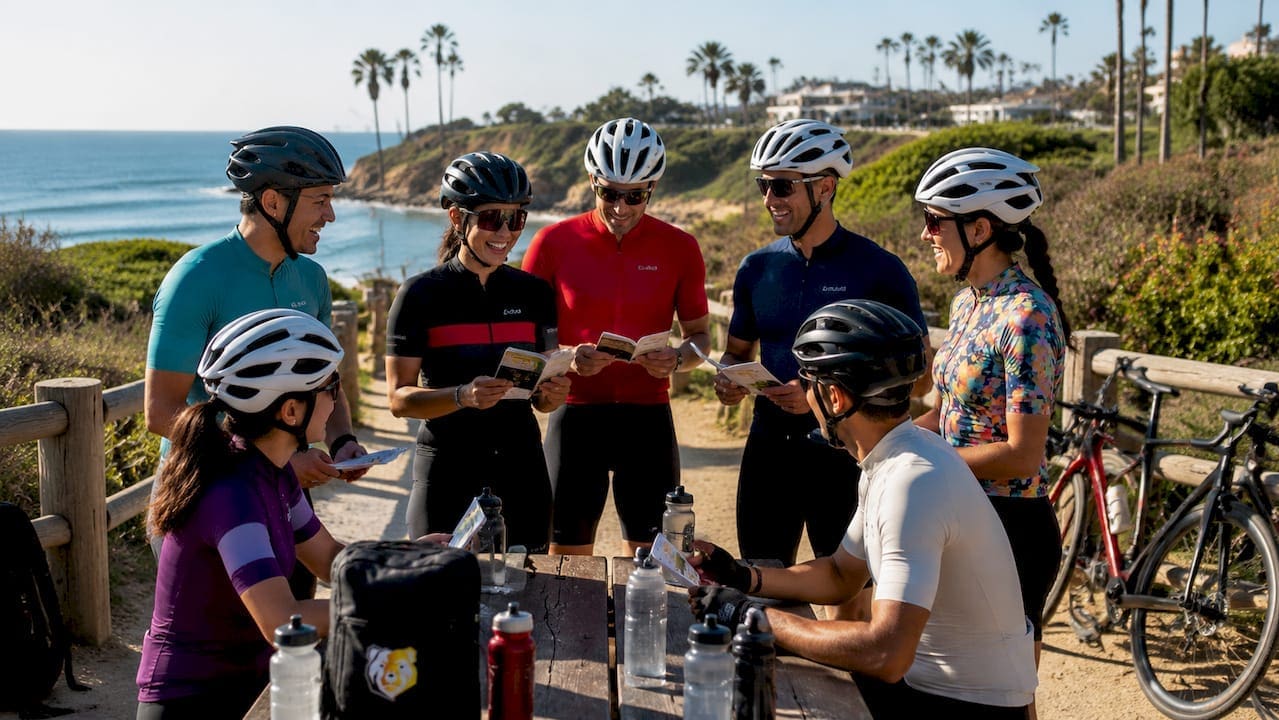
A cycling passport event is a structured ride where cyclists collect physical or digital stamps at designated checkpoints along a route, then submit that passport for official certification and rewards. The format, sometimes called a stamp rally in Asian cycling tourism, transforms a long-distance ride into a series of verifiable milestones. Programs like Korea’s official bike passport system and the UK-based Bike + Brew Passport show how broadly this concept applies, from government-backed infrastructure routes to grassroots community fundraisers. Whether you’re chasing a completion medal or supporting local charities, cycling passport participation delivers a tangible record of every kilometer earned.
What is a cycling passport event and how does it work?
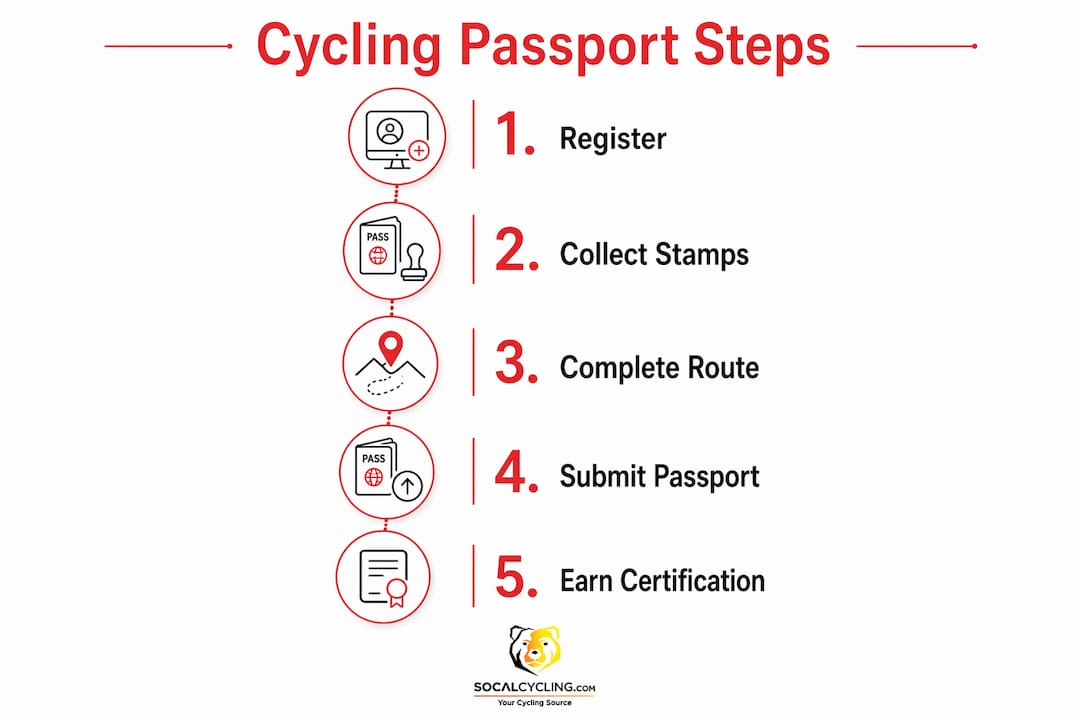
A cycling passport event involves riders collecting stamps at multiple checkpoints, then presenting that completed passport at a certification center to receive official recognition. The mechanics are straightforward, but the logistics reward careful planning.
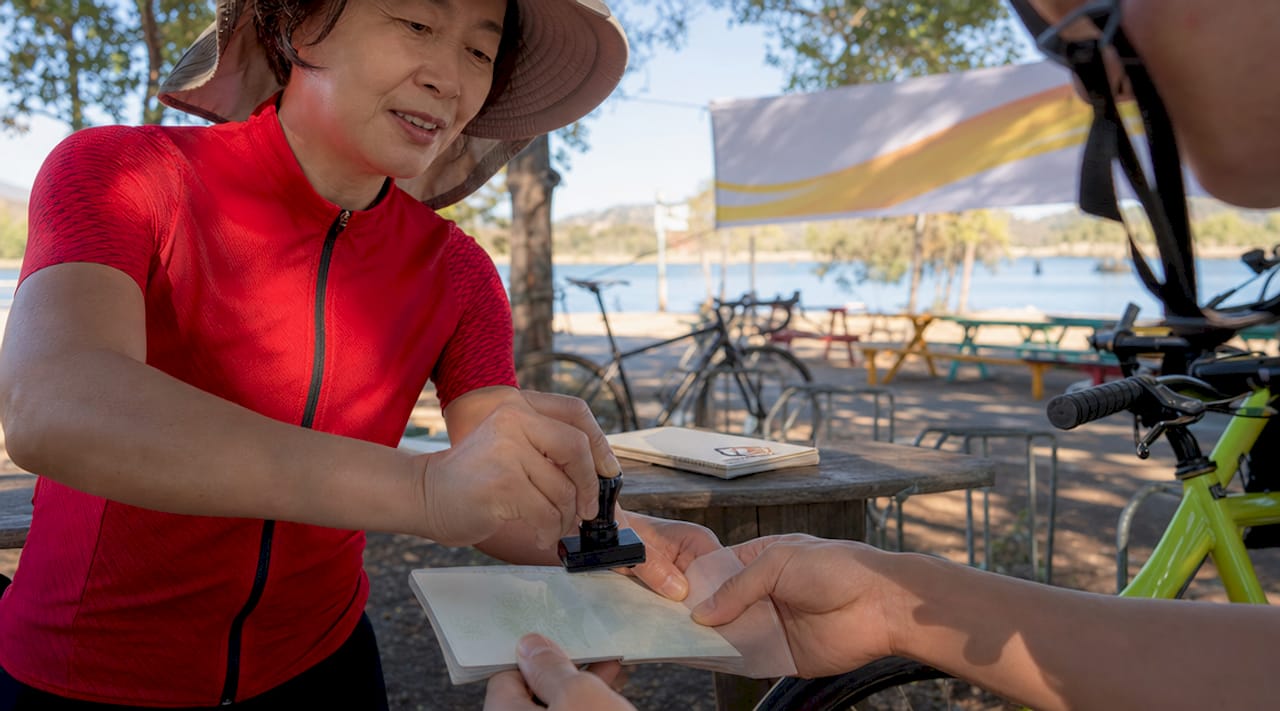
Korea’s national bike passport program is the clearest large-scale example of this format in action. The country operates a network of dedicated cycling paths, each with staffed booths and unstaffed stamp stations positioned at key points along routes like the Nakdong River trail and the Han River path. Riders carry a physical passport booklet, stop at each booth, and collect an ink stamp as proof of passage. At the end of a route, they present the completed booklet at a staffed certification center, where staff verify the stamps and issue a completion certificate and stickers free of charge. Medals are available for purchase separately.
How certification levels work
Korea’s system grades riders across multiple certification tiers, not just a single route completion. Passport events grade riders at levels that include individual path completions, cross-country combinations, and a grand slam designation for finishing a full set of major routes. This tiered structure means passport cycling is not a one-and-done experience. Riders return across multiple trips to accumulate stamps toward higher certifications, which builds long-term engagement with the format.
The Jeonju Bicycle Passport, running April through November 2026, adds a tourism layer by using QR code scans via smartphone for participation verification alongside a physical booklet. This dual approach, physical and digital, is now standard in well-organized passport programs.
The digital app as a backup system
Korea’s official bike passport app provides GPS-based digital stamping for riders who encounter unstaffed booths or connectivity gaps. When neither ink nor GPS works reliably, a selfie showing the rider, the bike, and the booth together serves as acceptable proof of passage. This redundancy in evidence collection is the system’s most practical feature, because rural routes and variable weather create real-world conditions where a single verification method will fail. Treat the physical booklet as your primary record and the app or photos as your insurance.
Pro Tip: Before you start any passport route, photograph the first stamp booth sign with your bike in frame. If your ink stamp smears or your app loses signal, that dated photo becomes your fallback proof at the certification center.
What are community and fundraising cycling passport events?
Community passport events use the same stamp-collection mechanic but replace route certification with social connection and charitable giving as the primary goals. The Bike + Brew Passport 2026 is the strongest current example of this model. It encourages riders to visit 296 biker-friendly venues across a region, collecting stamps at each stop. Each stamp represents more than a visit. It signals support for a local business and contributes to fundraising for grassroots charities.
This format works because it removes the pressure of a timed or distance-based challenge. Riders can complete the passport over weeks or months, visiting breweries, cafes, and bike shops at their own pace. The social dimension is built directly into the structure. Stopping at a venue means interacting with other riders and local community members, which creates the kind of organic connection that a solo long-distance ride rarely produces.
Key features of community-focused passport events include:
- Stamp milestones tied to prize draws. Many programs offer entry into prize draws at 10, 25, or 50 stamp thresholds, giving riders a reason to keep going beyond the first few stops.
- Charity fundraising integration. Community-driven passport events blend cycling with charitable fundraising, with each participation directly supporting local organizations. This is a meaningful distinction from purely competitive formats.
- Flexible timelines. Unlike a timed sportive or gran fondo, community passport events typically run across an entire season, accommodating riders of all fitness levels and schedules.
- Venue discovery. Riders explore biker-friendly businesses they would not otherwise find, which benefits local economies and expands the rider’s knowledge of their region.
- Social proof and mementos. A completed passport booklet filled with stamps from real venues carries sentimental value that a digital leaderboard position does not.
If you want to connect cycling with charity ride fundraising, the community passport format is one of the most accessible entry points available.
Physical stamping vs. digital check-ins: which method is better?
Both methods verify the same thing: that you were at a specific location at a specific time. The difference lies in reliability, user experience, and what happens when conditions are imperfect.
| Feature | Physical stamp | Digital check-in |
|---|---|---|
| Reliability | High in staffed areas; zero if booth is closed | Dependent on GPS signal and battery life |
| Tactile appeal | Strong. Booklet becomes a keepsake | Minimal. Data lives in an app |
| Backup options | Photo or selfie proof | Screenshot or cached GPS data |
| Verification speed | Manual review at certification center | Instant or near-instant confirmation |
| Rural performance | Works without connectivity | Unreliable without signal |
| Best use case | Primary record for official certification | Backup or tourism-focused events |
Physical stamps hold a clear advantage for official certification programs like Korea’s national system, where the booklet is the authoritative document. Treat the passport booklet as the primary record and use digital stamps or photos as backup evidence, since final certification may accept either depending on the situation.
Digital check-ins perform better in urban tourism events where connectivity is consistent and the goal is participation tracking rather than formal certification. The Jeonju Bicycle Passport’s QR code system works well precisely because the route stays within a well-connected city environment.
Pro Tip: Carry a portable battery pack on any passport ride longer than 60 miles. App-based GPS stamping drains your phone faster than normal use, and losing battery before the final checkpoint means losing your digital record entirely.
How to join or organize a cycling passport event
Joining an existing passport event requires less preparation than most cyclists expect. Organizing one demands more logistical thinking than it first appears.
Joining an existing event
- Acquire your passport first. Physical booklets for programs like Korea’s national system are sold at certification centers and select bike shops along the route. Digital-only events require downloading the official app and registering before you ride.
- Study the checkpoint map before you leave. Staffed certification centers have structured opening hours and rules for passport sales, stamping, and verification. Arriving at a staffed booth after closing time means no stamp and no certification for that segment.
- Plan your ride around booth hours, not just distance. A 100-mile route with a certification center that closes at 5 p.m. requires a very different start time than the same route with a 24-hour unstaffed stamp station.
- Carry backup stamping tools. Bring a personal ink stamp or a dedicated camera for selfie proofs. Knowing which booths are staffed and having backup stamping methods ready is the difference between a completed passport and a wasted day.
- Find local events through cycling groups. Connecting with a local cycling group is the fastest way to learn about passport events in your area, since many are organized at the club level and not widely advertised.
Organizing a passport event
Organizers need to decide on three things before anything else: the route, the verification method, and the reward structure. Route selection should prioritize locations with natural stopping points, such as cafes, parks, or landmarks, that can serve as checkpoint locations without requiring permanent infrastructure. Verification works best when you combine physical stamps with a photo-proof fallback, since you cannot guarantee every participant will have reliable smartphone access. Rewards do not need to be expensive. A printed certificate, a sticker, or entry into a prize draw creates enough incentive to drive completion rates. Gamified passport systems motivate riders through route segmentation and tangible rewards, so even modest prizes carry real motivational weight when tied to a visible milestone structure.
For event formats beyond passport rides, Socalcycling’s guide to cycling sportive formats covers the broader spectrum of organized ride structures worth understanding before you design your own event.
Key takeaways
A cycling passport event is defined by checkpoint-based stamp collection that converts ride completion into verifiable, rewarded achievement, whether the goal is official certification or community connection.
| Point | Details |
|---|---|
| Core mechanic | Riders collect stamps or digital check-ins at checkpoints and submit for certification and rewards. |
| Dual verification | Physical booklets serve as the primary record; digital apps and selfie photos act as reliable backups. |
| Community events | Programs like Bike + Brew Passport combine stamp collection with charity fundraising and local venue discovery. |
| Logistics matter | Staffed booth hours and checkpoint planning determine whether a passport ride succeeds or fails. |
| Gamification drives engagement | Tiered certification levels keep riders returning across multiple rides to achieve higher completions. |
Why cycling passport events are worth your time
From our perspective at Socalcycling, the most underrated quality of passport events is what they do to your relationship with a route. A solo century ride is satisfying, but it ends when you stop pedaling. A passport ride ends when you hold a stamped booklet that proves every mile. That physical record changes how the ride feels in retrospect, and that matters for motivation.
We have seen riders who struggled to commit to long-distance goals find real traction through passport formats because the checkpoints break a 150-mile route into a series of shorter, concrete targets. The psychology here is not complicated. Collecting a stamp at mile 40 gives you a win before you reach mile 80. That momentum is real and it compounds.
The community passport model, exemplified by events like Bike + Brew, adds something that pure distance challenges cannot: a reason to stop and talk to people. Some of the best conversations we have had on bikes happened at a checkpoint cafe, not at a finish line. That social texture is what separates a passport event from a training ride with a longer route.
One honest caution: do not underestimate the logistics. Missing a staffed certification center by 20 minutes because you did not check the hours is a genuinely frustrating experience. Plan your start time around booth closing hours, not sunrise. Carry backup proof options every single time. The certification is the point of the format, and losing it to a preventable oversight defeats the purpose entirely.
Discover cycling events with Socalcycling
Socalcycling covers cycling events across Southern California and beyond, from gran fondos and gravel races to community rides that share the passport format’s spirit of exploration and achievement.
Whether you are looking for your first organized ride or want to find a community that takes passport-style challenges seriously, Socalcycling’s event calendar and news keeps you current on what is happening near you. The site also covers gravel race events across the United States, many of which use checkpoint verification formats similar to passport rides. Entering local competitions also carries real benefits for your community, from economic support for local businesses to building the kind of cycling culture that makes more events possible.
FAQ
What is a cycling passport event in simple terms?
A cycling passport event is a ride where you collect stamps or digital check-ins at checkpoints along a route, then submit your completed passport for a certificate, medal, or other reward. It is a verifiable, gamified format used in both official tourism programs and community fundraisers.
Is the cycling passport the same as the Athlete Biological Passport?
No. The Athlete Biological Passport is an anti-doping monitoring system that tracks biological markers in professional cyclists to detect doping violations. It has no connection to stamp-based cycling passport events.
How do I get a physical cycling passport booklet?
For programs like Korea’s national system, booklets are sold at staffed certification centers and select bike shops along the route. Community events like Bike + Brew Passport typically provide booklets at participating venues or through event registration.
What happens if I miss a checkpoint stamp?
Most programs accept a selfie showing you, your bike, and the booth as a fallback when ink stamps are unavailable or a booth is unstaffed. Carrying a personal ink stamp and a camera as backup tools is the standard recommendation for any serious passport ride.
Can I organize my own cycling passport event?
Yes. The core requirements are a mapped route with natural stopping points, a verification method combining physical stamps with photo-proof backup, and a reward structure such as certificates or prize draws. Local cycling clubs are a practical starting point for finding participants and logistical support.
Recommended
- Cycling Sportive Explained: Your Complete Ride Guide
- Find a Cycling Group Near Me: Your 2026 Guide
- How to Join a Charity Cycling Ride Fundraiser
- How to Find Gravel Races Near Me in 2026