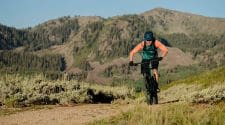



Choosing Portugal for a training block or cycling trip offers a distinct structural advantage: its geography allows you to target specific training zones without the traffic or unpredictable weather of more traditional European hubs. The country’s road network transitions seamlessly from long, steady mountain ascents perfect for sustained threshold work down to flat, coastal valleys that suit active recovery, making it easy to log high-mileage days.
To help you execute a seamless trip, this guide outlines how to strategically structure your riding week, make the most of the varied topography, and manage your nutrition and kit so that you return home with a stronger engine rather than empty legs. We cover everything from navigating mountain passes and utilising e-bikes for active recovery to managing summer heat and packing the essential gear for changing microclimates.
What Portugal’s Mountain Roads Do for Your Threshold Training
Portugal has no shortage of long, steady climbs that suit threshold work. Serra da Estrela usually gets most of the attention, but plenty of smaller mountain roads deliver the same steady effort without attracting nearly as many riders.
If you’re planning cycling vacations in Portugal, the country’s varied climbs provide plenty of room for sustained threshold efforts without every session following the same gradient. One ascent might pass granite villages with tiled roofs, while another winds through eucalyptus forest before opening onto high pastureland. Small grocery shops and weekly produce markets make easy places to refill bottles or pick up fruit without losing much time.
Road surfaces are generally good, although the occasional rough edge or loose gravel appears after winter. Sheep sometimes wander close to the roadside in higher areas, so descents require plenty of attention.

Image by Photos_by_Paul from Pixabay
How to Structure Your Training Week Before You Fly
Trying to squeeze in one final high-volume training week rarely pays off. Arriving tired usually means spending your first few riding days recovering instead of enjoying the mountain passes. Most experienced cyclists structure their taper week by cutting total mileage by 40% to 50% while keeping one or two brief, high-intensity intervals. This approach keeps the legs responsive and maintains blood volume without carrying deep muscle fatigue onto the plane.
Once you land, flights, airport queues, and several hours of sitting will inevitably leave you feeling stiff. An easy, low-resistance spin of 60 to 90 minutes after arriving helps clear metabolic waste and loosen up the joints. Waterfront cycle paths and broad riverside promenades make for comfortable places to turn the pedals without needing to worry about traffic. The first proper climbing day can then feel much better after that.
Why E-Bike Days in Portugal Work as Active Recovery
Recovery days don’t have to mean sitting indoors waiting for tired legs to improve. Plenty of cyclists opt for e-bike tours in Portugal because they can still spend hours outside without adding another demanding training session.
Historic neighborhoods become much easier to appreciate when there’s no pressure to maintain a training pace. Praça do Comércio is worth walking across for a few minutes before continuing, and Mercado do Bolhão is always busy during the morning with shoppers buying fresh fish, fruit, and vegetables. Locking the bike for half an hour and exploring on foot opens up a new way of seeing bustling towns in action.
An e-bike also makes steeper streets much less demanding. After several climbing days, that extra assistance often leaves enough energy for another solid ride the following morning.
Hydration and Nutrition for Riding in Portugal’s Summer Heat
Inland temperatures rise rapidly after 09:00, making a sunrise departure essential to complete your high-intensity efforts before the midday heat peak. To maintain a high work rate on sustained climbs, dual bottle cages are non-negotiable. Rather than relying on sporadic village shops, look out for public drinking fountains, or fontes, which are common in rural plazas and generally provide clean, cold mountain water.
Managing your electrolyte balance is critical when backing up high-volume days in this climate. Carrying portable hydration tablets allows you to treat water on the go, especially before tackling remote interior ascents where services become sparse. When you do need to refuel, local mini-mercados and village bakeries (pastelarias) offer rapid access to dense, highly digestible carbohydrates like pastéis de nata or bananas without disrupting your training rhythm.
If your route takes you through the quieter countryside, get into the habit of topping up both bottles at every opportunity. Most village grocery stores operate on a split-shift schedule, typically closing between 13:00 and 15:00. Securing your afternoon nutrition and morning recovery supplies before this midday shutdown ensures you avoid being caught short on remote roads.
Kit Essentials Worth Packing for Portugal’s Climbs
Packing for Portugal usually means preparing for more than one type of weather. Mountain mornings can feel surprisingly cool before the temperature rises quickly once the climbing starts.
A windproof gilet with a mesh back panel is an essential layer; it provides vital chest protection during fast, high-altitude descents and packs down to a negligible size once the road tilts upward. For early morning departures, pairing a summer jersey with lightweight, packable arm warmers allows you to adjust to shifting mountain microclimates on the fly. If your route cuts through wooded valleys, photochromic or high-contrast lenses are critical for transitioning safely between blinding sunlight and deep canopy shadows.
While Portuguese tarmac is generally fast and smooth, high-volume training blocks demand durable, tubeless-ready tyres or fresh tubes to handle sudden debris on rural descents. A basic flat-kit consisting of a multi-tool, a tubeless repair tool or glueless patches, two spare inner tubes, and a high-volume mini pump easily fits into a standard saddle bag. For mid-ride café stops in rural towns, a compact, high-tensile zip-tie lock offers fast, low-bulk security without adding unnecessary weight.

Image by Loyloy Thal from Pixabay
Is Portugal already on your training calendar?
Portugal offers a highly efficient training environment that definitely warrants a repeat visit. The elevation is consistent, low-traffic roads are accessible immediately outside the main hubs, and the infrastructure supports structured training blocks. A high-mileage day can transition smoothly from sustained alpine climbing to flatter, coastal recovery loops without requiring complex transfers.
Maximising a training trip comes down to precise logistical execution. Accurate route profiling, managing thermal shifts on long descents, and aligning your riding schedule with local opening hours are what keep a high-volume block on track. Once these logistics are dialled in, the quality of the riding speaks for itself.
Top Image by Faris Hamza from Pixabay