


A cycling race director is the central authority responsible for planning, safety, and sporting integrity across every stage of a cycling event. The role of race director in cycling covers everything from route selection and permit acquisition to real-time race control decisions on event day. USA Cycling and international governing bodies define this position as the primary point of accountability for regulatory compliance and rider safety. What most cycling enthusiasts do not realize is how dramatically this role has changed over the past decade, shifting from a single hands-on organizer to a strategic leader within a much larger professional structure.
How has the role of race director evolved in modern cycling?
The traditional model of a singular, all-powerful race director is fading fast. Organizers of the Giro d’Italia and Amstel Gold Race have both noted this shift toward collaborative event management, where operational responsibility is distributed across professional event bodies rather than resting on one person’s shoulders.
Tom Dumoulin’s appointment as Amstel Gold Race director is the clearest recent example of this new model. Dumoulin will shadow the outgoing director in 2026 before officially taking the role in 2027, with his focus firmly on sporting tradition, route safety planning, and stakeholder consultation rather than day-to-day logistics. That transition period is deliberate. It reflects how much institutional knowledge and relationship management the role now demands.
The financial side of the role has grown to match its complexity. Senior event manager positions at major international cycling events can reach up to £60,000 depending on event size. That salary range signals that cycling event management is now a professional career track, not a volunteer side project for a retired racer.
Key shifts in the modern race director role include:
- Route and safety planning now requires formal consultation with local authorities, emergency services, and national governing bodies.
- Stakeholder liaison has replaced hands-on logistics as the primary daily function for directors at major events.
- Sporting tradition is a defined responsibility. Directors like Dumoulin are explicitly tasked with preserving a race’s cultural identity.
- Organizational depth means directors now lead multi-disciplinary teams rather than personally managing every operational detail.
Pro Tip: If you are studying how to become a race director, shadow an experienced director for at least one full event cycle. The Amstel Gold Race transition model, where Dumoulin spends a full year learning before taking over, is the gold standard for knowledge transfer.
What are the key responsibilities and daily tasks of a cycling race director?
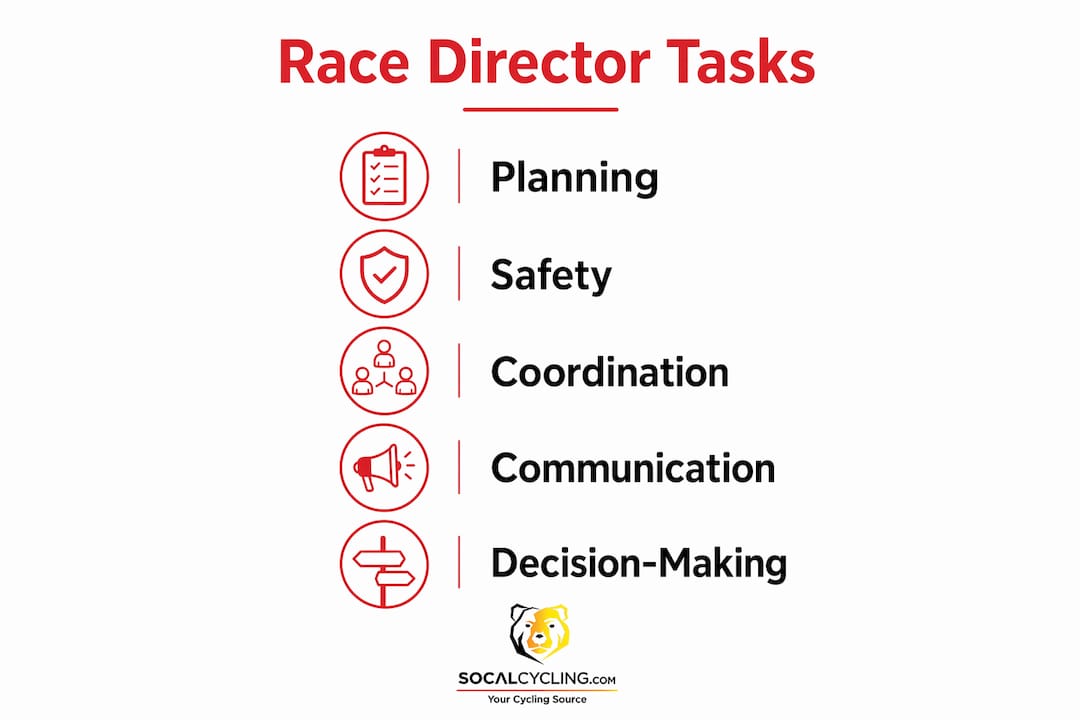
A race director’s duties span months before the first rider clips in. The work divides cleanly into three phases: pre-event planning, race day management, and post-event review.
Pre-event planning
- Route selection and safety audit. The director evaluates road surfaces, gradient profiles, and hazard points. Every section of the course must meet safety standards set by the relevant governing body.
- Permit and compliance work. Securing road closures, police escorts, and public authority approvals is non-negotiable. Missing a single permit can cancel an event the morning of the start.
- Stakeholder coordination. Sponsors, local governments, medical teams, and timing companies all need clear briefings and confirmed agreements before race week.
- Staff and volunteer recruitment. The director builds the team structure, assigns sector responsibilities, and confirms training requirements for all race officials.
- Emergency services integration. Medical response plans, helicopter landing zones, and hospital liaison contacts must be confirmed and rehearsed.
Race day management
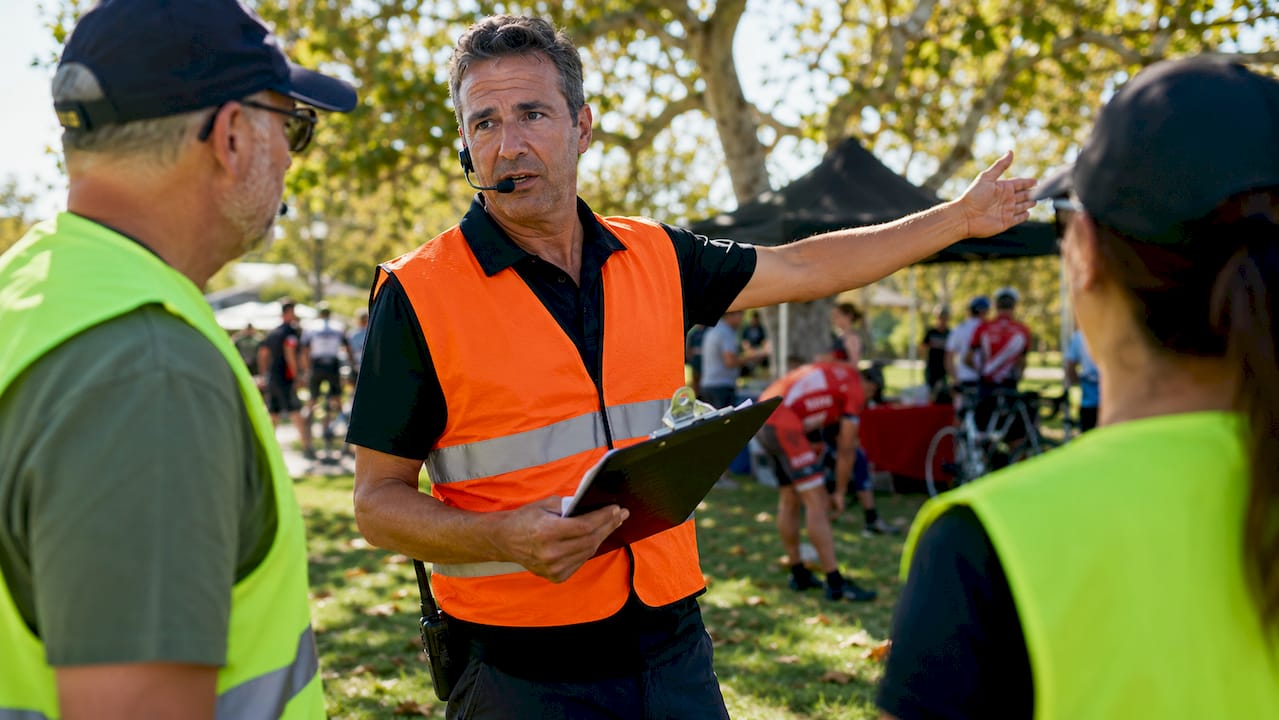
The director’s authority is most visible on race day. A visible, identifiable authority figure in race control remains essential to authorize real-time decisions such as race stoppages or course changes. No committee makes that call in the moment. One person does.
At the Isle of Man TT, the Clerk of the Course oversees 23 specialized staff covering medical, fire, and logistics sectors. That structure shows how modern race control works: the director sets the authority framework, and trained specialists execute within it.
| Phase | Primary Focus | Key Decision Maker |
|---|---|---|
| Pre-event | Route, permits, stakeholder agreements | Race director |
| Race day | Safety calls, neutralizations, course changes | Race director with race control team |
| Post-event | Debrief, protest review, report filing | Race director and commissaires |
Understanding the full cycling event category scope helps directors calibrate the right level of organizational complexity for each event type.
How do race directors manage safety and marshal roles?
Safety management is the most legally consequential part of the job. Race directors do not just plan safe routes. They build and maintain the entire safety system that operates on race day.
The Isle of Man TT’s Safety Management System overhaul brought structured communication and clear accountability to race operations. That kind of systems thinking is now the standard for any serious cycling event, not just extreme road races.
The role of race marshals in cycling is directly shaped by the race director’s planning decisions. Marshals without legal accreditation are limited to visual signaling and cannot stop traffic. In the UK, CSAS accreditation provides the legal authority for marshals to control traffic during races. Race directors who do not arrange proper accreditation for their marshal teams expose both riders and the public to unnecessary risk.
Key safety responsibilities for race directors include:
- Marshal training and legal empowerment. Directors must confirm that marshals in traffic-control positions hold the correct accreditation for their jurisdiction.
- Sector communication protocols. Every sector marshal needs a direct radio link to race control and a clear escalation path for incidents.
- Medical response integration. The director confirms ambulance positioning, first-responder locations, and hospital alert procedures before the race starts.
- Volunteer incentives. At the Santos Tour Down Under, traffic marshals receive a $50 donation per day as an incentive. Competitive incentive structures help directors attract and retain reliable volunteers.
Pro Tip: Build your marshal briefing document as a one-page reference card, not a 20-page manual. Marshals on course need fast, clear instructions they can recall under pressure. If your briefing takes more than 15 minutes to deliver, it is too long.
What organizational skills define effective race directors today?
Effective race directors must excel in stakeholder management, leadership under pressure, and balancing corporate demands with sporting traditions. These are not soft skills in the casual sense. They are the core technical competencies of the job.
Managing a large cycling event means coordinating with police departments, municipal governments, national governing bodies, title sponsors, broadcast partners, medical providers, and hundreds of volunteers simultaneously. Each group has different priorities and different communication styles. The race director translates between all of them.
The skills that separate good race directors from great ones:
- Clear decision authority. Everyone on the team must know exactly who makes which call. Ambiguity in race control costs time and creates safety gaps.
- Crisis composure. Route changes, weather emergencies, and serious crashes require calm, fast decisions. Directors who freeze or defer too long create secondary problems.
- Sponsor and media management. Major events carry significant commercial weight. Directors must protect the sporting product while satisfying sponsor visibility requirements.
- Cultural stewardship. Tom Dumoulin describes the race director as a guardian of sporting tradition and key relationships, less the boss and more a cultural leader. That framing captures what separates a great director from a competent event manager.
For organizers interested in the full spectrum of event formats they may need to direct, the cycling sportive format offers a useful contrast to traditional road racing in terms of safety and staffing demands.
Key Takeaways
The race director in cycling is the single point of accountability for safety, sporting integrity, and stakeholder coordination across every phase of an event.
| Point | Details |
|---|---|
| Role has evolved significantly | Directors now focus on strategic sporting direction, not hands-on logistics management. |
| Safety systems require legal structure | Marshal accreditation like CSAS is mandatory for legal traffic control, not optional. |
| Collaborative teams replace solo authority | Modern events use multi-disciplinary race control teams, not a single all-powerful director. |
| Cultural leadership matters | Effective directors preserve race identity and stakeholder trust, not just operational flow. |
| Career path is now professional | Senior event management roles at major events reach up to £60,000, reflecting full career-track status. |
The view from inside race control
We have covered cycling events at Socalcycling.com long enough to watch the race director role change in real time. The shift is real, and it is not always comfortable for people who came up through the old model.
The biggest mistake aspiring race directors make is treating the job as a logistics problem. It is not. Logistics is a component. The actual job is trust management. You are building trust with police commanders who need to know you will not waste their resources. You are building trust with sponsors who need to know their brand will not appear next to a poorly managed incident. You are building trust with riders who need to know the course is safe and the rules are enforced fairly.
The second mistake is underestimating how long stakeholder relationships take to build. Dumoulin spending a full year shadowing before taking the Amstel Gold Race director role is not ceremonial. It is the minimum viable knowledge transfer for a race with that much history and that many institutional relationships.
For anyone serious about cycling event coordination, our advice is direct: start small, stay visible, and treat every volunteer interaction as a leadership opportunity. The race directors who rise to major events are almost always the ones who built a reputation for reliability and clear communication at the local level first. The title follows the track record.
Socalcycling.com: your resource for cycling event coverage
Socalcycling.com covers cycling events, race management news, and athlete stories across Southern California, North America, and worldwide.

Whether you are an event organizer researching cycling race management best practices or a cycling enthusiast wanting to understand what happens behind the start line, Socalcycling.com has the coverage you need. The event news and guides on Socalcycling.com span road racing, gravel, cyclocross, mountain biking, and gran fondos. For organizers planning their first event, the cycling passport event guide covers volunteer coordination and participant management in practical detail. Bookmark the site for ongoing race coverage, event calendars, and team updates throughout the season.
FAQ
What is the primary role of a race director in cycling?
A cycling race director is the central authority responsible for route planning, safety compliance, stakeholder coordination, and real-time race control decisions. The role covers every phase from pre-event permitting through post-race debrief.
What is the difference between a race director and a race marshal?
A race director oversees the entire event organization and holds final decision authority. Race marshals are deployed on course to manage specific sectors, and their legal powers depend on accreditation. In the UK, CSAS accreditation is required for marshals to legally stop traffic.
How do you become a race director in cycling?
Most race directors build experience by working as race officials, event coordinators, or commissaires at smaller events before moving into director roles. Shadowing an experienced director, as Tom Dumoulin is doing at the Amstel Gold Race, is the most effective preparation path.
How many staff does a major cycling race control team include?
The Isle of Man TT race control operates with 23 specialized staff covering sectors including medical, fire, and logistics. That number reflects the complexity of modern cycling event coordination at the highest level.
What skills does a race director need most?
Stakeholder management, crisis decision-making, and clear communication are the three most critical skills. Large events require simultaneous coordination with police, sponsors, medical teams, local authorities, and volunteers, all with different priorities and expectations.
Recommended
- Cycling Event Category Guide: What Riders Need to Know
- What Is a Cat 5 Cycling Race? Beginner’s Guide
- Cycling Sportive Explained: Your Complete Ride Guide
- What Is a Cycling Omnium Event? Your Race Guide