

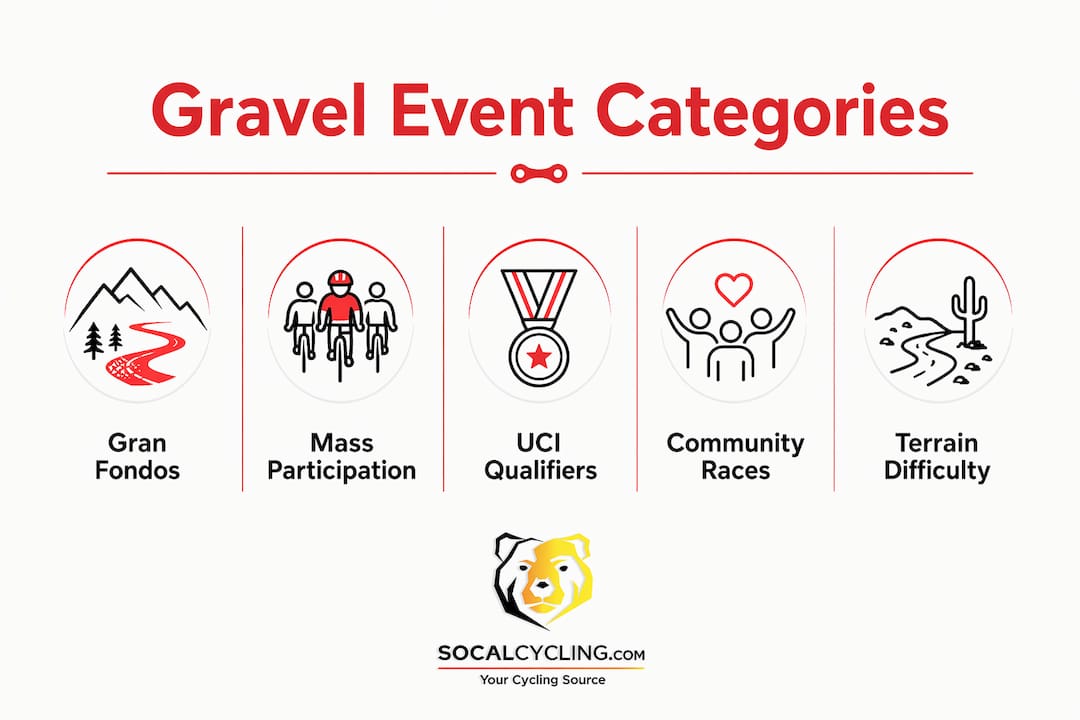
Gravel events are categorized to reflect the wide variety of race formats, terrain difficulties, competition levels, and rider experiences the sport now encompasses. Understanding why gravel events have different categories is the fastest way to find the right race for your goals. The sport now hosts approximately 1,800 gravel events annually in the US alone, ranging from elite UCI qualifiers to free youth rides and casual community fondos. That scale makes categorization not just useful but necessary. Without it, a first-time rider could accidentally sign up for a Category 4 singletrack sufferfest meant for seasoned racers.
Why gravel events have different categories
Gravel cycling classifications exist because the sport refuses to fit one mold. A Gran Fondo, a UCI GravelKing qualifier, and a local grassroots gravel ride share the same unpaved roads but almost nothing else. Each serves a different rider with different goals, fitness levels, and expectations.
The four main gravel event types break down like this:
- Gran Fondos: Non-competitive or lightly timed rides focused on personal achievement and scenery. Riders set their own pace, and finishing is the goal. Events like the Belgian Waffle Ride California blend challenge with community spirit.
- Mass participation races: Open-field events where amateurs race alongside each other on a set course. These prioritize accessibility. Entry fees average about $95, though youth categories are often free or discounted.
- UCI GravelKing World Series qualifiers: Structured competitive events feeding into the UCI Gravel World Championships. The UCI series spans 45 events across 32 countries, offering age-group qualification slots to the World Championships and a $350,000 prize purse.
- Bucket list destination rides: Events like Unbound Gravel or SBT GRVL that combine serious racing with a travel and adventure experience. These attract both elite and amateur riders and often offer multiple distance options.
| Category | Competitive Focus | Typical Distance | Terrain | Community Feel |
|---|---|---|---|---|
| Gran Fondo | Low | 50–100 miles | Mixed, moderate | High |
| Mass participation | Moderate | 30–100 miles | Varied | High |
| UCI qualifier | High | 60–140 km | Technical, challenging | Moderate |
| Destination event | Mixed | 100–200+ miles | Extreme to moderate | Very high |
The differences in gravel events are not arbitrary. They reflect what riders actually want from a day on dirt.
How terrain and course design shape event categories
Gravel terrain is the single biggest driver of event difficulty and classification. Gravel surfaces range from smooth rail trails to unmaintained forestry roads with deep ruts, rock gardens, and hazardous conditions. That four-category terrain scale directly influences how events are designed and who they target.
Here is how terrain categories translate to rider requirements:
- Category 1 (smooth rail trails and packed gravel): Accessible to road cyclists with minimal off-road experience. Tire width of 35–40mm is typically sufficient.
- Category 2 (maintained dirt roads and light gravel): Requires basic bike handling. Most gravel-specific bikes perform well here.
- Category 3 (loose gravel, washboard, and moderate ruts): Demands confident handling and a capable gravel or light mountain bike setup.
- Category 4 (deep ruts, rock gardens, unmaintained forest roads): Requires technical mountain bike skills and a bike built for punishment.
Course designers use this terrain scale to set expectations and filter the right riders into the right events. An event built on Category 4 terrain will attract a very different field than one on Category 1 paths. The 2026 UCI Gravel World Championships illustrates this perfectly. Courses range from 89 km with 2,000 meters of climbing to 140.7 km with 3,625 meters of climbing, differentiated by age and gender categories. That elevation gap is not cosmetic. It reflects a genuine difference in physical demand.
Pro Tip: Match your tire setup to the event’s terrain category before race day. Running 38mm tires on a Category 4 course is a mechanical risk, not just a performance issue.
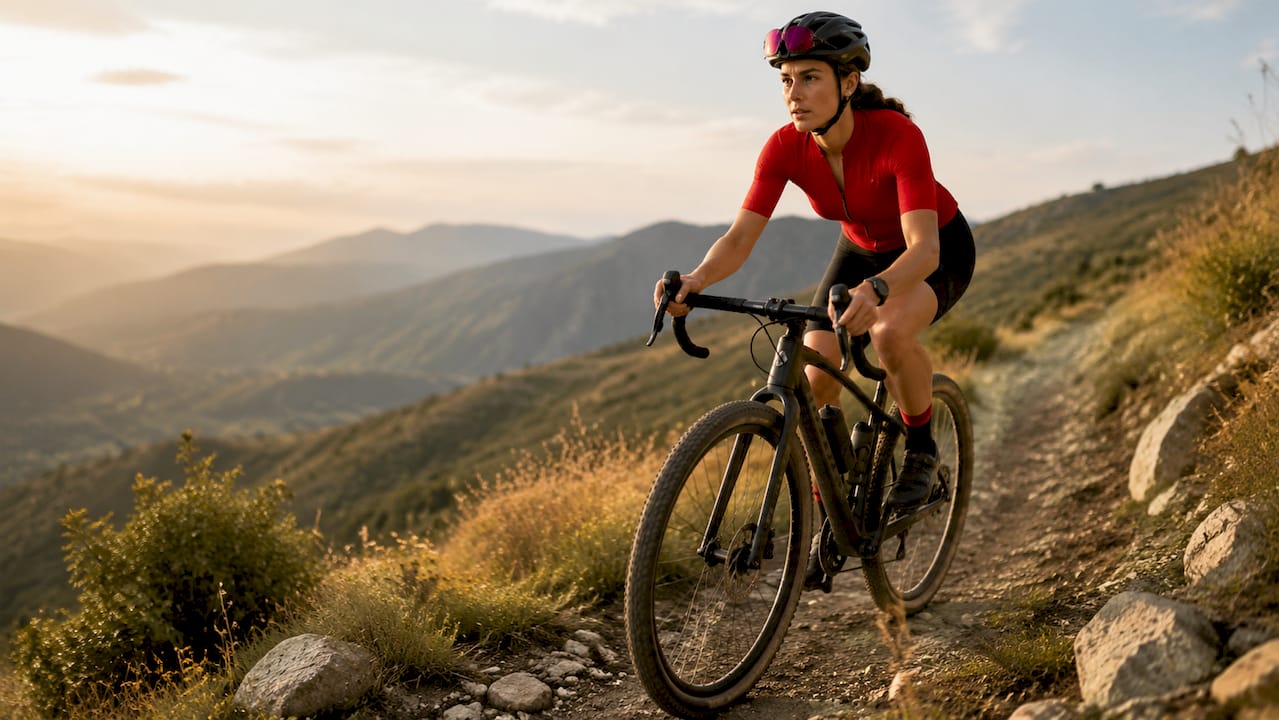
Terrain also affects navigation demands. Technical and navigational skills vary widely between gravel event categories, and endurance fitness alone does not prepare you for a course with unmarked forest junctions or off-camber descents.
What role do competition level and rider categories play?
Gravel race categories go deeper than just terrain. Most events subdivide their fields by age, gender, and competitive tier. This structure makes racing fair and helps riders find their correct competitive level.
A typical gravel event classification ladder looks like this:
- Open/Amateur field: No qualification required. The largest and most accessible category. Most mass participation events start here.
- Age group divisions: Typically broken into five-year brackets (e.g., 35–39, 40–44). These are the most common subcategories at events of all sizes.
- Masters divisions: Separate categories for riders aged 50 and above, sometimes with their own podium and prize structure.
- Pro/Elite field: Invitation or qualification required. Riders compete for prize money or UCI points. The Life Time Grand Prix series runs elite and amateur divisions side by side, showing how professional gravel racing can coexist with grassroots participation.
- Youth categories: Growing rapidly. Youth development is seen as key to sport growth, with entry fees often free or reduced to $15–$25.
- Adaptive/Paracycling categories: Available at select events. Still expanding, though not yet universal across the gravel calendar.
UCI-sanctioned events add another layer. The UCI GravelKing World Series assigns age-group qualification slots to the World Championships, meaning your category placement at a qualifier has real consequences for your season. That structure does not exist at a local fondo, where your age group finish earns you bragging rights and maybe a pint glass.
Entry fees reflect this hierarchy. Elite UCI events carry higher registration costs and stricter rules. Youth and community events prioritize access over revenue.
How organizational goals shape gravel event formats
The culture behind an event shapes its categories as much as the terrain does. Grassroots gravel events and UCI-sanctioned races occupy opposite ends of a wide spectrum, and both are legitimate expressions of the sport.
Local and community-driven events prioritize inclusion and experience. Organizers design categories to get as many riders on course as possible, not to filter out the field. The vibe is cooperative. Riders share course knowledge, wait for mechanicals, and celebrate finishers at every level. This culture traces back to gravel’s counterculture roots, where the point was to escape road racing’s rigid hierarchy.
“Modern gravel racing transcends one-size-fits-all formats, allowing riders to select events suited to adventure, competition, or local community engagement.” — Gravel Racing: Unbound vs. Mid-South vs. SBT GRVL
Professional series like the Life Time Grand Prix and the UCI GravelKing World Series operate differently. They build structured categories with prize money, media coverage, and qualification pathways. The UCI GravelKing series spans six continents and offers multiple distance options at each event, but the competitive framework is unmistakably professional. That is not a criticism. It is a different product for a different rider.
The tension between these two cultures is what makes gravel event formats so varied. Organizers must decide which rider they are serving. That decision drives every category choice they make, from distance options to age group cutoffs to whether a podium ceremony even exists. You can read more about how cycling event formats differ across disciplines to see how this plays out beyond gravel.
How to choose the right gravel event category for you
Choosing the right gravel event category comes down to honest self-assessment across four factors. Get these right and you will have a great day. Get them wrong and you will either be bored or in over your head.
- Competition level: Do you want to race or ride? UCI qualifiers and elite-division events demand race fitness and tactical awareness. Gran Fondos and community rides reward endurance and grit without the pressure of a competitive field.
- Terrain difficulty: Review the course profile and surface description before registering. A Category 3 or 4 terrain event requires technical skills that no amount of road miles will substitute for.
- Event size and atmosphere: Large destination events like Unbound Gravel draw thousands of riders and create a festival atmosphere. Smaller local events offer more personal experiences and easier logistics.
- Community culture: Check whether the event aligns with your values. Some events emphasize competition above all else. Others celebrate every finisher equally.
Use gravel events across the US as a reference point to compare formats before committing. Start with a mass participation event or Gran Fondo to build race experience, then step up to UCI qualifiers once you know your competitive level.
Pro Tip: Use local gravel races as training events for bigger destination races. The navigation and pacing skills you build at a 50-mile community event transfer directly to a 200-mile bucket list race.
Key Takeaways
Gravel events have different categories because the sport spans competitive levels, terrain types, and cultural values that no single format can serve.
| Point | Details |
|---|---|
| Four main category types | Gran Fondos, mass participation races, UCI qualifiers, and destination events each serve distinct rider goals. |
| Terrain drives difficulty | Gravel surfaces range from smooth rail trails to Category 4 forest roads, shaping event classification and bike setup requirements. |
| Rider subcategories matter | Age groups, masters divisions, pro fields, and youth categories create fair competition and reflect entry fee structures. |
| Culture shapes format | Grassroots events prioritize inclusion; UCI-sanctioned series prioritize structured competition and qualification pathways. |
| Match category to your goals | Evaluate competition level, terrain, event size, and atmosphere before registering to find the right fit. |
The real value of gravel’s category system
Gravel’s category system is the sport’s greatest strength and its most underappreciated feature. We have covered hundreds of events at Socalcycling, from elite UCI qualifiers in Europe to local dirt road rides in Southern California, and the one thing that stands out is how well-designed categories protect the rider experience at every level.
The counterintuitive truth is that more categories do not complicate gravel. They simplify your decision. When an event lists a 40-mile fondo option alongside a 140-mile elite race, it is telling you exactly who belongs where. Riders who ignore that signal and enter the wrong category almost always regret it, not because they fail, but because they miss the experience they actually came for.
What we advocate for at Socalcycling is focusing on your own goals rather than chasing category prestige. A well-executed Gran Fondo finish is more valuable to your development than a mid-pack UCI qualifier result where you were out of your depth. The sport is big enough for both. The category system exists to make sure you find the right corner of it.
Find your next gravel event with Socalcycling
Socalcycling covers the full spectrum of gravel cycling, from elite UCI race results to local Southern California dirt road rides worth adding to your calendar.

Whether you are looking for your first mass participation event or researching UCI qualifier formats, Socalcycling has the event listings, race previews, and format guides to help you choose with confidence. Browse the gravel event calendar for upcoming races across California and beyond. Use the gravel race finder to locate events by distance, terrain, and category type near you. The right event is out there. Socalcycling helps you find it before registration closes.
FAQ
What are the main types of gravel race categories?
Gravel events fall into four main types: Gran Fondos, mass participation races, UCI GravelKing World Series qualifiers, and bucket list destination events. Each offers a different competitive level, terrain challenge, and community atmosphere.
Why do gravel events charge different entry fees?
Entry fees reflect the event’s category and competitive structure. Fees average about $95 across the US, while youth categories are often free or discounted to $15–$25, and elite UCI events typically carry higher costs.
How does terrain affect gravel event classification?
Gravel terrain is classified from Category 1 smooth rail trails to Category 4 unmaintained forest roads with deep ruts and rock gardens. Higher terrain categories demand technical bike handling skills beyond standard endurance fitness.
What is the UCI GravelKing World Series?
The UCI GravelKing World Series is a structured global race calendar with 45 events across 32 countries offering age-group qualification slots to the UCI Gravel World Championships and a $350,000 prize purse.
How do I choose the right gravel event category?
Evaluate your competition goals, terrain comfort, preferred event size, and community culture before registering. Start with a local Gran Fondo or mass participation event to build skills before targeting UCI qualifiers or major destination races.
Recommended
- Gravel Race Event Examples Across the United States
- How to Find Gravel Races Near Me in 2026
- Cyclocross Race Calendar Checklist for 2026–2027
- What Is a Cycling Passport Event? Your 2026 Guide